Is there much COVID around? Do I need the new booster shot LP.8.1?
- Written by: Adrian Esterman, Professor of Biostatistics and Epidemiology, University of South Australia
COVID rarely rates a mention in the news these days, yet it hasn’t gone away[1].
SARS-CoV-2, the virus that causes COVID, is still with us. It continues to infect thousands of Australians each month, still puts vulnerable people into hospital, sadly still causes deaths and leaves a steady stream of people living with disability from long COVID.
As the virus continues to evolve, booster vaccines have been updated to better match the version of the virus currently circulating.
Here’s what we know about how much COVID is around, prominent viral subvariants and the latest booster shots.
The graph above shows Australia’s COVID notifications for the past 24 months taken from the National Notifiable Disease Surveillance System[2].
Although the December 2025 data are incomplete, we can see that in November 2025 there were still nearly 8,000 notifications nationally.
Two clear peaks appear: a summer wave in January and a winter wave in June. While 2025 levels are lower than those seen in 2024, the virus continues a pattern of rolling, seasonal mini-waves – just quieter ones than in previous years.
Of course, these numbers underestimate the number of true infections because most people no longer test for COVID or report positive results.
Which versions of the virus are circulating?
At the moment, Australia is seeing a mixture[3] of the subvariants NB.1.8.1, PQ.17, PE.1.4, RE.1.1, and an increasingly common arrival, LP.8.1.
The World Health Organization classifies[4] LP.8.1 as a “variant under monitoring”. That’s because of its rapid growth and its strong ability to evade existing immunity.
Each subvariant is simply a virus that has picked up a slightly different set of mutations as it continues to evolve. All of the above subvariants belong to the broader Omicron family and are descendants of JN.1. They share many core mutations that help them partially escape immunity, but each has added its own small tweaks.
Because they are so closely related genetically, they tend to cause similar illness and respond similarly to vaccines and prior infection.
In other words, these are not brand-new strains, but rather a swarm of closely related offshoots jockeying for position.
Booster shot has been updated
Given this ongoing evolution, our vaccines need occasional updating. For instance, in 2024, the Therapeutic Goods Administration (TGA) approved a new booster based on the JN.1 subvariant – the best available match at the time. Since then, however, the viral family tree has continued to branch.
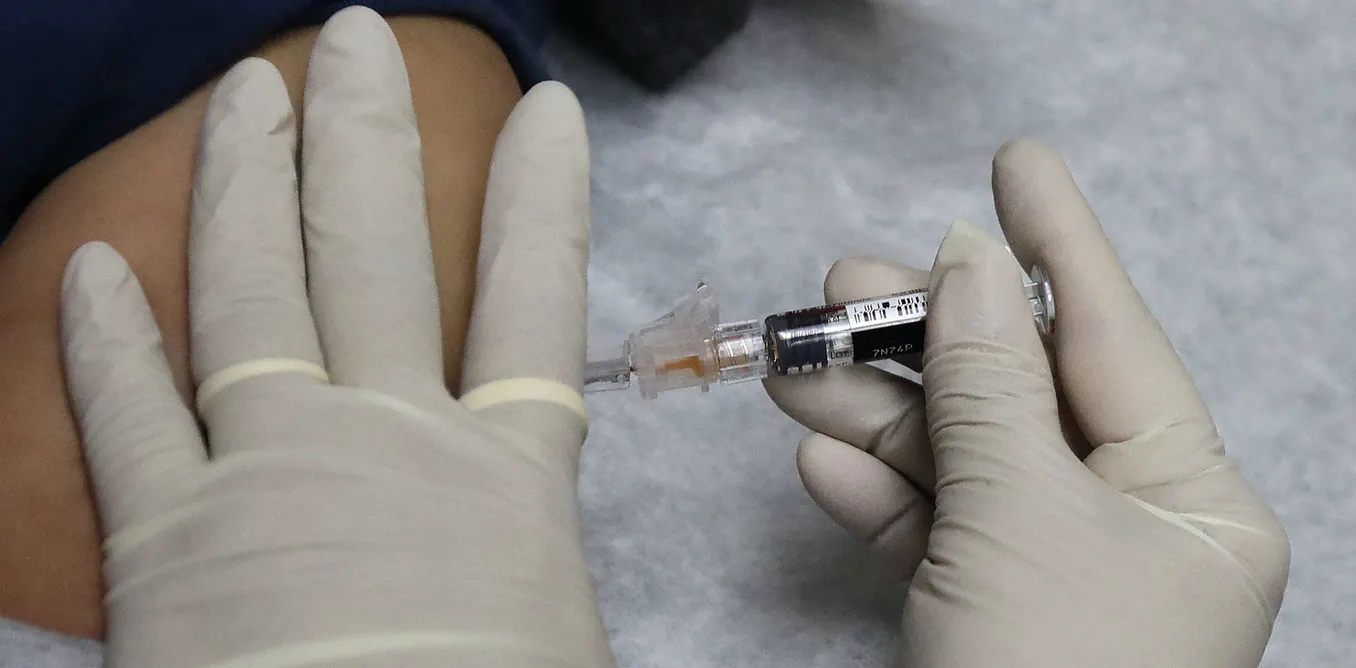
Now in 2025, the TGA has registered[5] Pfizer’s LP.8.1 vaccine, designed specifically to target the spike protein of LP.8.1. This vaccine should now be becoming available across Australia. It uses the same mRNA platform as earlier versions but updates the immune profile to better reflect the subvariants currently circulating.
We don’t yet have head-to-head vaccine effectiveness studies comparing the LP.8.1 vaccine directly with the previous JN.1 boosters.
Instead, decisions to approve an updated booster vaccine rely on immunogenicity data (how strongly the vaccine stimulates neutralising antibodies) and experience from earlier vaccines.
Early laboratory data[6] suggest the LP.8.1 update should generate stronger neutralising responses against LP.8.1-like viruses than a JN.1 vaccine, while still offering good cross-protection to other JN.1 descendants such as NB.1.8.1.
Who is eligible for the new booster?
Whether Australians are “recommended” or are asked to “consider” a free COVID booster, and how often, depends on their age and risk[7].
Healthy adults aged 18–64 are eligible for a booster every 12 months. The advice is to consider a dose, particularly if a new vaccine becomes available that better matches circulating strains.
For older Australians and those with a weakened immune system, the recommendation is stronger, reflecting their higher risk of severe disease.
Children are only recommended a booster every 12 months if they are aged 5–17 and immunocompromised.
You can also check your eligibility online[8]. And you can find the closest place to get vaccinated[9] by searching for a “COVID-19 vaccine clinic”. This includes nearby pharmacies, which often have walk-in availability, as well as GP clinics, where you’d generally have to book ahead.
How safe is the vaccine?
Because the vaccine is so new, we do not have long-term safety data on it. However, a statement[10] from the manufacturer Pfizer says the safety profile should be similar to their previous mRNA-based vaccines.
According to the vaccine surveillance system AusVaxSafety[11], 24% of people had a mild and short-lived reaction after being vaccinated with Pfizer’s earlier JN.1 vaccine. This included pain, redness and swelling at the injection site, fatigue, headache or muscle and joint pain. Fewer than 1% reported seeing a doctor or going to the emergency department after vaccination.
Why vaccination still matters
COVID has become less disruptive, but it has not disappeared. A single infection can still result in days or weeks of illness, missed work, and, for some people, long-term complications.
Vaccination remains one of the simplest ways to reduce the risk of severe outcomes, especially for people who have not had a booster in more than a year.
Elderly people are one of the highest risk groups for severe COVID, yet only 32%[12] of Australians over 75 are up to date with their booster shot.
Updating our vaccines to match the virus gives our immune system the best chance to recognise new subvariants quickly. That, ultimately, keeps more Australians out of hospital.
As we prepare for the festive season and summer holidays, it’s easy for a COVID booster to fall off our to-do list. But with many pharmacies accepting vaccination walk-ins, it’s never been easier to protect yourself and your family, and help keep community transmission low.
References
- ^ hasn’t gone away (www.health.gov.au)
- ^ National Notifiable Disease Surveillance System (nindss.health.gov.au)
- ^ mixture (github.com)
- ^ classifies (www.who.int)
- ^ registered (www.health.gov.au)
- ^ data (doi.org)
- ^ age and risk (www.health.gov.au)
- ^ check your eligibility online (www.health.gov.au)
- ^ closest place to get vaccinated (www.healthdirect.gov.au)
- ^ statement (www.pfizer.com)
- ^ AusVaxSafety (ausvaxsafety.org.au)
- ^ yet only 32% (www.health.gov.au)
Read more https://theconversation.com/is-there-much-covid-around-do-i-need-the-new-booster-shot-lp-8-1-271933