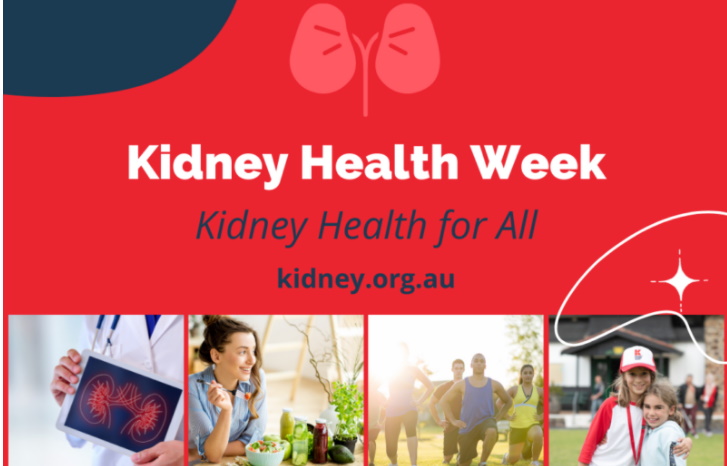
Kidney Health Week
Kidney disease affects 1.7 million people in Australia – but an eye-opening total of 1.5 million are not even aware they have it.
With 63 people in Australia on average dying every day with kidney disease, action must be taken now to reduce people having kidney failure by ensuring the disease is detected in time for the patient to receive adequate care and treatment.
People can lose 90 per cent of kidney function without experiencing any visible symptoms, so early detection is paramount. The best way to detect any kidney disease is to have a Kidney Health Check with a doctor. A Kidney Health Check is quick, and easy and is easily performed as part of a regular check-up.
In Kidney Health Week (March 7-13), the peak body for kidney health in Australia is calling on the public, especially now people who have had severe COVID-19 symptoms and/or are in a high-risk category, to visit their GP and have their kidneys checked.
One in three Australians has an increased risk of kidney disease. The leading risk factors for chronic kidney disease are diabetes and high blood pressure. Other factors that increase a person’s risk include smoking, obesity, family history, being over the age of 60, or aged over 30 and having a previous acute kidney injury or a history of heart problems.
CEO of Kidney Health Australia, Chris Forbes stated that after two years of the pandemic, regular kidney health checks could not be more important.
Mr Forbes said: “For those in a high-risk category it is absolutely essential to stay on top of your kidney health by getting regular checks with your GP. Lockdowns have resulted in people not visiting medical professionals as often as they normally would, so we are urging at-risk Australians to get tested this week during Kidney Health Week.”
Young people are also impacted by severe kidney disease, including Luke from Adelaide who was diagnosed with kidney disease very late at stage 5 at the age of just 23. After noticing he was fatigued and had a swollen foot, he was put on dialysis for six months before needing a kidney transplant. This may have been avoided with early detection.
Luke said, “When I was 18, I would never have guessed I had kidney disease. I lost so many good years because I didn't know what the signs or symptoms were. By the time I was diagnosed, I needed dialysis and a transplant. It would have only taken a simple blood test and everything could have been different.”
All Australians who are in a high-risk category (such as those with diabetes and high blood pressure) or people who have recently had severe COVID-19 symptoms should visit their local GP for a check.
Kidney Health Week is from March 7 – 13 with World Kidney Day falling on Thursday March 10. For more information visit Kidney Health Australia’s website at: www.kidney.org.au
About Kidney Health Australia
Kidney Health Australia is a not-for-profit organisation and the peak body for kidney health in Australia. As the recognised voice for kidney disease in Australia, we are increasing awareness and early detection for kidney health to support a healthier community, with the aim to ensure the 1.7 million Australians with signs of kidney disease are diagnosed and have delayed progression of their disease.
To find out more visit www.kidney.org.au.