The Times Australia
Google AI
Business and Money

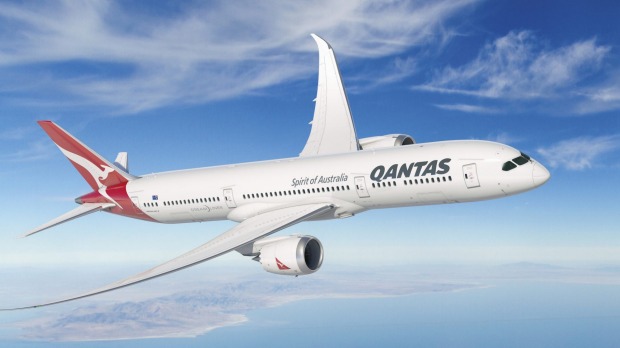
How Qantas might have done all Australians a favour by making refunds so hard to get

  • Written by Peter Martin, Visiting Fellow, Crawford School of Public Policy, Australian National University

I’m not sure whether I’ve got any unclaimed Qantas flight credits.

I haven’t looked, either because I’m too busy or can’t be bothered. Which is exactly what Qantas wants. And not only Qantas. Separating out those people who are desperate or determined to get their money from those who give up is a standard business practice.

It’s called price discrimination[1], although Qantas appears to have added a twist.

Washing machine[2], fridge[3] and computer[4] manufacturers all do it. They sell their products for a standard price, and then offer a $200 or $400 “cash back” to buyers who fill in and send off a form when they get home.

The manufacturers know time-poor, lazy or well-off customers won’t bother, so they won’t need to send them cash. But the customers who do bother will really need the cash, and probably wouldn’t buy the products without it.

That way they can sell to people who otherwise wouldn’t have bought, while at the same time charging a high price to people prepared to pay it. They’ve arranged things so the two groups sort themselves out.

A tax on the time-poor

Qantas (and Virgin) could have easily refunded money to people who bought flights during the first years of COVID and had to cancel because of lockdowns. In most cases, Qantas had their credit card numbers. It still has them. It could refund the best part of A$500 million[5] right now.

Instead, it makes it really difficult to get money back. It requires phone calls, waiting on the line and fishing out old emails and customer codes.

For a while, until it backed down[6] days ahead of its chief executive bringing forward his retirement[7], Qantas said those credits would expire unless they were reclaimed, knowing full well many would not be.

But it’s not only Qantas imposing a tax on the time-poor.

A tax on those who won’t pick up the phone

News Corporation will allow you to subscribe to its papers with a click and a card. But when you hit “unsubscribe[8]”, you get given a phone number.

When (and if) you get around to ringing it, you are subjected to an ordeal in which the operator gives you reason after reason not to unsubscribe, instead of acting on your request. You can insist, of course, but it takes time and effort.

The (NewsCorp-owned) Wall Street Journal also makes it impossible to unsubscribe without a phone call… unless you live in California[9]. There, and only there – not in Australia, not in the rest of the United States – you are allowed to unsubscribe online because of a law forcing[10] providers to offer the option.

Australia’s banks are experts at separating lazy customers from diligent shoppers, as are electricity companies.

They routinely offer customers who switch (or say they are about to switch) better[11] rates than customers who stay, turning a time-poor tax into a loyalty tax[12].

Read more: When the price is not right: technology price gouging in Australia[13]

A tax on loyal customers

You might think a tax on those who don’t chase the best deals is effectively a tax on the better-off, as they are the least likely to need savings.

Yet an array of evidence across a wide range of industries assembled by David Byrne and Leslie Martin finds loyalty taxes hit the poorest[14] the hardest.

Byrne and Martin set up a call centre inside Melbourne University. Pexels[15]

In an intriguing and expensive experiment in 2017, Byrne and Martin attempted to find out why this was.

They staffed a call centre[16] at The University of Melbourne, in which actors phoned electricity companies, provided or let slip a few details, and said they were thinking of switching.

Among those details was eligibility for Victoria’s low-income energy subsidy.

Byrne and Martin found no discrimination against low-income callers because they said they had low incomes. But they did find that where the callers sounded as if they lacked information, they got offered lower discounts.

A premium price dispute

Disturbing evidence tendered in the Federal Court suggests some Australian insurance companies may be systematising discrimination against Australians who lack access to information.

The Australian Securities and Investments Commission has alleged some insurers set premiums not only on the basis of risk, but also on the basis of what a computer model tells them about the likelihood of each customer tolerating a price hike.

ASIC says the alleged practice is known internally as “renewal optimisation[17]”.

Those claims are disputed[18], with insurer IAG telling The Australian Financial Review: “We don’t agree with how ASIC has characterised the process by which we calculate renewal premiums, and the impact on our customers.”

Enough for a government inquiry

Where immorality starts and standard business practice stops will be a question for a newly-established taskforce on competition. It will be headed by the Grattan Institute’s Danielle Wood[19] (who will also head the Productivity Commission) and the former head of the Competition and Consumer Commission, Rod Sims[20].

One thing they might be able to agree on immediately is that something else Qantas has been accused of doing with flight credits is beyond the pale.

Evidence supplied to the ABC[21] in 2022 suggests that not only has Qantas been hanging on to customers’ money by directing them to use credits for flights rather than refunds, it has been jacking up the price of flights when they do – by 50% to 300%, imposing what amounts to an extra (enforced) loyalty tax.

If Qantas and others have taken standard business practices just that little bit further in recent years, there’s a small chance they’ve done us a favour. They’ve given the taskforce something to sink its teeth into.

Read more: Booking customers on cancelled flights – how could Qantas do that?[22]

References

  1. ^ price discrimination (www.investopedia.com)
  2. ^ Washing machine (www.haier.com.au)
  3. ^ fridge (www.lg.com)
  4. ^ computer (www.umart.com.au)
  5. ^ A$500 million (www.afr.com)
  6. ^ backed down (www.dailymail.co.uk)
  7. ^ forward his retirement (theconversation.com)
  8. ^ unsubscribe (www.newsagencyblog.com.au)
  9. ^ California (clocr.com)
  10. ^ forcing (www.cnet.com)
  11. ^ better (theconversation.com)
  12. ^ loyalty tax (www.etax.com.au)
  13. ^ When the price is not right: technology price gouging in Australia (theconversation.com)
  14. ^ the poorest (papers.ssrn.com)
  15. ^ Pexels (www.pexels.com)
  16. ^ call centre (academic.oup.com)
  17. ^ renewal optimisation (www.afr.com)
  18. ^ disputed (www.afr.com)
  19. ^ Danielle Wood (ministers.treasury.gov.au)
  20. ^ Rod Sims (ministers.treasury.gov.au)
  21. ^ Evidence supplied to the ABC (www.abc.net.au)
  22. ^ Booking customers on cancelled flights – how could Qantas do that? (theconversation.com)

Authors: Peter Martin, Visiting Fellow, Crawford School of Public Policy, Australian National University

Read more https://theconversation.com/how-qantas-might-have-done-all-australians-a-favour-by-making-refunds-so-hard-to-get-213346

Business Times

When It Comes To Business In Australia – Here’s How To Look Your …

When it comes to doing business here in Australia, you always need to look your best, and nobody remembers the person who did...

SMEs face growing payroll challenges one year in on wage theft re…

A year after wage theft reforms came into effect, Australian SMEs are confronting a new reality. Paying employees correctly...

Zebra Technologies Further Strengthens APAC Leadership to Drive…

Key executive promotions to enhance partner collaboration and support digital transformation initiatives for customers S...

The Times Features

The past year saw three quarters of struggling households in NSW & ACT experience food insecurity for the first time – yet the wealth of…

Everyday Australians are struggling to make ends meet, with the cost-of-living crisis the major ca...

The Week That Was in Federal Parliament Politics: Will We Have an Effective Opposition Soon?

Federal Parliament returned this week to a familiar rhythm: government ministers defending the p...

Why Pictures Help To Add Colour & Life To The Inside Of Your Australian Property

Many Australian homeowners complain that their home is still missing something, even though they hav...

What the RBA wants Australians to do next to fight inflation – or risk more rate hikes

When the Reserve Bank of Australia (RBA) board voted unanimously[1] to lift the cash rate to 3.8...

Do You Need a Building & Pest Inspection for New Homes in Melbourne?

Many buyers assume that a brand-new home does not need an inspection. After all, everything is new...

A Step-by-Step Guide to Planning Your Office Move in Perth

Planning an office relocation can be a complex task, especially when business operations need to con...

What’s behind the surge in the price of gold and silver?

Gold and silver don’t usually move like meme stocks. They grind. They trend. They react to inflati...

State of Play: Nationals vs Liberals

The State of Play with the National Party and How Things Stand with the Liberal Party Australia’s...

SMEs face growing payroll challenges one year in on wage theft reforms

A year after wage theft reforms came into effect, Australian SMEs are confronting a new reality. P...