Albanese records worst Newspoll ratings this term; Victorian Labor’s primary plunges
- Written by: Adrian Beaumont, Election Analyst (Psephologist) at The Conversation; and Honorary Associate, School of Mathematics and Statistics, The University of Melbourne
A national Newspoll[1], conducted January 20–24 from a sample of 1,259, gave the Coalition a 51–49 lead, a one-point gain for the Coalition since the previous Newspoll in early December. Primary votes were 39% Coalition (steady), 31% Labor (down two), 12% Greens (up one), 7% One Nation (steady) and 11% for all Others (up one).
In three of the last four Newspolls, the Coalition has had a 51–49 lead. This is the consensus of the polls at the moment, as can be seen from the graph below. The federal election is not due until May, and this position is recoverable for Labor, but they would probably lose now. I had more comments on this last Thursday[2].

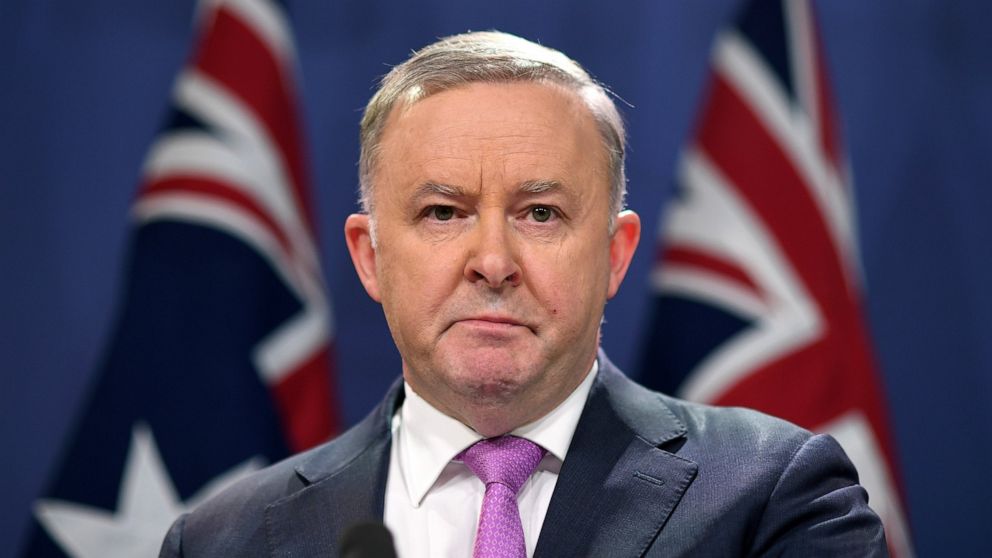
The worst news from Newspoll for Labor was Anthony Albanese’s ratings, which slumped six points since December to a term-low net approval of -20, with 57% dissatisfied and 37% satisfied.
Peter Dutton’s net approval increased one point to -11. Albanese led Dutton by 44–41 as better PM (45–38 in December). This three-point margin for Albanese is a term low.
The graph below shows Albanese’s Newspoll ratings this term. The individual polls are marked with plus signs and a smoothed line has been fitted.

There have been five polls in January of leaders’ ratings from Freshwater, YouGov, Resolve, Essential and Newspoll. On average, Albanese is at -15 net approval and Dutton at -3.2. If not for a net zero approval from Essential, Albanese’s ratings would be worse.
Additional Resolve questions
I previously covered the mid-January Resolve poll for Nine newspapers that gave Dutton a 39–34 preferred PM lead over Albanese. In additional questions, by 61–24, voters supported keeping Australia’s national day[3] on January 26 over changing to another date (47–39 in January 2023).
The thumping defeat of the October 2023 Voice referendum has damaged the push to change the date. By 52–24, voters supported legislating so that January 26 is enshrined in law as Australia’s national day.
By 54–9, respondents thought there had been more antisemitism[4] over more Islamophobia in recent months (32–14 in October). By 51–24, they thought the conflict in the Middle East had made Australia a less safe place (45–26 in October).
Victorian Resolve poll: Labor’s primary plunges to 22%
A Victorian state Resolve poll[5] for The Age, conducted with the federal December and January Resolve polls from a sample of over 1,000, gave the Coalition 42% of the primary vote (up four since November), Labor 22% (down six), the Greens 13% (steady), independents 17% (up three) and others 6% (down one).
Resolve doesn’t usually give a two-party estimate, but The Age’s article said that on 2022 election preference flows, the Coalition would have a 55.5–44.5 lead. Independents would be unlikely to get 17% at an election, but they are on the readout everywhere in Resolve polls until after nominations close.
In late December, Brad Battin was elected Liberal leader in a party room vote, replacing John Pesutto. From just the January sample, Battin led Labor incumbent Jacinta Allan as preferred premier by 36–27 (30–29 to Pesutto in November).
Victorian Labor’s unpopularity is hurting federal Labor in Victoria. The Poll Bludger’s BludgerTrack[6] has a 5.3% swing against Labor in Victoria, with swings in the other mainland states at 2% or less.
By the November 2026 election, Labor will have governed in Victoria for 12 successive years and for 23 of the 27 years since 1999. An “it’s time” factor is probably contributing to Labor’s woes.
State byelections will occur[7] on February 8 in Labor-held Werribee and Greens-held Prahran. At the 2022 election, Labor won Werribee by a 60.9–39.1 margin against the Liberals, while the Greens won Prahran by 62.0–38.0 against the Liberals.
In Prahran, which Labor is not contesting, Tony Lupton, who was the Labor MP from 2002 to 2010, is running as an independent. The Liberals and Lupton will swap preferences on their how to vote material. Voters can choose their own preferences instead of following their candidate’s recommendations, but many will follow those recommendations.
Germany and Canada
I covered German and Canadian electoral developments for The Poll Bludger on Saturday[8]. The German federal election is in about four weeks, on February 23. Polls are bleak for the left, with big gains likely for the far-right AfD.
Justin Trudeau announced he would resign as Canadian Liberal leader and PM on January 6 once a new Liberal leader had been elected, which will occur on March 9. The Conservatives had a big lead in last Monday’s update to the CBC Poll Tracker, but there’s a new poll that gives the Conservatives just a 3.8-point lead. Trudeau promised to reform Canada’s electoral system before he won the October 2015 election, but did nothing.
References
- ^ national Newspoll (www.theaustralian.com.au)
- ^ last Thursday (theconversation.com)
- ^ keeping Australia’s national day (www.theage.com.au)
- ^ more antisemitism (www.theage.com.au)
- ^ Victorian state Resolve poll (www.theage.com.au)
- ^ Poll Bludger’s BludgerTrack (www.pollbludger.net)
- ^ byelections will occur (www.abc.net.au)
- ^ The Poll Bludger on Saturday (www.pollbludger.net)