We know how hard it is for young people to buy a home – so how are some still doing it anyway?
- Written by: Rachel Ong ViforJ, John Curtin Distinguished Professor & ARC Future Fellow, Curtin University
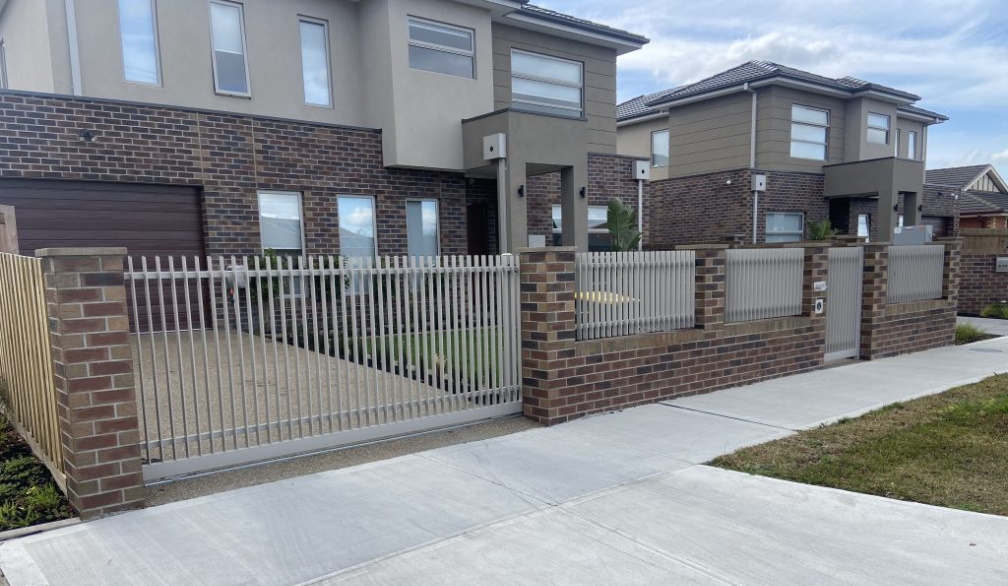
For young Australians, breaking into the housing market feels tougher than ever. Many now fear they’ll never be able to own a home[1].
Despite public debates on whether it’s truly harder to buy a house than it was decades ago, falling homeownership rates across generations[2] suggest the market has indeed shifted significantly against those just starting out.
But if it’s so difficult, how are some young people still managing to buy homes? Our newly published study[3] set out to investigate the major barriers – and the factors – that might tip the scales in favour of ownership.
Despite the challenges imposed by high home prices relative to incomes, some young Australians are still finding a way onto the property ladder.
While being a good saver helps, a boost from the “bank of mum and dad” can be a game changer.
A fading dream
Using 14 years of data from the 2006-2020 government-funded Household, Income and Labour Dynamics in Australia (HILDA) survey, we tracked independent adults aged 25-44 who were not homeowners.
Our calculations from the HILDA survey show for those aged 25-44 , average house prices across major cities in 2006 were 4.5 times the average household income.
In Sydney, for example, the average price of properties faced by these young people was about A$600,000 in 2006 while the average household income was $102,000.
Across major cities, this ratio rose steadily to 6 times income in 2018, before dropping slightly to 5.4 times income at the start of the pandemic.
For young people in cities, house prices are spiralling upward at faster rates than their incomes.
A generous ‘bank’ available to some
As property markets have become more unaffordable, the share of non-homeowning young people receiving help from the “bank of mum and dad[5]” has climbed.
We estimated from the HILDA survey that in 2006, 3.1% of this group received more than $5,000 in transfers or inheritance from their parents, rising to 5.3% by 2020.
Young people are good savers
Contrary to popular some commentary[6] that young people are unable to purchase a house because they are spending their money on “smashed avocados”, young people are actually saving more.
In 2006, around two-thirds of non-homeowning adults aged 25-44 saved regularly by putting money aside each month, saved non-regular income, or saved money left over after they met their spending needs. This proportion increased to four in five of young non-homeowning adults in 2020.
In general, young non-homeowners are also financially planning further ahead. In 2006, 47% were planning more than a year ahead. By 2020, this share had risen to 55%.
How are some young people buying houses?
We looked at how the personal saving habits of young people influence their homeownership chances, taking each person’s finances and living situation into account.
Not surprisingly, saving regularly does improve the likelihood of eventually buying a house. However, being a regular saver is much less likely to offset the impact of rising prices than parental help.
Our research found that once prices exceed three times an individual’s income, their odds of becoming a homeowner are halved.
In much of Australia, prices are already well above that mark. In all state capitals, they’ve gone beyond six times annual household income[8] – a line where the odds of homeownership fall to about a third.
However, we found having access to the “bank of mum and dad[9]” can shift these odds dramatically.
We found receiving financial assistance of more than $5,000 quadruples the odds of becoming a homeowner.
Parents also help in indirect ways. Young people living in rent-free dwellings provided by family or friends had more than double the odds of private renters.
This puts those from well-off families at a distinct advantage. Those without parental assistance face steeper deposit hurdles and risk missing out on access to areas with better job prospects.
How governments can help
For those without parental assistance, governments have an important role to play. Property prices will continue to soar faster than incomes grow, unless policies are implemented to address both supply and demand challenges.
Loosening restrictions[10] on mortgage borrowing could help some first homebuyers overcome the hurdle to homeownership. But there’s a worrying trade-off between making it easier to borrow and exposing young people to more financial risk.
Government grants that place more cash into the hands of first-time homebuyers will likely push house prices up further, unless supply[11] of entry-level properties can keep up.
Such grants should also be carefully targeted to those without access to personal or family resources to help buy a home.
Finally, tax reforms[12] could be used to increase the supply of dwellings in first homeowner entry markets, and hold back demand from multi-property owners who can crowd out first-time home buyers.
Read more: Our housing system is broken and the poorest Australians are being hardest hit[13]
References
- ^ never be able to own a home (theconversation.com)
- ^ falling homeownership rates across generations (www.aihw.gov.au)
- ^ study (doi.org)
- ^ Mick Tsikas/AAP (photos.aap.com.au)
- ^ bank of mum and dad (theconversation.com)
- ^ some commentary (www.theaustralian.com.au)
- ^ Tatiana Volgutova/Shutterstock (www.shutterstock.com)
- ^ beyond six times annual household income (www.anz.com.au)
- ^ bank of mum and dad (theconversation.com)
- ^ Loosening restrictions (www.ahuri.edu.au)
- ^ supply (www.ahuri.edu.au)
- ^ tax reforms (www.thenewdaily.com.au)
- ^ Our housing system is broken and the poorest Australians are being hardest hit (theconversation.com)