What aged-care staff say about their grief when residents die
- Written by: Jennifer Tieman, Matthew Flinders Professor and Director of the Research Centre for Palliative Care, Death and Dying, Flinders University
As our population ages, we’re living longer and dying older. End-of-life care is therefore an increasingly important part of aged care. In Australia, around 50% of people[1] aged over 85 die in an aged care home.
But what does this mean for those who work in aged care? Research suggests aged-care staff experience a unique type of grief when residents die[2]. However, their grief often goes unrecognised, and they may be left with insufficient support.
Forming relationships over time
Aged-care staff don’t just do tasks such as helping with showering or delivering meals, but engage actively and connect with residents.
In our own research[3] we’ve spoken with aged-care staff who care for older people both in aged-care facilities and in their own homes.
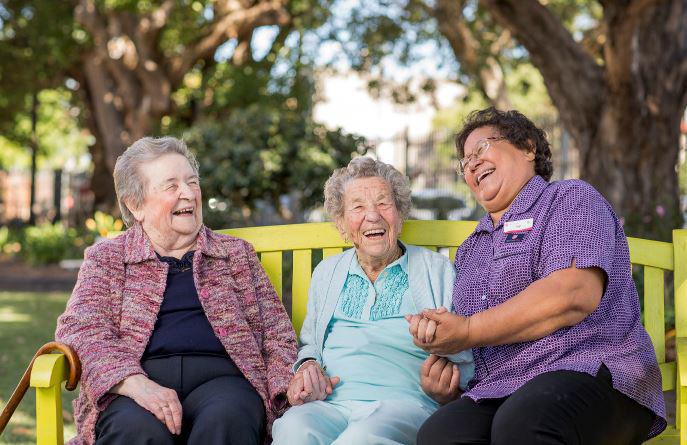
Aged-care staff are aware many of those they look after will die, and that they have a role in supporting older people as they come to the end of their life. In their caring role, they will often form meaningful and rewarding relationships with the older people in their care.
As a result, when the older person dies, this can be a source of profound loss for aged-care workers. As one told us[4]:
I know I cry over some of them that die […] You spend time with them and you love them.
Some aged-care workers we interviewed talked about being present with the older person, talking to them or holding their hands as they died. Others spoke of how they shed tears for the person who had died, but that the tears were also for their loss[5], because they have known the older person and been involved in their life.
I think what made it worse was when her breathing got very shallow, and I knew she was coming to the end. I did go out. I told her I was going out for a minute. I went out and I had a cry because I wish that I could have saved her, but I knew that I couldn’t.
Sometimes aged-care staff indicated there wasn’t an opportunity for them to say goodbye or be acknowledged as someone who had suffered a loss, even if they had been providing care to the person for a number of months or years. One aged-care worker noted[6]:
If people die in hospital, that’s another grief. Because they don’t get to say goodbye. Often the hospital won’t tell you.
Aged-care staff often must also support families[7] and loved ones as they come to terms with the death of a parent, relative or friend. This can add to the to the emotional toll for staff who may be experiencing their own feelings of grief.
Cumulative grief
Repeated experiences of death can lead to cumulative grief[8] and emotional strain. While staff saw meaning and value in their work, they also found regular exposure to death challenging.
One staff member told us[9] that with time and seeing multiple deaths, you can “feel a little robotic. Because you’ve had to become that way to manage”.
Organisational issues such as staff shortages or high workloads can also exacerbate these feelings of burnout and dissatisfaction. Staff highlighted the need for support[10] in coping.
Sometimes all you want to do is talk. You don’t need someone to solve anything for you. You just want to be heard.
Supporting aged-care staff to manage their grief
Aged-care organisations must take steps[11] to support the wellbeing[12] of their workforce, including acknowledging the grief many feel when older people die.
Following the death of an older person, offering support to staff who have worked closely with that person and acknowledging the emotional bonds that existed are powerful ways of recognising and validating staff grief. Simply asking the staff member how they are going or giving them the chance to take some time to process that the person has died is a good place to start.
Workplaces should also encourage self-care more broadly, promoting activities such as taking scheduled breaks, connecting with colleagues, and prioritising time for relaxation and physical activities. Staff value workplaces that encourage, normalise, and support their self-care practices[13].
We also need to look at how we can normalise the ability to talk about death and dying[14] within our families and communities. A reluctance to recognise death as part of life can add to the emotional load staff carry, especially if families see dying as a failure of care.
Conversely, aged-care staff have consistently told us how meaningful it is to receive positive feedback and acknowledgement from families. As one worker recalled[15]:
We had a death over the weekend. A really long-term resident here. And the daughter drove in especially this morning to tell me what fantastic care she had. That makes me feel better, that what we’re doing is right.
As members of families and communities, we need to recognise aged-care workers are uniquely vulnerable to feelings of grief and loss, often having built relationships with those in their care over months or years. Supporting the wellbeing of this important workforce supports them to continue to care for us and our loved ones as we age and come to the end of our lives.
References
- ^ 50% of people (www.aihw.gov.au)
- ^ when residents die (doi.org)
- ^ our own research (doi.org)
- ^ one told us (www.eldac.com.au)
- ^ for their loss (www.eldac.com.au)
- ^ aged-care worker noted (www.mdpi.com)
- ^ support families (www.flinders.edu.au)
- ^ cumulative grief (doi.org)
- ^ staff member told us (www.eldac.com.au)
- ^ need for support (doi.org)
- ^ take steps (www.palliaged.com.au)
- ^ support the wellbeing (www.palliaged.com.au)
- ^ self-care practices (www.palliaged.com.au)
- ^ talk about death and dying (doi.org)
- ^ one worker recalled (doi.org)