The Sydney Harbour Bridge faces tolls once again — despite tolls being abolished years ago. Why?
- Written by: The Times
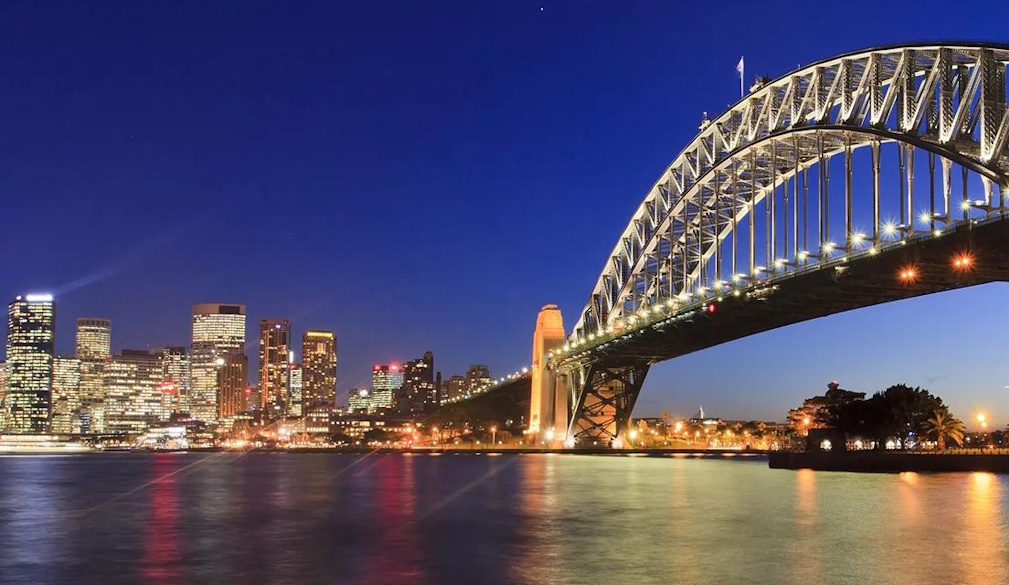
For many Sydney motorists, the Harbour Bridge toll was meant to be history.
The toll booths came down. The political promises were made. The public message was clear: the Sydney Harbour Bridge, a piece of national infrastructure opened in 1932 and paid off decades ago, would no longer be tolled in the way it once was.
And yet, in 2025, drivers are again being asked to pay to cross Sydney’s most famous span.
So what happened? Why are tolls back—at least in practice—on a bridge that was supposedly “freed” from them years ago?
The answer lies in a mix of history, accounting, transport policy, and a quiet redefinition of what a “toll” actually is.
A brief history: from construction debt to political symbol
The Sydney Harbour Bridge was originally tolled for a very simple reason: to pay for its construction.
When the bridge opened in 1932, tolls were set to help service the massive debt incurred during its build—at a time when Australia was deep in the Great Depression. Over the decades, those tolls did their job. The construction debt was fully repaid by the early 1980s.
In theory, that should have been the end of tolling.
But in practice, the toll never quite went away. It evolved.
By the 1980s and 1990s, the toll was increasingly justified not as a debt-repayment measure, but as a contribution to maintenance, traffic management, and broader transport funding. Governments of both persuasions discovered that once a toll is politically normalised, removing it entirely is harder than it sounds.
The “abolition” that wasn’t really an abolition
When politicians spoke about tolls being “abolished,” what many voters heard was simple: no more paying to cross the bridge.
What actually happened was more subtle.
The traditional toll booths were removed, and payment systems were modernised. Cash tolls disappeared. Electronic tolling arrived. The physical act of stopping to pay vanished—but the charge itself did not fully disappear.
Over time, the toll became bundled into broader road pricing and transport funding arrangements. Instead of being presented as a standalone “Harbour Bridge toll,” it became part of a network-based charging system—particularly as Sydney’s toll-road footprint expanded dramatically.
In short, the toll stopped being visible, but it didn’t stop existing.
The return of tolls: what’s really being charged now?
When people say the Harbour Bridge “faces tolls again,” they are usually referring to new or continued charges applied through electronic tolling systems, especially when linked to:
-
Network-wide toll caps and concessions
-
Cross-subsidisation of other roads and tunnels
-
Congestion management policies
-
Revenue pooling across Sydney’s motorway system
The key shift is this: the toll is no longer framed as paying for the bridge itself. It’s framed as paying for using scarce road space in a congested city.
That reframing matters politically, because it allows governments to argue that tolls are not a broken promise—but a different kind of charge altogether.
Congestion pricing by another name
One of the most important factors behind the re-emergence of toll-like charges is congestion.
Sydney has grown rapidly. The number of vehicles using harbour crossings continues to rise, even as governments try to encourage public transport use. The bridge and tunnels are operating near capacity for much of the day.
Economists and transport planners have long argued that pricing road use is one of the most effective ways to manage congestion. Rather than banning cars or endlessly expanding roads, you make drivers pay more during peak times, encouraging shifts in travel behaviour.
While Australia has been cautious about explicitly introducing congestion pricing, tolls perform a similar function—especially when applied consistently across a network.
In that sense, the Harbour Bridge has become less a standalone road and more a priced gateway into the Sydney CBD.
Revenue reality: governments need the money
There is also a less theoretical explanation: money.
Large transport systems are expensive to run. Sydney’s motorways, tunnels, and major arterial roads require constant maintenance, upgrades, safety improvements, and technology investment.
At the same time:
-
Fuel excise is under long-term pressure from more efficient vehicles and electrification
-
Registration fees are politically sensitive
-
General taxation is already stretched
Tolls provide a user-pays revenue stream that governments can point to as “fairer” than across-the-board taxes.
Once toll revenue becomes embedded in forward budgets—especially when it helps fund major projects—it is extremely difficult to unwind without creating a funding hole somewhere else.
The quiet shift from asset-based tolls to network tolls
Historically, tolls were tied to specific assets: this bridge, that tunnel.
Today, Sydney increasingly operates on a network tolling model. Revenue from one road helps fund another. Discounts, caps, and rebates are applied across multiple routes. Private operators are integrated into a wider system overseen by the state.
Under this model, the question is no longer “Has the bridge been paid off?” but “How should the transport network be priced overall?”
That shift explains why many motorists feel misled. They were told one story—about paying off a bridge—and later found themselves living in a different one—about paying to manage a city.
Political optics: why governments avoid saying “the toll is back”
No government wants to campaign on “bringing back tolls.”
Instead, charges are framed as:
-
Adjustments
-
Integration
-
Modernisation
-
Harmonisation
-
Fairness measures
The language matters because the Harbour Bridge is not just infrastructure—it’s an emotional symbol. It represents public ownership, engineering triumph, and shared civic space.
Explicitly reintroducing a “Harbour Bridge toll” sounds like reneging on a promise. Quietly embedding the charge in a broader system sounds like responsible governance.
From a political perspective, the latter is far safer.
Is this fair to motorists?
That depends on who you ask.
Supporters argue that:
-
Drivers who use the busiest infrastructure should contribute to its upkeep
-
Pricing reduces congestion for everyone
-
Revenue funds alternatives like public transport
Critics counter that:
-
Motorists already pay through registration, fuel excise, and taxes
-
The bridge is a public asset that should be freely accessible
-
Tolls disproportionately hit workers with fewer transport alternatives
What is clear is that toll fatigue is growing. Sydney drivers now navigate one of the most tolled urban road networks in the world, and patience is wearing thin.
The bigger picture: this is about the future of road pricing
The Harbour Bridge toll debate is really a preview of a much larger conversation Australia has not yet fully confronted.
As fuel excise declines and cities become more congested, governments will increasingly look to road-user charging—by distance, time of day, or location.
Seen through that lens, the Harbour Bridge is not an exception. It’s a test case.
If tolls can quietly return there—on a bridge that was “paid off” decades ago—then no piece of road infrastructure is immune from future pricing.
So why are tolls back?
Because:
-
The meaning of tolls has changed
-
Governments need sustainable transport revenue
-
Congestion has become a dominant policy concern
-
Network-wide pricing has replaced asset-specific funding
-
Political language has softened what is, in effect, a reintroduction
The Sydney Harbour Bridge is no longer just a bridge. It is a choke point, a policy lever, and a symbol of how Australia is grappling—sometimes awkwardly—with the cost of moving millions of people in a modern city.
The toll booths may be gone. But the bill, it seems, never really left.