Nationals dump net zero – say Australia shouldn’t cut emissions faster than comparable countries
- Written by: Michelle Grattan, Professorial Fellow, University of Canberra
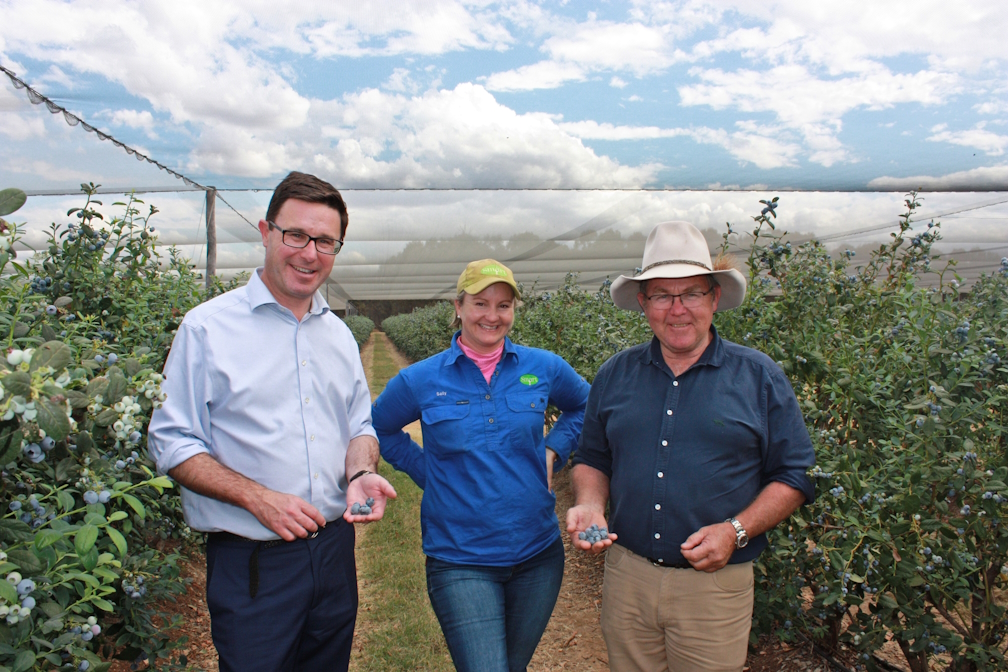
Once again, the Nationals have got out in front of the Liberals on a key issue, this time net zero, announcing on Sunday they were dumping their commitment to it.
This is not unexpected, but more than awkward for their Coalition partner. It makes it trickier for the Liberals to retain the target – which is politically important in city seats – albeit in some watered-down form. It raises the question: if the Liberals stick with net zero what does that mean for the Coalition relationship?
And it puts the Liberals under greater pressure to get a policy out quickly. The party will now speed up its release – it was already planning to do this before Christmas.
The early positioning follows the pattern of the Voice referendum, where the Nationals announced their opposition ahead of the Liberals. In climate and energy debates over the years, the Nationals have been earlier out and more stridently conservative than the Liberals.
The Nationals party room, after several hours of discussion on Sunday, agreed unanimously to a revised policy that says Australia should cut its emissions in line with the developed world, rather than moving faster in order to achieve net zero by 2050.
On Saturday, the party’s federal council called on the parliamentary party to drop the net zero commitment. The Nationals signed up to it in 2021 when Scott Morrison was prime minister and Barnaby Joyce was deputy prime minister and Nationals leader.
The council’s resolutions are not binding on the parliamentary party, but the timing of the council and the parliamentary party meeting was coordinated, given it was clear where the party was moving.
Nationals leader David Littleproud told a Sunday news conference, “We are not walking away from reducing emissions. We can peg ourselves to the rest of the world. If the world moves we move with them”.
He described this as an “agile” model, and was anxious to distance it from denying climate change.
Litteproud said Australia had cut emissions more than like countries. “OECD countries have been cutting their emissions by 1% per year. Australia has been cutting its emissions by about 2% per year – double the OECD rate.”
The Nationals policy would tie the reduction to the average of OECD countries (this would exclude China and India which are not full OECD members). Under this formula the Albanese government’s 2035 target of a 62% to 70% cut on 2005 levels would come down to a 30% to 40% cut.
“Our emissions cuts will be capped and calibrated, which is common sense,” Littleproud said.
“The responsibility will be shared and transparent,” he said.
He pointed to the “proven model” of the Emissions Reduction Fund, saying that in 2014–2023 it “facilitated real emission reductions that didn’t ruin the economy.
"We will incentivise lower emissions through a renewed Emissions Reduction Fund. This will be a small fraction of the $9 billion now being spent each year on net-zero subsidies, regulations, and administrative costs.
"Our approach will increase investment in cheaper electricity by broadening the Capacity Investment Scheme [which presently excludes coal and gas] to include all energy technologies and remove the moratorium on nuclear energy,” Littleproud said.
Senator Matt Canavan, one of those leading the work on the new policy, said that under the Albanese government’s plans Australia would be cutting its emissions at a rate three times more than the rest of the world.
Littleproud said he had informed Opposition Leader Sussan Ley of the Nationals’ position. After the Liberal Party reached its position the two parties would talk. He would not speculate on what the Liberals would do.
Liberals gave their views on net zero on Friday at a meeting organised by a Coalition backbench committee.
Within the Liberal Party there is a spectrum of views, with hardline conservatives wanting to ditch the net zero commitment, some moderates strongly believing in keeping the 2050 target firmly in place, and yet others seeking a compromise such as retaining the target as an aspiration.
Environment Minister Murray Watt said once again in the Coalition “we’re seeing the tail wagging the dog”.
“We’ve got the National Party, which didn’t even rate 4% of the vote in the last federal election, dictating terms to the Liberal Party who claim to be the majority party in a coalition,” Watt told the ABC[1].
He said it was a repeat of the nuclear issue “where the National Party went out first to drag the Liberal Party into supporting nuclear, only to be resoundingly rejected by the Australian people at the last election”.
The Greens’ Sarah Hanson-Young denounced the Nationals’ policy move – and sought to invoke it in relation to another issue, the government’s attempt to get a deal with the opposition or the Greens for its changes to the Environment Protection and Biodiversity Conservation Act.
“The question I have for the Labor party now is how on earth can you work with such a ridiculous, out-of-touch party like the Coalition in order to pass your environment laws over the next few weeks, or indeed into next year?” Hanson-Young said.
Crossbencher Zali Steggall said the Nationals’ decision showed they were “captured by fossil fuel interests”.
Another independent, Allegra Spender, said the Liberals “are left with a choice – either be honest that the Nationals are once again setting the Coalition’s climate policy, whatever words the Libs come up with to dress up their own policy, or split with the Nationals altogether”.
References
- ^ Watt told the ABC (www.theguardian.com)