The Times Australia
Fisher and Paykel Appliances
The Times Australia
.

Making Urgent Care Even More Accessible For Victorians
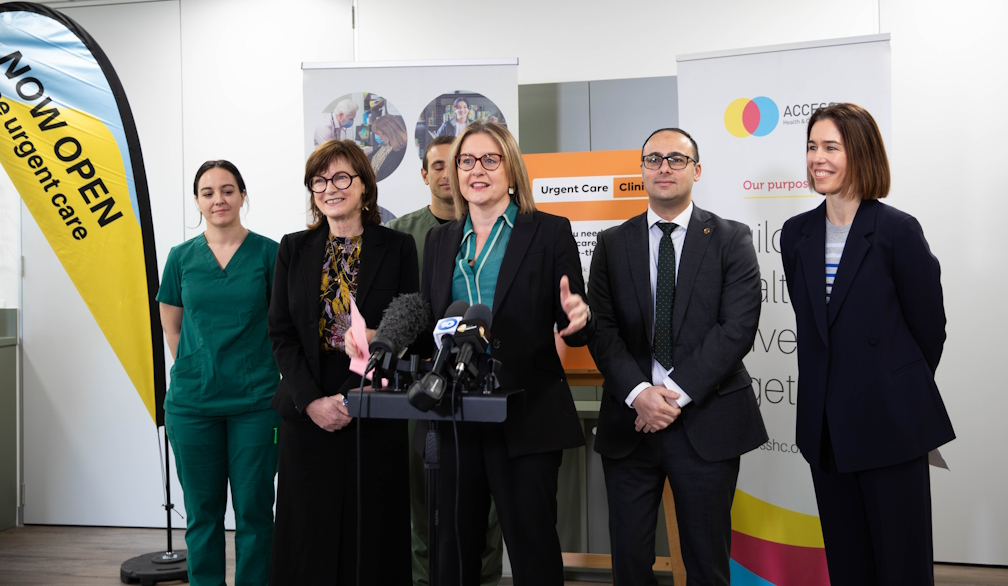

The Allan Labor Government’s Priority Primary Care Clinics – which are currently averaging 7,000 patient visits each week through both walk ins and appointments – are this month marking half a million visits from Victorians in need.

Premier Jacinta Allan and Minister for Health Mary-Anne Thomas today visited Access Health and Community in Richmond to announce the clinics will now be known as Urgent Care Clinics, to make it simpler for Victorians to know how and where to get the right kind of care.

The 29 clinics were set up by the Labor Government to reduce pressure on busy emergency departments, with patient survey data revealing around 50 per cent would have gone to emergency if the clinics did not exist. 

General practitioners are the backbone of primary care, which is why highly experienced GPs lead the clinics, backed by nurses. 

The clinics are free for anyone with or without a Medicare card. People can seek care for a range of reasons including sprains, broken bones, mild burns, respiratory illness, tonsilitis, ear infections and urinary tract infections.

Hospitals, paramedics, Nurse on Call, and the Victorian Virtual Emergency Department (VVED) are also using the clinics as a safe and effective referral option, with around 36 per cent of patients coming via these services. The clinics also receive referrals from GP clinics and pharmacies. 

The clinics are popular with regional Victorians, with more than 142,000 patients seen at the nine clinics in country Victoria.

Due to the inaction of the former Federal Coalition Government, too many Victorians are unable to secure an appointment or afford to see a GP.

As these clinics become further embedded in our health system, it is also important to ensure they are aligned with national Medicare Urgent Care Clinics. The Commonwealth has now taken over funding 10 of Victoria’s existing clinics as part of its responsibility for delivering primary care across Australia.

Continued investment in the VVED is also helping to relieve pressure on hospitals and paramedics, with more than 360,000 virtual consultations completed since 2020. 86 per cent of these callers did not require a physical care. 

If faced with a medical emergency, people should still call Triple Zero or present to their closest hospital ED. For locations or more information, please visit betterhealth.vic.gov.au/u(opens in a new window)rgent-care-clinics. 

The Premier Jacinta Allan, said,

“Hundreds of thousands of patients have been diverted away from our busy EDs and ambulances through these free clinics.”

“We’re calling them Urgent Care Clinics so Victorians know how and where to get the right kind of care.”

The Minister for Health Mary-Anne Thomas, said,

“Our Urgent Care Clinics are taking pressure off our emergency departments by offering an alternative option when Victorian families need urgent, but not emergency care.”

Shocking true cost of BOM’s disaster website revealed at $96 million

Leader of The Nationals David Littleproud said there should be consequences after revelations the Bureau of Mete...

Times Magazine

Australia’s electric vehicle surge — EVs and hybrids hit record levels

Australians are increasingly embracing electric and hybrid cars, with 2025 shaping up as the str...

Tim Ayres on the AI rollout’s looming ‘bumps and glitches’

The federal government released its National AI Strategy[1] this week, confirming it has dropped...

Seven in Ten Australian Workers Say Employers Are Failing to Prepare Them for AI Future

As artificial intelligence (AI) accelerates across industries, a growing number of Australian work...

Mapping for Trucks: More Than Directions, It’s Optimisation

Daniel Antonello, General Manager Oceania, HERE Technologies At the end of June this year, Hampden ...

Can bigger-is-better ‘scaling laws’ keep AI improving forever? History says we can’t be too sure

OpenAI chief executive Sam Altman – perhaps the most prominent face of the artificial intellig...

A backlash against AI imagery in ads may have begun as brands promote ‘human-made’

In a wave of new ads, brands like Heineken, Polaroid and Cadbury have started hating on artifici...

The Times Features

The way Australia produces food is unique. Our updated dietary guidelines have to recognise this

You might know Australia’s dietary guidelines[1] from the famous infographics[2] showing the typ...

Why a Holiday or Short Break in the Noosa Region Is an Ideal Getaway

Few Australian destinations capture the imagination quite like Noosa. With its calm turquoise ba...

How Dynamic Pricing in Accommodation — From Caravan Parks to Hotels — Affects Holiday Affordability

Dynamic pricing has quietly become one of the most influential forces shaping the cost of an Aus...

The rise of chatbot therapists: Why AI cannot replace human care

Some are dubbing AI as the fourth industrial revolution, with the sweeping changes it is propellin...

Australians Can Now Experience The World of Wicked Across Universal Studios Singapore and Resorts World Sentosa

This holiday season, Resorts World Sentosa (RWS), in partnership with Universal Pictures, Sentosa ...

Mineral vs chemical sunscreens? Science shows the difference is smaller than you think

“Mineral-only” sunscreens are making huge inroads[1] into the sunscreen market, driven by fears of “...

Here’s what new debt-to-income home loan caps mean for banks and borrowers

For the first time ever, the Australian banking regulator has announced it will impose new debt-...

Why the Mortgage Industry Needs More Women (And What We're Actually Doing About It)

I've been in fintech and the mortgage industry for about a year and a half now. My background is i...

Inflation jumps in October, adding to pressure on government to make budget savings

Annual inflation rose[1] to a 16-month high of 3.8% in October, adding to pressure on the govern...