Ceasefire talks collapse – what does that mean for the humanitarian catastrophe in Gaza?
- Written by: Ali Mamouri, Research Fellow, Middle East Studies, Deakin University
Efforts to end the relentless siege of Gaza have been set back by the abrupt end[1] to peace talks in Qatar.
Both the United States and Israel have withdrawn their negotiating teams, accusing Hamas of a “lack of desire to reach a ceasefire”.
US President Donald Trump’s special envoy Steve Witkoff[2] says it would appear Hamas never wanted a deal:
State Department spokesman Tommy Piggott reads Steve Witkoff’s statement on the collapse of the Gaza peace talks.While the mediators have made a great effort, Hamas does not appear to be coordinated or acting in good faith. We will now consider alternative options to bring the hostages home and try to create a more stable environment for the people in Gaza
The disappointing development coincides with mounting fears of a widespread famine in Gaza and a historic decision[3] by France to formally recognise a Palestinian state.
French President Emmanuel Macron[4] says there is no alternative for the sake of security of the Middle East:
True to its historic commitment to a just and lasting peace in the Middle East, I have decided that France will recognise the State of Palestine
What will these developments mean for the conflict in Gaza and the broader security of the Middle East?
‘Humanitarian catastrophe’
The failure to reach a truce means there is no end in sight to the Israeli siege of Gaza which has devastated the territory for more than 21 months.
Amid mounting fears of mass starvation, Australian Prime Minister Anthony Albanese says Gaza is in the grip of a “humanitarian catastrophe[5]”. He is urging Israel to comply immediately with its obligations under international law:
Israel’s denial of aid and the killing of civilians, including children, seeking access to water and food cannot be defended or ignored.
According to the United Nations Palestinian refugee agency UNRWA, more than 100 people – most of them children – have died of hunger. One in five[6] children in Gaza City is malnourished, with the number of cases rising every day.
Commissioner-General Philippe Lazzarini[8] says with little food aid entering Gaza, people are
neither dead nor alive, they are walking corpses […] most children our teams are seeing are emaciated, weak and at high risk of dying if they don’t get the treatment they urgently need.
The UN and more than 100 aid groups blame Israel’s blockade[9] of almost all aid into the territory for the lack of food.
Lazzarini says UNRWA has 6,000 trucks of emergency supplies waiting in Jordan and Egypt. He is urging Israel – which continues to blame Hamas for cases of malnutrition – to allow the humanitarian assistance into Gaza.
Proposed ceasefire deal
The latest ceasefire proposal[10] was reportedly close to being agreed by both parties.
It included a 60-day truce, during which time Hamas would release ten living Israeli hostages and the remains of 18 others. In exchange, Israel would release a number of Palestinian prisoners, and humanitarian aid to Gaza would be significantly increased.
During the ceasefire, both sides would engage in negotiations toward a lasting truce.
While specific details of the current sticking points remain unclear, previous statements from both parties suggest the disagreement centres on what would follow any temporary ceasefire.
Israel is reportedly seeking to maintain a permanent military presence[11] in Gaza to allow for a rapid resumption of operations if needed. In contrast, Hamas is demanding a pathway toward a complete end to hostilities.
A lack of mutual trust has dramatically clouded the negotiations.
From Israel’s perspective, any ceasefire must not result in Hamas regaining control of Gaza, as this would allow the group to rebuild its power and potentially launch another cross-border attack.
However, Hamas has repeatedly said it is willing to hand over power[12] to any other Palestinian group in pursuit of a Palestinian state based on the 1967 borders[13]. This could include the Palestinian National Authority[14] (PNA), which governs the West Bank and has long recognised Israel.
Support for a Palestinian state
Israeli leaders have occasionally paid lip service to a Palestinian state. But they have described[15] such an entity as “less than a state” or a “state-minus” – a formulation that falls short of both Palestinian aspirations and international legal standards.
In response to the worsening humanitarian situation, some Western countries have moved to fully recognise a Palestinian state, viewing it as a step toward a permanent resolution of one of the longest-running conflicts in the Middle East.
Macron’s announcement France will officially recognise a full Palestinian state in September is a major development.
France is now the most prominent Western power to take this position. It follows more than 140 countries[16] – including more than a dozen in Europe – that have already recognised statehood.
While largely symbolic, the move adds diplomatic pressure on Israel amid the ongoing war and aid crisis in Gaza.
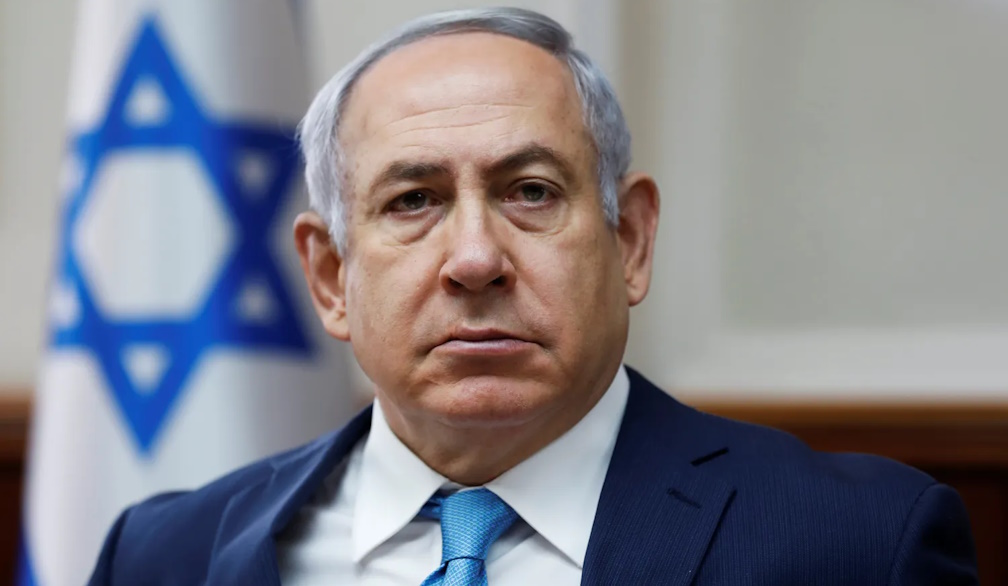
However, the announcement was immediately condemned[17] by Israeli Prime Minister Benjamin Netanyahu, who claimed recognition “rewards terror” and
risks creating another Iranian proxy, just as Gaza became. A Palestinian state in these conditions would be a launch pad to annihilate Israel – not to live in peace beside it.
Annexing Gaza?
A Palestinian state is unacceptable to Israel.
Further evidence was recently presented in a revealing TV interview by former Israeli Prime Minister Ehud Barak who stated[18] Netanyahu had deliberately empowered Hamas in order to block a two-state solution.

Instead there is mounting evidence Israel is seeking to annex[20] the entirety of Palestinian land and relocate Palestinians to neighbouring countries.
Given the current uncertainty, it appears unlikely a new ceasefire will be reached in the near future, especially as it remains unclear whether the US withdrawal from the negotiations was a genuine policy shift or merely a strategic negotiating tactic.
References
- ^ abrupt end (www.politico.com)
- ^ Steve Witkoff (www.theguardian.com)
- ^ historic decision (apnews.com)
- ^ Emmanuel Macron (www.elysee.fr)
- ^ humanitarian catastrophe (x.com)
- ^ One in five (www.unrwa.org)
- ^ Jehad Alshrafi/AAP (photos.aap.com.au)
- ^ Philippe Lazzarini (www.unrwa.org)
- ^ Israel’s blockade (www.bbc.com)
- ^ latest ceasefire proposal (time.com)
- ^ permanent military presence (www.aljazeera.com)
- ^ hand over power (www.newarab.com)
- ^ 1967 borders (www.bbc.com)
- ^ Palestinian National Authority (www.cfr.org)
- ^ described (theconversation.com)
- ^ 140 countries (www.aljazeera.com)
- ^ immediately condemned (abcnews.go.com)
- ^ stated (www.palestineremembered.com)
- ^ Manuel Balce Ceneta/AAP (photos.aap.com.au)
- ^ seeking to annex (www.amnesty.org)