China’s economy took centre stage in Xi’s new year address, spinning slow growth as a ‘remarkable’ achievement
- Written by: Lewis Eves, Lecturer in Government and International Relations, University of Essex
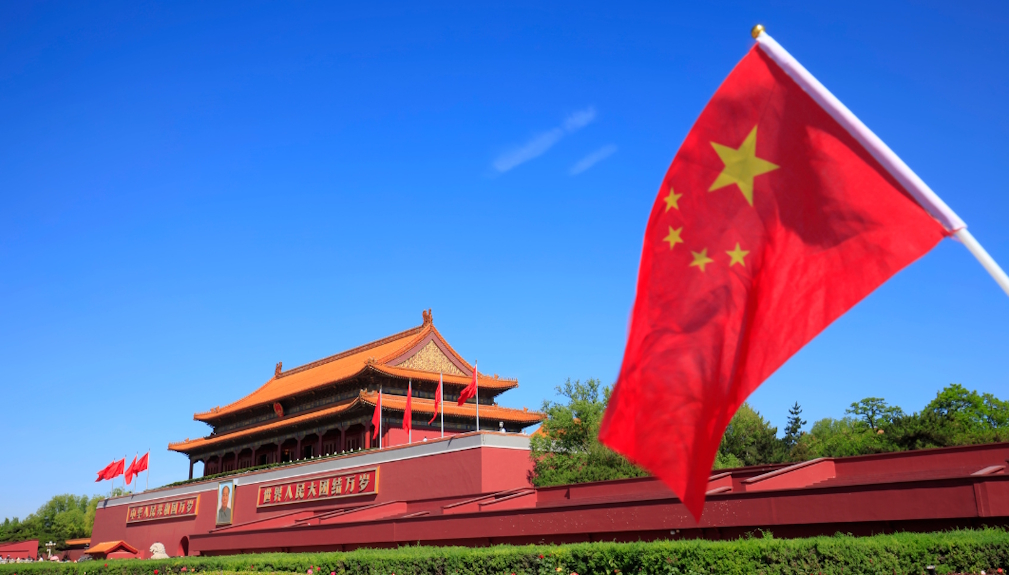
Chinese president Xi Jinping delivered his annual televised new year address[1] on December 31, and commentators have been quick to share their interpretation. Some have emphasised Xi’s passing reference[2] to Chinese reunification as a threat against Taiwan. Others have focused on Xi’s comments about China’s economy, framing them as a fearful reaction[3] to Donald Trump’s reelection as US president.
However, these accounts miss the bigger picture. Xi’s new year address speaks to the increasing insecurity of the Chinese Communist party’s (CCP) grip on power. This insecurity is evident in how Xi’s comments, supported by the party’s control of Chinese media, attempted to gaslight the Chinese people.
The mainstay of Xi’s address concerned the economic success of China. He stressed that the Chinese economy is thriving, and explained that China’s total GDP is soon expected to surpass 130 trillion yuan (£14.3 trillion). This equates to a 4.9% increase in GDP[4] over the course of the last 12 months.
Reports on Xi’s address in the Chinese media have taken this a step further. China Daily, the official CCP-owned newspaper often used to communicate the party’s position[5] to the Chinese people, praised Xi’s “heartening speech” and stressed the impressiveness[6] of China’s “remarkable” growth rate. An article published on January 1 explained that other developed economies struggled to average rates of 1.5%.
Omitted from the positive economic commentary of Xi’s address is the reality that China’s economic growth has slowed[7], falling from 5.2% in 2023. Although a growth rate of 4.9% is impressive relative to other developed economies, it is disappointing within the context of Chinese economic growth. China achieved annual growth rates[8] of over 10% in the 2000s, with GDP even growing by around 13% in some years.
One year ago, in his 2024 address, Xi acknowledged the challenges[9] facing the Chinese economy. He promised economic interventions that would accelerate growth and promote job creation to tackle worrying rates of youth unemployment. However, despite these interventions, China’s economic growth continues to slow[10] and youth unemployment remains high.
It is perhaps difficult to understand why Xi and the CCP admitted to economic challenges when China’s growth rate was higher and celebrated economic success when growth had slowed. But it makes sense when considered through the lens of “goal-shifting” – an act that goes beyond the positive spin governments put on their country’s economic performance.
Goal-shifting is a form of political gaslighting[11], in which an established goal is “shifted” to one that is easier to achieve. This has the result of allowing an unfavourable outcome by the standard of the original goal to be presented as an achievement by the standard of the new goal.
If we take China’s 2024 GDP growth of 4.9% as the outcome, it can be viewed unfavourably in comparison with China’s 5.2% growth in 2023. However, by shifting the goal to China having higher GDP growth than other developed economies – a feat that was never truly in doubt – China’s 2024 growth rate can be framed as “remarkable” in Chinese media.
It appears the CCP is using its influence and control over the Chinese media to emphasise the economic message of Xi’s address. In doing so, it is gaslighting the Chinese people by shifting China’s economic goals to downplay the struggling economy. At the same time, the CCP is framing the relative strength of Chinese growth compared to other countries as a success of the party’s economic stewardship.
Since the 1980s, the CCP has relied on the twin pillars[13] of economics and nationalism to uphold the legitimacy of its government. Economically, its legitimacy was upheld by years of high growth, which has lifted more than 800 million[14] people in China out of poverty. But, with growth slowing over the past decade, the CCP has pivoted towards a reliance on nationalism.
The CCP and China’s nationalist movement have a symbiotic relationship. The CCP promotes nationalistic values[15] in schools and supports nationalist projects throughout China such as historical societies, patriotic statues and museums. This gives nationalist groups a vested interest in supporting the CCP.
However, this relationship is detrimental[16] to the CCP in the long term. The CCP cannot constrain nationalist groups without undermining its own nationalist credentials. This has resulted in scenarios where nationalist groups have acted against the CCP’s wishes, including launching cyber attacks[17] both in China and abroad.
Read more: Chinese nationalist groups are launching cyber-attacks – often against the wishes of the government[18]
The twin-pillar model the CCP has relied on for decades is faltering. In his previous new year address, Xi took the unprecedented step of acknowledging China’s economic struggles. Reluctant to stir nationalist sentiment, the CCP attempted to use the economic pillar by betting on a reversal of economic fortunes in 2024. This reversal failed to materialise.
The CCP has become increasingly insecure, so Xi’s 2025 new year address adjusted the goals for judging China’s economic performance. Meanwhile, the party encouraged reporting that supported Xi’s address, spinning China’s slowing growth and worsening economic woes as a “remarkable” economic achievement.
References
- ^ new year address (www.fmprc.gov.cn)
- ^ Xi’s passing reference (www.washingtonpost.com)
- ^ fearful reaction (www.wsj.com)
- ^ 4.9% increase in GDP (www.worldbank.org)
- ^ communicate the party’s position (www.nature.com)
- ^ stressed the impressiveness (www.chinadaily.com.cn)
- ^ growth has slowed (www.worldbank.org)
- ^ annual growth rates (www.imf.org)
- ^ acknowledged the challenges (theconversation.com)
- ^ continues to slow (theconversation.com)
- ^ political gaslighting (www.cambridge.org)
- ^ metamorworks / Shutterstock (www.shutterstock.com)
- ^ twin pillars (www.cambridge.org)
- ^ more than 800 million (www.e-ir.info)
- ^ promotes nationalistic values (www.prcleader.org)
- ^ relationship is detrimental (onlinelibrary.wiley.com)
- ^ launching cyber attacks (theconversation.com)
- ^ Chinese nationalist groups are launching cyber-attacks – often against the wishes of the government (theconversation.com)