Climate change is forcing us to rethink our sense of ‘home’ – and what it means to lose it
- Written by: Talia Fell, PhD Candidate, School of Historical and Philosophical Inquiry, The University of Queensland
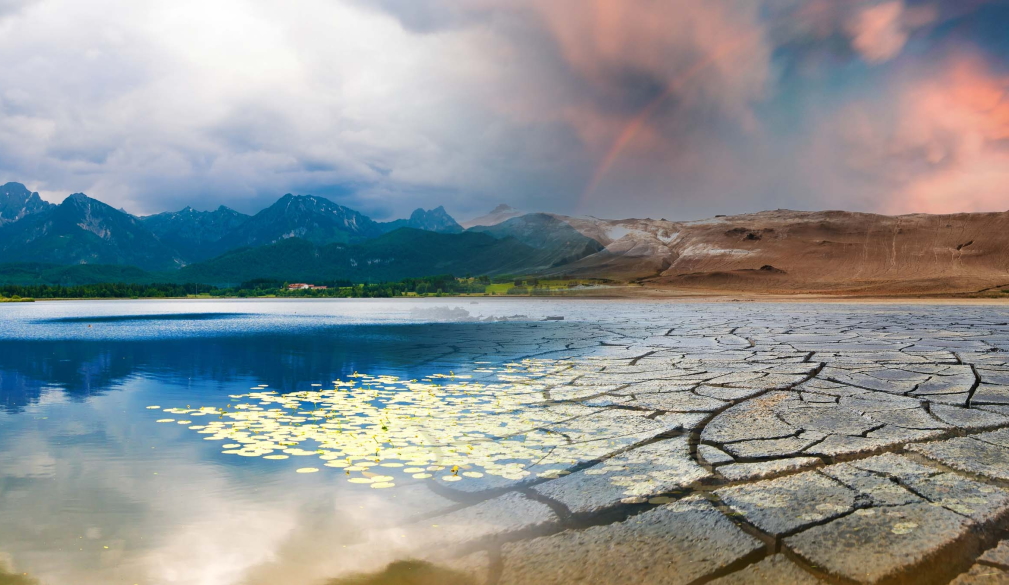
The Los Angeles wildfires are causing the devastating loss of people’s homes.
From A-list celebrities such as Paris Hilton to an Australian family[1] living in LA, thousands of houses[2] have been destroyed, leaving their owners shocked and grieving. And climate science points towards figures[3] that suggest more such events are waiting.
These events strip away precious memories created over many years, and sometimes over lifetimes. They prompt us to ask: what does it mean to lose the place I care most deeply about?
Philosophy explains how our personal losses connect to a broader, more profound loss of home rooted in our dependence on the ecosystems we live in.
The concept of ‘home’
In her 1949 text The Second Sex[4], philosopher Simone de Beauvoir[5] writes that, for many cultures, the home has represented values of tradition, safety and family. Inside its walls we preserve the past in furniture, knick knacks and photographs, and we associate these objects with memories created with loved ones.
The home also represents separation from the people and events of the outside. It is “refuge, retreat, grotto, womb, it protects against outside dangers”, Beauvoir writes.
But she explains how this understanding of home is culturally specific to civilisations founded on landed property[6], which contain intersecting structures of patriarchy and capitalism.
After all, patriarchy sees women as the caretakers of the home, providing for the physical and emotional needs of its inhabitants. Meanwhile, the functioning of the home also relies on the income of those who work outside it.
At the same time, many of us, Beauvoir writes, have a more instrumental understanding of home. It is where we rest, sleep, eat and store the objects we own and use.
Barriers to having a sense of ‘home’
The traditional understanding of home as a protective structure is complicated when you realise certain people do not have the privilege of calling one particular place “home”.
For many, the home exists as a point of inequality, instability and unsafety.
In Australia, homelessness continues to rise in the middle of the ongoing housing crisis[7]. Home is also often the most dangerous place for women[8].
Australian philosopher Val Plumwood[9] puts these issues into perspective when she argues the expression of “one’s place” or “homeplace” often represents a privileged and exclusionary sense of place. She writes[10]:
Those who are most vulnerable and powerless are at most risk of losing control over their ability to remain in a home place or place of attachment.
She further argues[11] that, under capitalism, the idea of personal belonging to a particular place or dwelling is often framed as being more important than many other vital attachments to place, such as connection to land.
She uses the term “shadow places” to describe the ecosystems we exclude and exploit – including our forests and waterways – even though they are fundamental to our existence. These places provide essential labour, nourishment and the conditions we need to survive and flourish.
Ironically, our detachment from these places is what props up our limited understanding of the “home” as a fixed, four-walled dwelling.
For Plumwood, an expanded sense of “home” would encompass the broader ecological context we exist within.
Our sense of ‘home’ in the climate crisis
In her 1998 article[12], Indigenous Australian law scholar Irene Watson[13] emphasises the issue of colonialism in detachment from the land.
Watson explains colonisers were already alienated from a sense of connection to land when they came to “Australia”. This disconnection led them to plunder the land, treating it as a commodity rather than a living, complex ecosystem that nurtures and is nurtured by First Nations peoples.
As philosopher Teresa Brennan[14] puts it, to commodify a living thing is to turn it into something that can be bought and owned. Once commodified, nature can no longer reproduce itself, nor decompose to nourish other life forms.

Brennan explains how[15] the tendency to commodify (and therefore exploit) nature represents a denial of nature’s reproductive capacity.
And this denial is not sustainable, as it drives the exploitation of every available natural resource. Under capitalism, a stop to exploitation means a stop to profits.
Turning to philosophy to rethink our values
Many people fail to see the rich complexity of nature: its unique intelligence and age-old memories that extend beyond our personal lifetimes.
Brennan argues nature is valuable beyond its profitability for the most powerful individuals. Perhaps, then, our sense of “home” should extend beyond the bounds of a dwelling filled with sentimental objects to include the wider lands and ecosystems we are part of.
In doing so, we can accelerate the shift towards social, political and economic systems that acknowledge that what is good for our planet is good for each of us, too.
References
- ^ an Australian family (www.abc.net.au)
- ^ thousands of houses (www.usatoday.com)
- ^ towards figures (www.abc.net.au)
- ^ The Second Sex (www.penguin.com.au)
- ^ Simone de Beauvoir (en.wikipedia.org)
- ^ landed property (en.wikipedia.org)
- ^ the ongoing housing crisis (theconversation.com)
- ^ dangerous place for women (www.theguardian.com)
- ^ Val Plumwood (en.wikipedia.org)
- ^ writes (www.taylorfrancis.com)
- ^ argues (australianhumanitiesreview.org)
- ^ 1998 article (www.tandfonline.com)
- ^ Irene Watson (people.unisa.edu.au)
- ^ Teresa Brennan (en.wikipedia.org)
- ^ explains how (www.routledge.com)