I’m fully vaccinated but feel sick – should I get tested for COVID-19?
- Written by: Arif R. Sarwari, Physician, Associate Professor of Infectious Diseases, Chair of Department of Medicine, West Virginia University
Imagine last night you developed a little runny nose and a sore throat. When you woke up this morning you started coughing and had a fever. In the past year, your mind would have immediately jumped to COVID-19. But if you are already fully vaccinated, you might wonder: Should I still get tested for COVID-19?
As an infectious disease physician[1], I am often asked this question. The answer is yes. If you have symptoms of COVID-19, you should get tested for COVID-19 even if you are fully vaccinated. You won’t be at high risk for hospitalization or severe disease, but if you are infected you may pass the virus to an unvaccinated person[2], who could then get very sick.
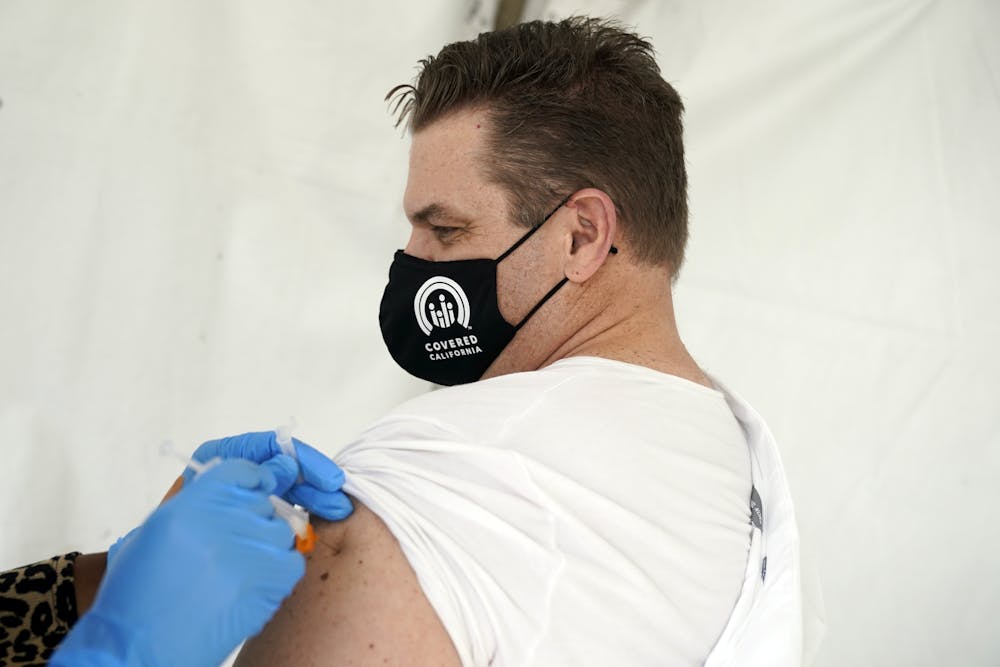 Vaccination prevents more than 90% of severe COVID-19 cases, but researchers think that only 70%-85% of vaccinated people are completely protected from any infection.
AP Photo/Marcio Jose Sanchez[3]
Vaccination prevents more than 90% of severe COVID-19 cases, but researchers think that only 70%-85% of vaccinated people are completely protected from any infection.
AP Photo/Marcio Jose Sanchez[3]
Vaccines work but aren’t 100% effective
Researchers have developed some amazing COVID-19 vaccines over the past year[4]. The high efficacy of these vaccines in the closely controlled environment of clinical trials matches their effectiveness in real life. The mRNA vaccines made by Pfizer and Moderna remain over 90% effective in preventing hospitalization or death[5].
That does not, however, mean that you have the same degree of protection from getting infected.
The latest research estimates that the mRNA vaccines offer 70% to 85% protection from getting infected at all[6]. It’s impossible to know whether a person is fully protected or could still develop a mild case if exposed to the coronavirus.
If you did happen to get infected, you could still spread the virus. And that’s why testing is still important.
What is a breakthrough case?
When a person gets infected with the coronavirus after being fully vaccinated, this is called a breakthrough case. Breakthrough cases demonstrate a basic principle of infectious disease – whether or not a person gets infected depends on the balance between two factors: intensity of exposure and immune competence.
Intensity of exposure[7] relates to how close an uninfected person is to a highly infectious individual spewing virus while talking and how long the two people are in contact. Immune competence relates to the body’s inherent protection against COVID-19. Unvaccinated individuals who’ve never been infected with the coronavirus have no protection – this is a completely new virus after all – while fully vaccinated people will be much more protected.
According to the CDC, as of April 30, 2021, there had been a total of 10,262 known SARS-CoV-2 vaccine breakthrough infections[8] in U.S. states and territories. These are usually asymptomatic or only mildly symptomatic cases, and most don’t result in hospitalization. Breakthrough cases will continue to occur, and though these people are less likely to spread the coronavirus to others[9] than are unvaccinated individuals, they still probably can[10].
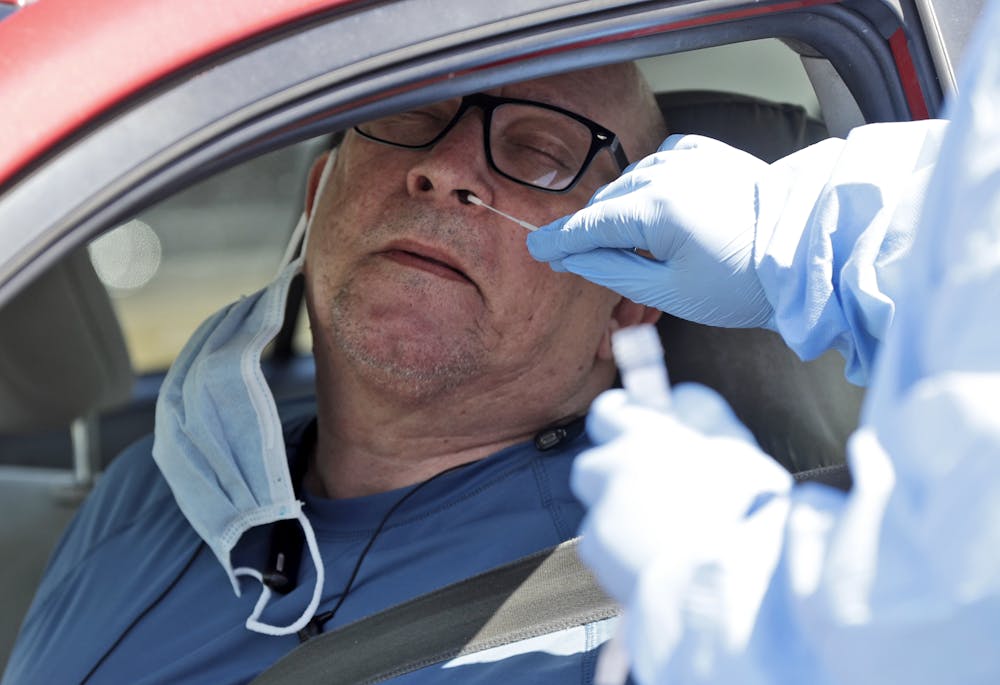 If you have symptoms of COVID-19, you should still get tested, even if you’ve already been vaccinated.
AP Photo/Wilfredo Lee[11]
If you have symptoms of COVID-19, you should still get tested, even if you’ve already been vaccinated.
AP Photo/Wilfredo Lee[11]
And what about the SARS-CoV-2 variants? Well, the world has been fortunate that the mRNA vaccines in particular afford significant protection against all major variants[12] that have emerged so far. But it is entirely possible that at some point a coronavirus strain could mutate[13] and partially or fully escape the protection from vaccines[14]. This is yet another good reason to get tested if you are feeling sick.
[Get our best science, health and technology stories. Sign up for The Conversation’s science newsletter[15].]
As vaccination rates rise and daily case counts fall in the U.S. and other countries, it is also important to keep a close eye on the coronavirus[16]. COVID-19 testing allows officials to keep track of how much virus is in a community, and positive test results can help people quarantine before unknowingly spreading the virus to others. So, yes, please get tested if you have concerning symptoms, even if you are fully vaccinated.
References
- ^ As an infectious disease physician (directory.hsc.wvu.edu)
- ^ may pass the virus to an unvaccinated person (theconversation.com)
- ^ AP Photo/Marcio Jose Sanchez (newsroom.ap.org)
- ^ amazing COVID-19 vaccines over the past year (theconversation.com)
- ^ over 90% effective in preventing hospitalization or death (www.cdc.gov)
- ^ 70% to 85% protection from getting infected at all (doi.org)
- ^ Intensity of exposure (dx.doi.org)
- ^ 10,262 known SARS-CoV-2 vaccine breakthrough infections (www.cdc.gov)
- ^ less likely to spread the coronavirus to others (doi.org)
- ^ they still probably can (theconversation.com)
- ^ AP Photo/Wilfredo Lee (newsroom.ap.org)
- ^ afford significant protection against all major variants (www.cdc.gov)
- ^ coronavirus strain could mutate (theconversation.com)
- ^ partially or fully escape the protection from vaccines (doi.org)
- ^ Sign up for The Conversation’s science newsletter (theconversation.com)
- ^ important to keep a close eye on the coronavirus (theconversation.com)