The RBA Governor Warns on Inflation: What Was Said — and What It Means for Australia
- Written by: The Times
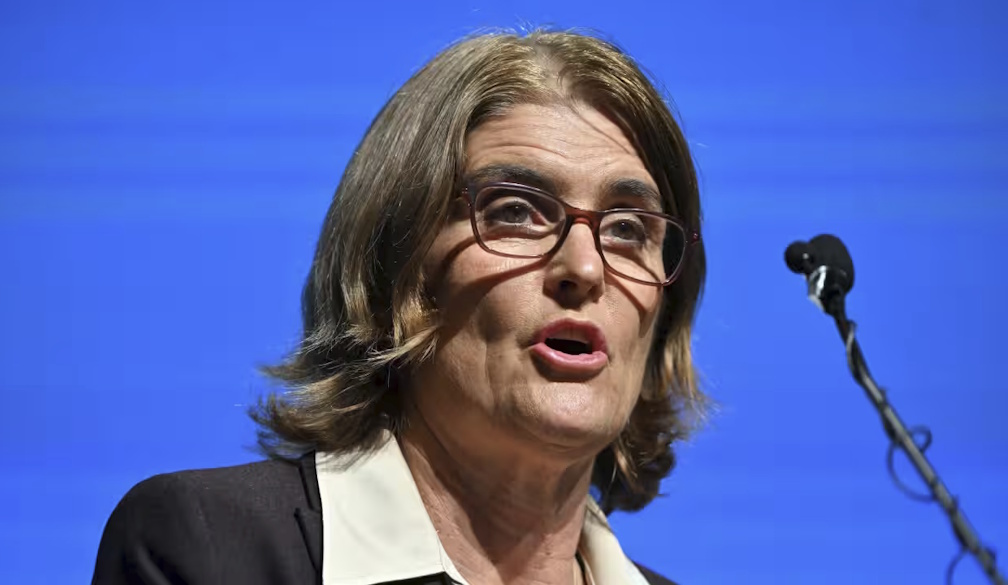
The tone from the Reserve Bank of Australia has sharpened. In her latest remarks, Governor Michele Bullock made it clear that inflation remains a persistent threat to Australia’s economic stability, and that the central bank is prepared to act decisively if price pressures fail to ease as expected.
At the heart of her message was a simple but consequential point: inflation is proving more stubborn than anticipated, and complacency is not an option.
What the Governor Said
Bullock emphasised that while inflation has come down from its peak, it is still above the RBA’s target band of 2–3 per cent. More importantly, she highlighted concerns about “sticky” inflation — particularly in services, housing, and labour-intensive sectors where price pressures are not easing quickly.
She noted three key risks:
-
Domestic demand remains resilient, meaning consumers are still spending despite higher interest rates
-
Wage growth is rising, which, while positive for households, can entrench inflation if not matched by productivity gains
-
Global uncertainty, including supply chain risks and geopolitical tensions, could reignite imported inflation
The Governor signalled that the RBA will not hesitate to tighten monetary policy further if inflation expectations begin to drift or if current settings prove insufficient.
In practical terms, that means interest rates could remain higher for longer — or rise again.
The Policy Stance: Higher for Longer
The RBA’s posture has shifted from reactive to preventative. Rather than waiting for inflation to accelerate again, the Bank is positioning itself to lean against risks early.
This reflects a broader central banking doctrine: once inflation becomes embedded, it is far more costly — economically and socially — to bring it back under control.
For Australia, this means:
-
Interest rates are unlikely to fall quickly
-
Monetary policy will remain restrictive
-
Economic growth may be deliberately slowed to stabilise prices
This is not a short-term adjustment. It is a recalibration of expectations.
Impact on Australian Businesses
For businesses, the Governor’s stance introduces both constraint and clarity.
On one hand, higher borrowing costs continue to weigh on:
-
Expansion plans
-
Capital investment
-
Hiring decisions
Small and medium enterprises, in particular, face tighter margins as financing costs rise while consumers become more price-sensitive.
On the other hand, the RBA’s clear commitment to controlling inflation provides a degree of predictability. Businesses can plan around a known environment rather than reacting to sudden policy shifts.
However, several structural challenges emerge:
1. Cost Pressures Persist
Input costs — wages, energy, logistics — remain elevated. Businesses must decide whether to absorb these costs or pass them on, risking reduced demand.
2. Demand Becomes Fragile
Consumers under financial pressure tend to cut discretionary spending first. Retail, hospitality, and travel sectors are especially exposed.
3. Productivity Becomes Critical
With wage growth rising, businesses must find efficiencies. Investment in automation, AI, and process optimisation is no longer optional — it is strategic.
What It Means for Australians
For households, the Governor’s comments confirm what many already feel: financial conditions are unlikely to ease soon.
The implications are direct and immediate.
Mortgage Holders
Borrowers face ongoing repayment pressure. Even if rates do not rise further, they are expected to remain elevated, keeping household budgets tight.
Renters
Higher interest rates feed into the rental market as landlords pass on costs. Combined with housing shortages, this keeps rents under upward pressure.
Cost of Living
Inflation in essentials — groceries, insurance, utilities — remains a central concern. While headline inflation may decline, everyday expenses continue to rise in many categories.
Savings vs Spending Behaviour
Australians are increasingly cautious. Higher interest rates encourage saving, but inflation erodes purchasing power, creating a tension that shapes consumer behaviour.
In effect, households are being asked to tighten spending to help bring inflation down — a necessary but uncomfortable economic mechanism.
Implications for Government Spending
The RBA Governor’s warning also places pressure on fiscal policy.
Governments at both federal and state levels face a delicate balancing act:
-
Supporting households through cost-of-living measures
-
Avoiding excessive spending that could fuel inflation
Bullock’s message implicitly reinforces the need for fiscal discipline. Large-scale stimulus or broad cash injections into the economy risk working against monetary policy.
This creates three key dynamics:
1. Targeted Support Over Broad Stimulus
Expect more narrowly focused assistance — for vulnerable households or specific sectors — rather than widespread spending programs.
2. Infrastructure and Productivity Focus
Governments may prioritise investments that improve economic capacity, such as transport, energy, and digital infrastructure, rather than consumption-driven spending.
3. Political Pressure Builds
With voters feeling the squeeze, governments face increasing pressure to act — even when economic conditions argue for restraint.
The Broader Economic Strategy
The Governor’s remarks reflect a wider strategy: restore price stability first, even at the cost of slower growth.
This is a classic central banking trade-off. Allowing inflation to persist risks:
-
Eroding real wages
-
Distorting investment decisions
-
Undermining long-term economic confidence
By contrast, tightening policy — even aggressively — can stabilise the economy over time, though it creates short-term pain.
Australia is now firmly in that phase.
The Road Ahead
The key question is no longer whether inflation is falling — it is whether it is falling fast enough.
If progress stalls, the RBA has signalled it is prepared to act again.
For businesses, households, and governments alike, the message is consistent:
-
Expect a prolonged period of tighter financial conditions
-
Plan for higher costs of capital
-
Prioritise efficiency and resilience
The Governor’s warning is not just commentary — it is a policy signal.
And for Australia, it marks a continuation of one of the most challenging economic adjustments in decades: bringing inflation back under control without tipping the economy into a deeper slowdown.
Whether that balance can be achieved will define the next chapter of the Australian economy.