Flattery or calm confidence? How Anthony Albanese should handle Donald Trump at the White House
- Written by: Rebecca Strating, Director, La Trobe Asia, and Professor of International Relations, La Trobe University
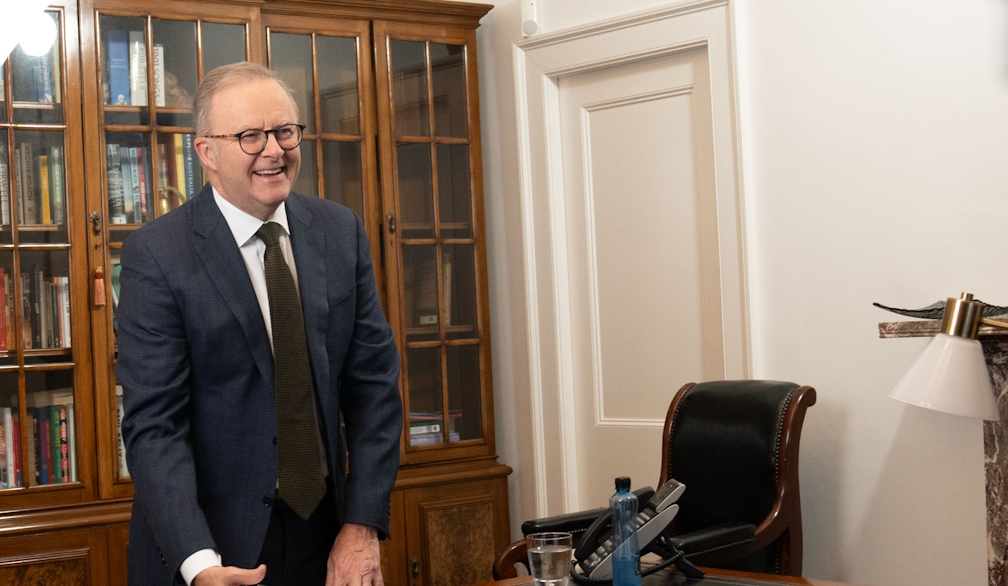
The long-awaited meeting between US President Donald Trump and Australian Prime Minister Anthony Albanese is finally set to happen in Washington this week[1].
While unforeseen circumstances could still derail it, the stakes for Australia are high. Albanese will be seeking to discuss a wide range of issues, from tariffs and trade to the future of AUKUS and deeper cooperation on critical minerals and supply chains[2].
The lead-up to the meeting has been subject to much speculation. Questions about when the two leaders would finally sit down only intensified after Albanese appeared to be left off[3] Trump’s schedule at the UN General Assembly in September.
It is fair to say Australia is not high on Trump’s list of priorities. But neither, more broadly, is Asia. So far, Trump’s foreign policy attention has been consumed by Russia’s war in Ukraine, suspected drug boats coming from Venezuela, and conflicts in the Middle East.
Why personal relationships are important
There’s also been much debate in the Australian media about whether a face-to-face meeting with Trump matters[4].
Traditionally, high-level, public meetings signal that leaders value the relationship between their countries. They offer a chance to reinforce existing commitments and make new ones, highlight shared priorities, and make the case for national interests directly.
Such meetings also underscore the importance of personal diplomacy. The quality of leader-to-leader ties can shape the tone and direction of a bilateral relationship. As history shows – think of George W. Bush’s relationship with John Howard[5] – personal rapport can deepen alliances and build momentum for cooperation.
But with Trump, these encounters are less about relationships and more about performance.
During his now-infamous clash with Ukrainian President Volodymyr Zelensky at the White House in February, Trump declared, “This is going to be great television[6].”
Trump’s made-for-television dressing-down of Zelensky.A few months later, he ambushed[7] South African President Cyril Ramaphosa in front of reporters at the White House over baseless claims of a “white genocide” in South Africa.
Clashing with Ramaphosa: ‘It will take President Trump listening’Respect and reciprocity, it seems, are rarely front of mind for Trump in foreign engagements.
Flattery vs recognition
For Australia, this raises critical questions about the role of image and reputation[8] – for both Albanese and the country itself – and how to manage the optics of a meeting with such an unpredictable figure.
Canberra will be thinking carefully about who is watching. This includes Trump’s inner circle, the broader Washington establishment, the Australian public and international observers. In the age of viral clips and Truth Social public diplomacy, a single awkward exchange can eclipse months of careful diplomacy.
That means Albanese’s messaging must be carefully calibrated: confident[9] and respectful, without appearing deferential.
Flattery can be tempting. Some leaders have dangled talk of a Nobel Peace Prize[10] to win Trump’s favour. Albanese recently congratulated Trump for his role in brokering the Gaza ceasefire, a move that may have been designed to appeal to Trump’s well-known desire for recognition.
There is, however, a fine line between genuine acknowledgement and flattery. Overdoing it would likely backfire. Australian voters have firmly rejected[11] Trump-style politics in their own elections. And being seen to grovel to Trump would be politically damaging.
Other leaders have stood up to Trump when necessary. Japan, for example, cancelled a high-level meeting[12] between foreign policy and defence leaders after Washington demanded Tokyo spend more on defence.
Be prepared for surprises
So, how best to engage, especially considering Trump wields an outsize influence over foreign policy decisions? Is it smarter to build a positive personal relationship or keep a safe distance?
Trump’s former communications chief, Anthony Scaramucci, offers sound advice[13] about being a “co-producer” of the encounter – knowing the script and having an agenda in mind. “Get in. Produce it well. Be respectful. Get out,” he says.
There is always a risk Trump could use the meeting as a platform to criticise Australian positions he dislikes, such as Palestinian statehood, climate change, pharmaceutical pricing, and so on.
The challenge for Albanese will be emphasising the importance of the alliance, while keeping potential disputes separate. The mantra[14] that guides Australia’s approach to China – “cooperate where we can, disagree where we must, and engage in our national interest” – may apply equally[15] to the United States under Trump.
A certain degree of open disagreement with Washington might not be a bad thing. Closer to home, demonstrating different views on issues like Palestine and climate change could bolster Australia’s reputation as an independent actor. In Southeast Asia, in particular, Australia has sometimes been viewed as a US lackey.
What’s at stake
Some argue the upcoming meeting is crucial[16] for shoring up AUKUS, the trilateral security agreement with the United States and United Kingdom. A formal US review[17] of AUKUS is underway and expected to be completed in the coming weeks.
An alternative viewpoint: it might be good Trump appears to know little[18] about it. He may be less likely to interfere or make further demands on Australia if it is not front of mind.
Either way, Australian leaders have remained outwardly confident the deal will proceed as planned, frequently emphasising its benefits to the US. It’s surely no coincidence that Canberra announced another billion-dollar payment[19] to support the pact ahead of Albanese’s visit.
But Australian officials have also been careful to dodge certain US demands, such as committing to defend Taiwan in a potential conflict with China or raising defence spending to 3.5% of GDP.
Handled well, the Albanese-Trump encounter could reaffirm Australia’s relevance in Washington, bolster AUKUS, and project confidence in an uncertain regional order. Navigating Trump’s world of theatrics will require Albanese to stay calm, clear and confident.
References
- ^ this week (www.abc.net.au)
- ^ critical minerals and supply chains (www.smh.com.au)
- ^ left off (www.theguardian.com)
- ^ matters (www.abc.net.au)
- ^ George W. Bush’s relationship with John Howard (www.aspi.org.au)
- ^ great television (deadline.com)
- ^ ambushed (www.bbc.com)
- ^ image and reputation (www.tandfonline.com)
- ^ confident (theconversation.com)
- ^ Nobel Peace Prize (www.theguardian.com)
- ^ firmly rejected (independentaustralia.net)
- ^ cancelled a high-level meeting (www.reuters.com)
- ^ sound advice (www.theaustralian.com.au)
- ^ mantra (www.pm.gov.au)
- ^ may apply equally (nsc.anu.edu.au)
- ^ crucial (www.abc.net.au)
- ^ formal US review (www.theguardian.com)
- ^ appears to know little (www.abc.net.au)
- ^ billion-dollar payment (www.reuters.com)