


The 2025 federal budget fails the millions of voters who want action on Australia’s struggling environment
- Written by: Timothy Neal, Senior lecturer in Economics / Institute for Climate Risk and Response, UNSW Sydney
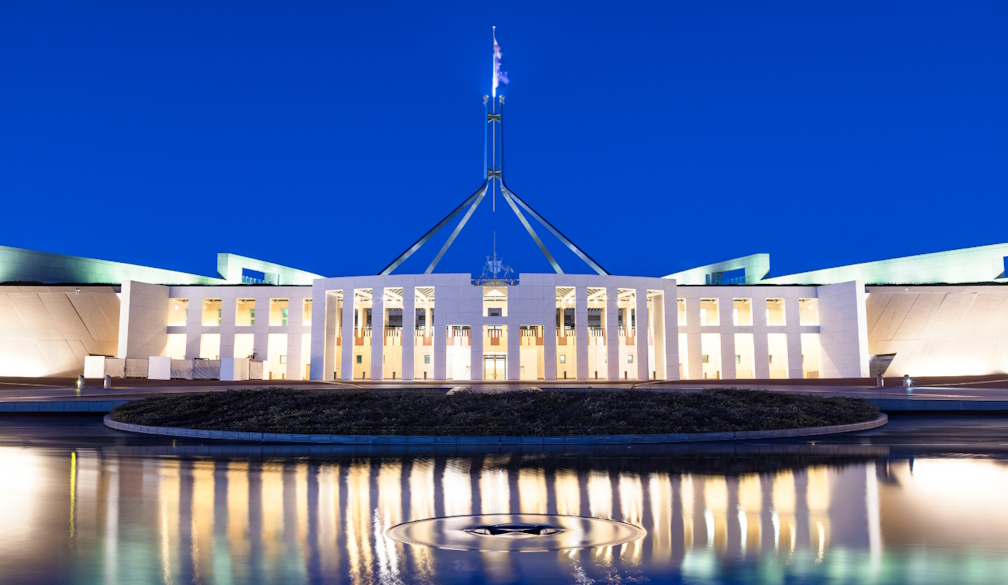
Commentators have branded last night’s federal budget as an attempt to win over typical Australian voters[1] concerned about the cost of living, ahead of what is expected to be a tightly fought federal election.
The budget’s big-ticket items[2] included tax cuts and energy bill relief, plus measures to make childcare and healthcare cheaper.
There was little in the budget dedicated to stemming Australia’s environmental crises. Given this, one might assume the average voter cares little for action on conservation and curbing climate change. But is this true?
Polling suggests the clear answer is “no”. Voters consistently say they want more government action on both conservation and climate change. As the federal election looms, Labor is running out of time to show it cares about Australia’s precious natural environment.
What environmental spending was in the budget?
The main spending on the environment in last night’s budget had been announced in the weeks before. It includes:
These measures are welcome. However, the overall environment spending is inadequate, given the scale of the challenges Australia faces[3].
Australia’s protected areas, such as national parks, have suffered decades of poor funding[4], and the federal budget has not rectified this. It means these sensitive natural places will remain vulnerable to harms[5] such as invasive species and bushfires.
More broadly, Australia is failing to stem the drivers of biodiversity loss, such as land clearing[6] and climate change. This means more native species become threatened with extinction[7] each year.
Experts say[8] conserving Australia’s threatened species would cost an extra $2 billion[9] a year. Clearly, the federal budget spending of an extra $50 million a year falls well short of this.
And global greenhouse gas emissions continue to increase[10]. This contributes to ever-worsening climate change[11], bringing heatwaves, more extreme fires, more variable rainfall and rising seas.
Contrary to what the federal budget priorities might suggest, Australians are concerned about these issues.
What does the average voter think about the environment?
Results from reputable polling provide insight into what the average voters want when it comes to environmental policy and spending.
When it comes to conservation, the evidence is clear. Polling by YouGov[12] in October last year (commissioned by two environment groups) estimated that 70% of Australians think the Labor government should do more to “protect and restore nature”. The vast majority of voters (86%) supported stronger national nature laws.
Essential Research polling in October 2023[13] found 53% of voters think the government is not doing enough to preserve endangered species. About the same proportion said more government action was needed to preserve native forests, and oceans and rivers.
On climate change, the average voter appears to have views significantly out of step with both major parties. The Australia Institute’s Climate of the Nation[14] report last year found 50% of voters believed the government was not doing enough to prepare for and adapt to climate impacts.
The report also found 50% of voters supported a moratorium on new coal mines in Australia, 69% support charging companies a levy for each tonne of carbon pollution they emit, and 69% are concerned about climate change.
Also in 2024, a Lowy Institute poll[15] found 57% of Australians supported the statement that “global warming is a serious and pressing problem, and that we should take steps now to mitigate it even if it involves significant costs”.
There’s a caveat here. As the cost-of-living crisis has worsened, the issue has edged out all others in terms of voter concerns at the upcoming election.
For example, in January this year, Roy Morgan polling found[16] 57% of voters considered cost of living one of their top-three issues of concern. Only 23% considered global warming a top-three issue.
However, global warming was still more of a concern for voters than managing the economy (22%), keeping interest rates down (19%) and reducing taxes (15%). It was tied with reducing crime (23%).
It’s also important to note that climate change and cost-of-living pressures are not separate issues. Research suggests[17] that as climate change worsens, it will cause inflation to worsen.
Labor’s unmet election promises
The singular focus on the cost of living in last night’s federal budget means environmental spending has been neglected.
Context matters here. Labor has utterly failed to deliver its 2022 election promise[18] to rewrite federal environmental protection laws and create an environmental protection agency.
The government could have used this budget to repair its environmental credentials going into the next election – but it didn’t. The many voters concerned about the environment might well wonder if Labor considers the environment a policy priority at all.
The upcoming election result may show whether minor parties and independents better reflect the Australian electorate’s views on this important issue.
References
- ^ win over typical Australian voters (www.theguardian.com)
- ^ big-ticket items (theconversation.com)
- ^ challenges Australia faces (theconversation.com)
- ^ poor funding (theconversation.com)
- ^ vulnerable to harms (theconversation.com)
- ^ such as land clearing (www.abc.net.au)
- ^ threatened with extinction (www.dcceew.gov.au)
- ^ Experts say (conbio.onlinelibrary.wiley.com)
- ^ extra $2 billion (onlinelibrary.wiley.com)
- ^ continue to increase (www.csiro.au)
- ^ ever-worsening climate change (www.bom.gov.au)
- ^ Polling by YouGov (www.acf.org.au)
- ^ polling in October 2023 (essentialreport.com.au)
- ^ Climate of the Nation (australiainstitute.org.au)
- ^ Lowy Institute poll (poll.lowyinstitute.org)
- ^ Roy Morgan polling found (www.roymorgan.com)
- ^ Research suggests (www.nature.com)
- ^ utterly failed to deliver its 2022 election promise (theconversation.com)










