


The Israel-Hamas ceasefire didn’t resolve any deep-seated issues. Now, it’s shattered
- Written by: Marika Sosnowski, Postdoctoral research fellow, The University of Melbourne
When a ceasefire in the war between Hamas and Israel finally came into effect on January 19, the world breathed a collective sigh of relief.
However, that ceasefire agreement, and its associated negotiations, have now been cast aside by new Israeli attacks[1] on Gaza.
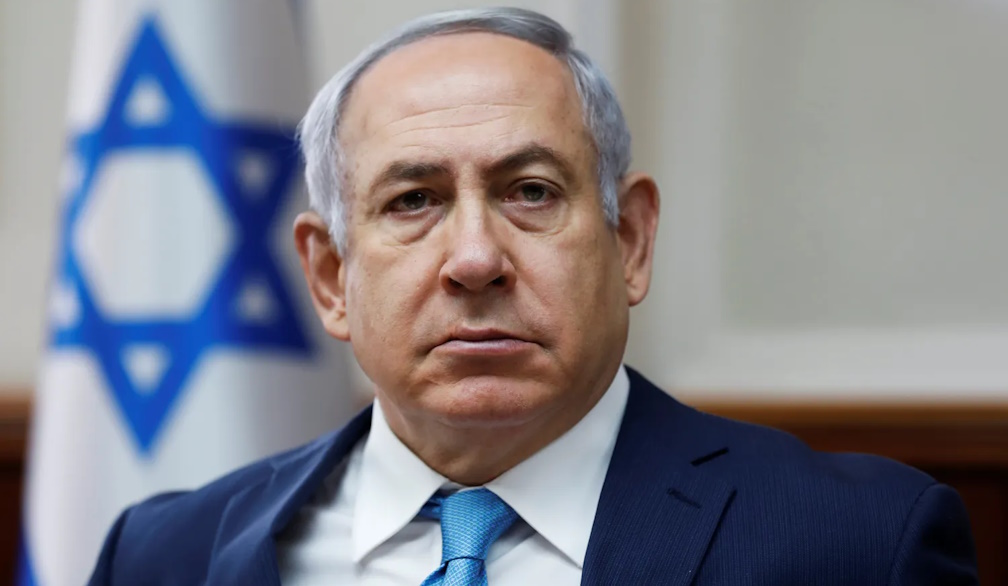
A statement from Israeli Prime Minister Benjamin Netanyahu’s office said[2] the strikes came after Hamas’ “repeated refusals” to “release our hostages”, and the group’s rejection of all proposals presented by US President Donald Trump’s Middle East envoy, Steve Witkoff.
Even before Israel cut off[3] all humanitarian aid and electricity to Gaza in the past two weeks, Hamas claimed[4] it had not met the levels of humanitarian aid, shelter and fuel it agreed to provide in the terms of the ceasefire. However, this is a distraction from a larger issue.
This ceasefire was always more like a strangle contract[5] than a negotiated agreement between equal parties. Israel, as the party with far greater military and political power, has always had the upper hand.
And while the first phase of the ceasefire, which lasted 42 days, saw the successful release[6] of 33 hostages held by Hamas in exchange for nearly 1,800 Palestinian prisoners, the ceasefire also enabled Israel to use it for its own political and military ends.
Buying time
The most common conventional concern about ceasefires is that the parties to a conflict will use them for their own ends.
Typically, the worry is that non-state armed groups, such as Hamas, will use the halt in violence to buy time to regroup, rearm and rebuild their strength to continue fighting.
But states such as Israel have this ability, too. Even though they have standing armies that might not need to regroup and rearm in the same way, states can use this time to manoeuvre in the international arena – a space largely denied to non-state actors.
Trump’s rise to power in the US has seemingly given the Israeli government carte blanche to proceed in ways that were arguably off limits to previous US presidents who were also largely supportive of Israel’s actions.
This includes the plan of forcing Gaza’s population out of the strip. This plan was raised[7] earlier in the war by Trump advisor Jared Kushner and Israeli officials[8] as a supposed humanitarian initiative[9].
Trump has now repeated the call to relocate[10] Palestinians from Gaza to Egypt and Jordan – or possibly[11] other parts of Africa – and for the US to take “ownership[12]” of the coastal strip and turn[13] it into the “Riviera of the Middle East”.
On the face of it, this plan would be a war crime. But even if it is never fully implemented, the fact it is being promoted by Trump after many years[14] of domestic Israeli and international opprobrium shows how political ideas once thought unacceptable can take on a life of their own.
Political and military maneouvering
Israel has also used the ceasefire to pursue larger political and military goals in Gaza, the West Bank, southern Lebanon and Syria.
Even though the ceasefire did reduce overall levels of violence in Gaza, Israel has continued to carry out attacks[15] on targets in the strip.
It has also escalated the construction of settlements[16] and carried out increasingly violent operations[17] in the West Bank. In addition, there have been egregious[18] attacks on Palestinian residents in Israel.
And though nearly 1,800 Palestinian prisoners were released during the ceasefire, Israel was holding more than 9,600 Palestinians[19] in detention on “security grounds” at the end of 2024. Thousands more[20] Palestinians are being held by Israel in administrative detention, which means without trial or charge.
During the ceasefire, Israel also accelerated[21] efforts to evict the UN agency for Palestinian refugees, UNRWA, from its headquarters in East Jerusalem. And the Israeli government has also proposed increasingly[22] draconian[23] laws aimed at restraining the work of Israeli human rights organisations.
On the military front, the ceasefire arguably alleviated some pressure on Israel, giving it time to consolidate its territorial and security gains against Hezbollah in southern Lebanon and in Syria.
In the past two months, two deadlines[24] for the withdrawal of Israeli forces from southern Lebanon passed. Israel has instead proposed[25] establishing a buffer zone on Lebanese territory and has begun destroying villages[26], uprooting olive trees and building semi-permanent outposts[27] along the border.
In a speech[28] in February, Netanyahu also demanded the “complete demilitarisation of southern Syria” following the fall of Bashar al-Assad’s regime. And Defence Minister Israel Katz said this month Israel would keep its troops[29] in southern Syria to “protect” residents from any threats from the new Syrian regime.
Be careful what you wish for
While Palestinians are known for their sumud – usually translated as steadfastness or tenacity – there is a limit to what humans can endure. The war, and subsequent ceasefires, have created a situation in which Gazans may have to put the survival and wellbeing of themselves and their families above their desire to stay in Palestine.
There is a general assumption[30] that ceasefires are positive and humanitarian in nature. But ceasefires are not panaceas. In reality, they are a least-worst option for stopping the violence of war for often just a brief period.
A ceasefire was never going to be the solution to the decades-old conflict between Israel and the Palestinians. Instead, it has turned out to be part of the problem.
References
- ^ Israeli attacks (www.9news.com.au)
- ^ said (www.nytimes.com)
- ^ cut off (www.abc.net.au)
- ^ claimed (x.com)
- ^ strangle contract (theconversation.com)
- ^ release (apnews.com)
- ^ raised (www.theguardian.com)
- ^ Israeli officials (www.theguardian.com)
- ^ humanitarian initiative (www.nytimes.com)
- ^ relocate (digital.abcaudio.com)
- ^ possibly (www.timesofisrael.com)
- ^ ownership (bsky.app)
- ^ turn (www.youtube.com)
- ^ many years (newlinesmag.com)
- ^ attacks (acleddata.com)
- ^ settlements (x.com)
- ^ violent operations (www.france24.com)
- ^ egregious (x.com)
- ^ more than 9,600 Palestinians (www.btselem.org)
- ^ Thousands more (www.btselem.org)
- ^ accelerated (www.unrwa.org)
- ^ increasingly (www.haaretz.com)
- ^ draconian (hamoked.org.il)
- ^ deadlines (www.atlanticcouncil.org)
- ^ proposed (themedialine.org)
- ^ destroying villages (apnews.com)
- ^ building semi-permanent outposts (www.bbc.com)
- ^ speech (www.bbc.com)
- ^ would keep its troops (www.theguardian.com)
- ^ assumption (hdcentre.org)










