In a largely uneventful and inconsequential US vice presidential debate, no one can claim victory
- Written by: Emma Shortis, Adjunct Senior Fellow, School of Global, Urban and Social Studies, RMIT University
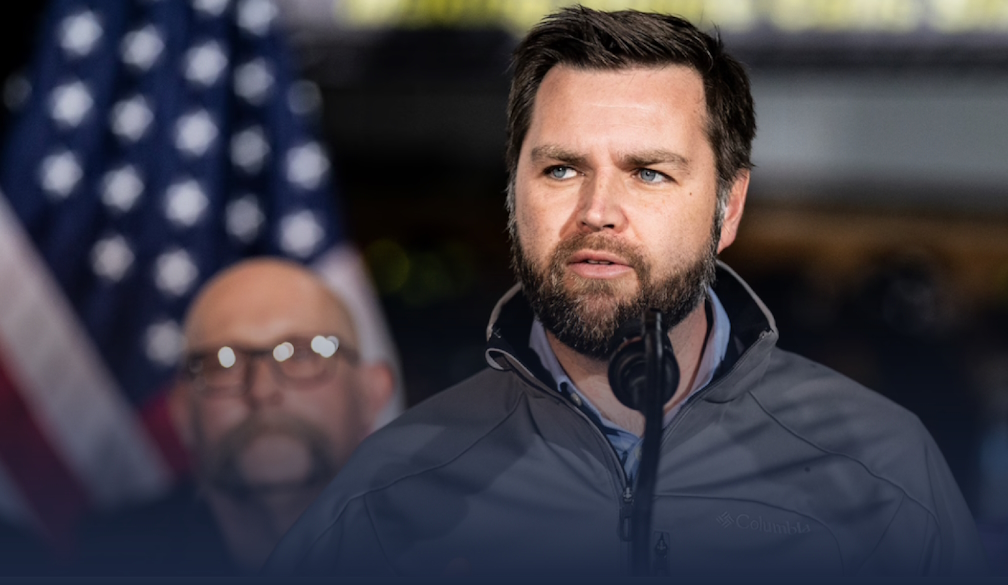
Just like vice presidents themselves, in US politics, debates don’t really matter until they do. The most recent debate (and likely the last of the 2024 election cycle) between aspiring vice presidents Senator JD Vance and Governor Tim Walz isn’t likely to matter much at all.
Hosted by CBS, the vice presidential debate took place under much the same rules as the first and only debate between presidential candidates Kamala Harris and Donald Trump. There was no audience and very little fact-checking. The only real difference was that the microphones weren’t muted when a candidate wasn’t speaking – a setup that only really got away from the two moderators once.
A shallow, optics-focused analysis would suggest that the format favoured Vance; that he successfully projected an image of himself as a sensible, commonsense candidate. But Walz also performed entirely adequately, reinforcing his steady, nice-guy image.
There was, in the end, no clear winner. But there was a lot of substance.
America, and a world, in crisis
CBS moderators opened the debate by noting the many intersecting crises facing the US and the rest of the world. Specifically listing the dangerously escalating situation[1] in the Middle East, Hurricane Helene[2] and a labour strike, the moderators focused first on Iran.
In a bizarre choice, rather than asking how each candidate would aim to deescalate or even build peace in the region, the candidates were asked whether or not they would support an Israeli “preemptive strike” on Iran.
Walz, perhaps caught off guard by the specificity of the question, got off to a shaky start, but recovered well enough. Vance, on steadier ground, outlined his ticket’s firm support for Israel.
That neither candidate took issue with the casual suggestion of a “preemptive strike” says a great deal about US global leadership today.
Unlike in the previous presidential debate, the unfolding crisis caused by Hurricane Helene elevated the issue of climate change to the second question. While both candidates touted policies of strengthening fossil fuel production and use at home, Vance’s answer hinted at the underlying radicalism of his politics.
Noting the tragic loss of life in states such as North Carolina, Vance was careful to distinguish victims of the hurricane as “innocent”. He promised, quite specifically, that a future Trump administration would support “citizens” affected by climate change fuelled disasters such as Helene.
These coded references to race and immigration were carefully designed to reinforce Trump and Vance’s conspiratorial narratives about an America under siege, facing an “invasion” of “illegal aliens[3]”.
Vance is accomplished at sanitising Trump’s rhetoric, and made a considerable effort to project a sense of reasonableness. Walz’s weakness – along with the broader Democratic policy platform – is that he attempts to walk a line between conceding to the right on issues of immigration while simultaneously attempting not to alienate the diverse base of support for the Democratic party. It remains to be seen if anyone will be convinced.

Unsurprisingly, Walz was stronger on issues that favour the Democrats, including health care and reproductive rights. Vance was careful not to be drawn on the question of a national abortion ban, a policy favoured by much of Trump’s conservative support base. He spoke instead of his support for a “minimum national standard” (in effect, if not in language, the same thing).
The standout moment came towards the end. Just as in that very first debate between President Joe Biden and Trump a political lifetime ago, the moderators did not ask about the integrity of US democracy until quite a long way into the 90-minute run time.
Asked by his opponent about Trump’s refusal to concede the 2020 election, Vance refused to engage, saying he was instead “focused on the future”. That future, as Walz noted, involves entirely credible threats to US democracy continuing to come from Vance’s running mate.
Quiet conspiracy
Unlike that running mate, Vance largely steered away from spouting conspiracy theories about stolen elections – or any of the far-right’s other favoured issues – directly. In his final statement, though, he highlighted what allows them to thrive.
Apparently attempting to moderate Trump’s nightmarish rhetoric of “American carnage[5]”, Vance leaned into a familiar exceptionalism, focusing at the end on the beauty and the wonder of America. He is proud, he said, to live “in the most incredible country in the world. But…”
It is in the space after that “but” that conspiracy thrives. If the US is indeed the best country in the world, how can there be a “but”? If it cannot be that the US might not be the best country in the world, then the answer can only be that its success is being undermined by a conspiracy against it.
In New York tonight, Walz did not do enough to fill that space. Vance sought to quietly expand it.
That neither of them conclusively succeeded likely won’t matter to the final outcome. Still, the space after the “but…” hangs over us all.
References
- ^ dangerously escalating situation (theconversation.com)
- ^ Hurricane Helene (apnews.com)
- ^ illegal aliens (www.nytimes.com)
- ^ Matt Rourke/AP (photos.aap.com.au)
- ^ American carnage (www.theguardian.com)