What junior doctors’ unpaid overtime tells us about the toxic side of medicine
- Written by: Claire Hooker, Senior Lecturer and Coordinator, Health and Medical Humanities, University of Sydney
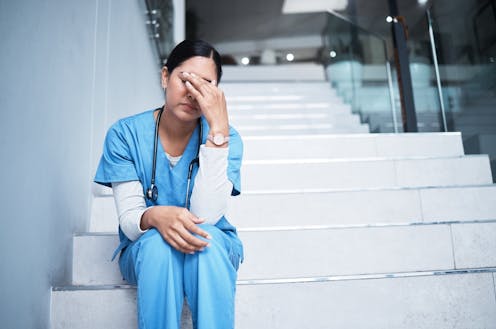
What’s been described as the largest underpayment class action[1] in Australian legal history has just been settled[2]. Who was allegedly underpaid? Thousands of junior doctors who, subject to court approval, are set to share back-pay of more than a quarter of a million dollars.
Amireh Fakhouri, who brought the claim on behalf of junior doctors in New South Wales, alleged that when they worked in the state’s public health system from December 2014 to December 2020, NSW Health had failed to pay the overtime and weekend meal break entitlements she and her colleagues were owed.
More than 20,000 claimants are now set to be eligible for a share in the nearly A$230 million settlement.
But repayment was never the main goal of the class action. Fakhouri, who is now training as a GP[3] in Victoria, said she hoped instead it would change the work culture in medicine.
A rite of passage?
Our health-care system has routinely relied on the labour of junior doctors. These include interns[4] (those who have completed their university medical training and are in their first year of being practising doctors), residents[5] (who have completed their internship and hold a general registration) and registrars[6] (specialists in training).
Junior doctors often provide much of the staffing for night and weekend shifts and complete burdensome administrative tasks for consultants (senior doctors).
Overworking junior doctors has been normalised for decades. We see this depicted in books (such as The House of God[7] and This is Going to Hurt: Secret Diaries of a Junior Doctor[8]) and TV shows (such as House[9] and Scrubs[10]).
The TV series This is Going to Hurt is based on the book by former UK junior doctor Adam Kay.This is a safety issue. Doctor fatigue has considerable effects[11] on patient safety through potential medical errors, poor quality patient care, longer patient recovery, reduced physician empathy and impacts on the doctor-patient relationship.
A 2020 study[12] found that when doctors reported even moderate tiredness their chance of making a medical error rose by 53%.
Put simply, stretched, demoralised and tired doctors will do harm. Eventually, that will affect you.
It’s not just long hours
The expectation of working long hours is only part of the culture of medicine.
Our research[13] and global evidence[14] shows “teaching by humiliation[15]” and other forms of verbal mistreatment[16] have also been normalised.
A 2018 study[17] of NSW interns and residents found more than 50% experienced bullying. Some 16-19% (mostly female) experienced sexual harassment.
Some of the junior doctors who are victims of mistreatment later become the perpetrators[18], perpetuating this harmful culture.
Junior doctors are suffering
The impact of long hours on junior doctors and of the abuse they are subjected to is vividly evident through research, including ours. Junior doctors have significantly high levels of depression, anxiety[19] and thoughts of suicide[20].
As we’ve been saying for almost a decade[21], there is a desperate need for better work-life balance for junior doctors and deep culture change in our health-care system.
But there is often little sympathy for junior doctors. In 2022, one hospital threatened to remove[22] comfortable lounges to prevent juniors napping on quiet night shifts. Just last week, we heard of a similar case involving junior doctors at another hospital, who were told[23] “sleeping is not part of your job description”.
A culture of silence
This class action was needed because on a day-to-day basis, junior doctors mostly do not complain[24].
They internalise distress as failure (not being tough enough) and fear that a diagnosis of depression or anxiety will result in patients and colleagues avoiding them[25].
They don’t report mistreatment or reject overwork as, often, their senior doctors control their career progression[26].
This is important, because contrary to perceptions of doctors as wealthy elites, our[27] research[28] shows junior doctors often find it hard to progress, get a job in their city of choice, or find full-time roles. The pressure on junior doctors to “make it” in an increasingly competitive environment grows stronger. Such professional problems reinforce the culture of not complaining for fear of blow-back.
Most of those who do take action, report[29] ineffective or personally harmful outcomes when reporting to senior colleagues. This fulfils a vicious cycle of silence as junior doctors become ill but do not seek help[30].
We wanted to lift the silence
We used theatre to lift the culture of silence about health-care worker distress due to workplace pressure.
We conducted interviews[31] with junior and senior doctors about their experiences and used their verbatim stories to craft the script of the play Grace Under Pressure[32].
The aim is for this “verbatim theatre” to facilitate conversations and actions that promote positive culture change.
What needs to be done?
It often takes brave public legal action such as this lawsuit to catalyse culture change – to nudge hospitals to prevent junior doctors from working back-to-back shifts, to protect time off for a personal life, ensure meal breaks, and provide means to hold powerful senior doctors to account.
Culture change is hard, slow and requires multi-pronged strategies. We need a safe way for junior doctors to report their concerns, and training so they know their options for responding to mistreatment[33]. We need senior doctors and hospital managers to be trained in how to encourage and respond constructively to complaints.
Our research shows that when this happens, culture change is possible[34].
References
- ^ class action (supremecourt.nsw.gov.au)
- ^ been settled (www.abc.net.au)
- ^ training as a GP (www.theguardian.com)
- ^ interns (www.amc.org.au)
- ^ residents (www.ama.com.au)
- ^ registrars (www.unsw.edu.au)
- ^ The House of God (www.penguin.com.au)
- ^ This is Going to Hurt: Secret Diaries of a Junior Doctor (www.panmacmillan.com.au)
- ^ House (www.imdb.com)
- ^ Scrubs (www.imdb.com)
- ^ considerable effects (onlinelibrary.wiley.com)
- ^ 2020 study (jamanetwork.com)
- ^ Our research (bmchealthservres.biomedcentral.com)
- ^ global evidence (www.tandfonline.com)
- ^ teaching by humiliation (onlinelibrary.wiley.com)
- ^ verbal mistreatment (www.publish.csiro.au)
- ^ 2018 study (www.publish.csiro.au)
- ^ perpetrators (www.abc.net.au)
- ^ depression, anxiety (www.publish.csiro.au)
- ^ thoughts of suicide (bmjopen.bmj.com)
- ^ almost a decade (theconversation.com)
- ^ threatened to remove (www.abc.net.au)
- ^ were told (www.smh.com.au)
- ^ do not complain (theconversation.com)
- ^ avoiding them (www.publish.csiro.au)
- ^ career progression (www.publish.csiro.au)
- ^ our (journals.plos.org)
- ^ research (www.sciencedirect.com)
- ^ report (www.publish.csiro.au)
- ^ seek help (www.youtube.com)
- ^ interviews (www.tandfonline.com)
- ^ Grace Under Pressure (apt.org.au)
- ^ responding to mistreatment (mh.bmj.com)
- ^ is possible (bmchealthservres.biomedcentral.com)