When can my baby drink cow’s milk? It’s sooner than you think
- Written by: Karleen Gribble, Adjunct Associate Professor, School of Nursing and Midwifery, Western Sydney University

Parents are often faced with well-meaning opinions and conflicting advice about what to feed their babies.
The latest guidance from the World Health Organization (WHO) recommends[1] formula-fed babies can switch to cow’s milk from six months. Australian advice[2] says parents should wait until 12 months. No wonder some parents, and the health professionals who advise them, are confused[3].
So what do parents need to know about the latest advice? And when is cow’s milk an option?
Read more: Why is toddler milk so popular? Follow the money[4]
What’s the updated advice?
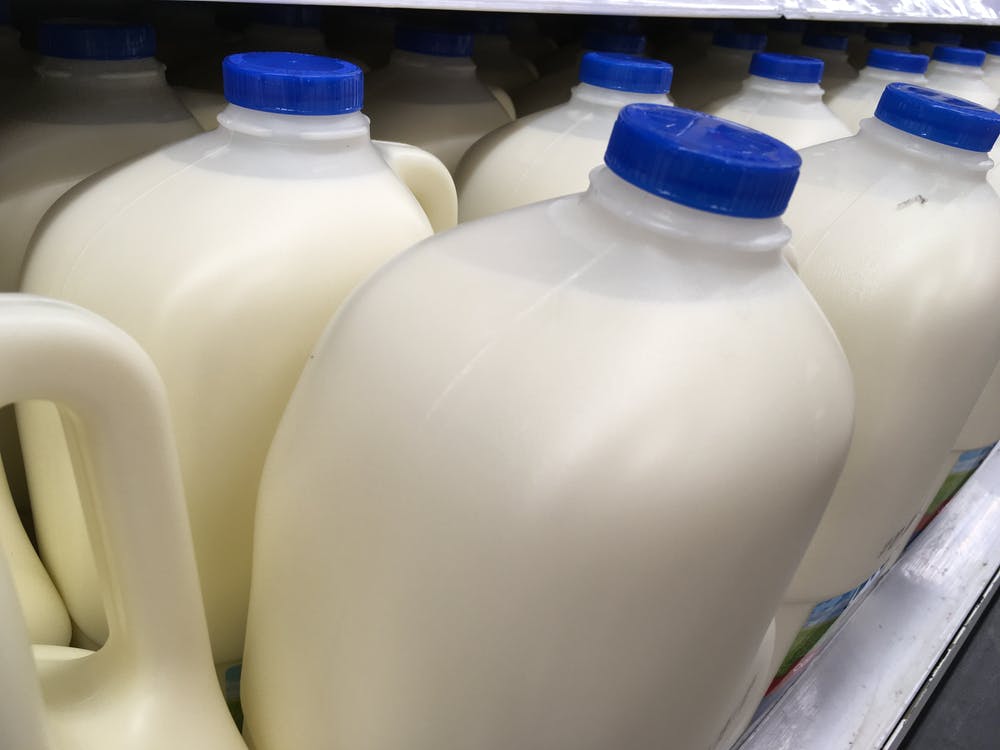
Last year, the WHO updated its global feeding guideline[5] for children under two years old. This included recommending babies who are partially or totally formula fed can have whole animal milks (for example, full-fat cow’s milk) from six months.
This recommendation was made after a systematic review[6] of research by WHO comparing the growth, health and development of babies fed infant formula from six months of age with those fed pasteurised or boiled animal milks.
The review found no evidence the growth and development of babies who were fed infant formula was any better than that of babies fed whole, fresh animal milks.
The review did find an increase in iron deficiency anaemia[7] in babies fed fresh animal milk. However, WHO noted this could be prevented by giving babies iron-rich solid foods[8] daily from six months.
On the strength of the available evidence, the WHO recommended babies fed infant formula, alone or in addition to breastmilk, can be fed animal milk or infant formula[9] from six months of age.
The WHO said that animal milks fed to infants could include pasteurised full-fat fresh milk, reconstituted evaporated milk, fermented milk or yoghurt. But this should not include flavoured or sweetened milk, condensed milk or skim milk.
Why is this controversial?
Australian government guidelines[11] recommend “cow’s milk should not be given as the main drink to infants under 12 months”. This seems to conflict with the updated WHO advice. However, WHO’s advice is targeted at governments and health authorities rather than directly at parents.
The Australian dietary guidelines are under review[12] and the latest WHO advice is expected to inform that process.
Read more: Misleading food labels contribute to babies and toddlers eating too much sugar. 3 things parents can do[13]
OK, so how about iron?
Iron is an essential nutrient for everyone but it is particularly important for babies[14] as it is vital for growth and brain development. Babies’ bodies usually store enough iron during the final few weeks of pregnancy to last until they are at least six months of age[15]. However, if babies are born early (prematurely), if their umbilical cords are clamped too quickly[16] or their mothers are anaemic during pregnancy, their iron stores may be reduced.
Cow’s milk is not a good source[17] of iron. Most infant formula is made from cow’s milk and so has iron added[18]. Breastmilk is also low in iron but much more of the iron in breastmilk is taken up by babies’ bodies[19] than iron in cow’s milk.
Babies should not rely on milk (including infant formula) to supply iron after six months. So the latest WHO advice emphasises the importance of giving babies iron-rich solid foods from this age. These foods include:
You may have heard that giving babies whole cow’s milk can cause allergies. In fact, whole cow’s milk is no more likely[20] to cause allergies than infant formula based on cow’s milk.
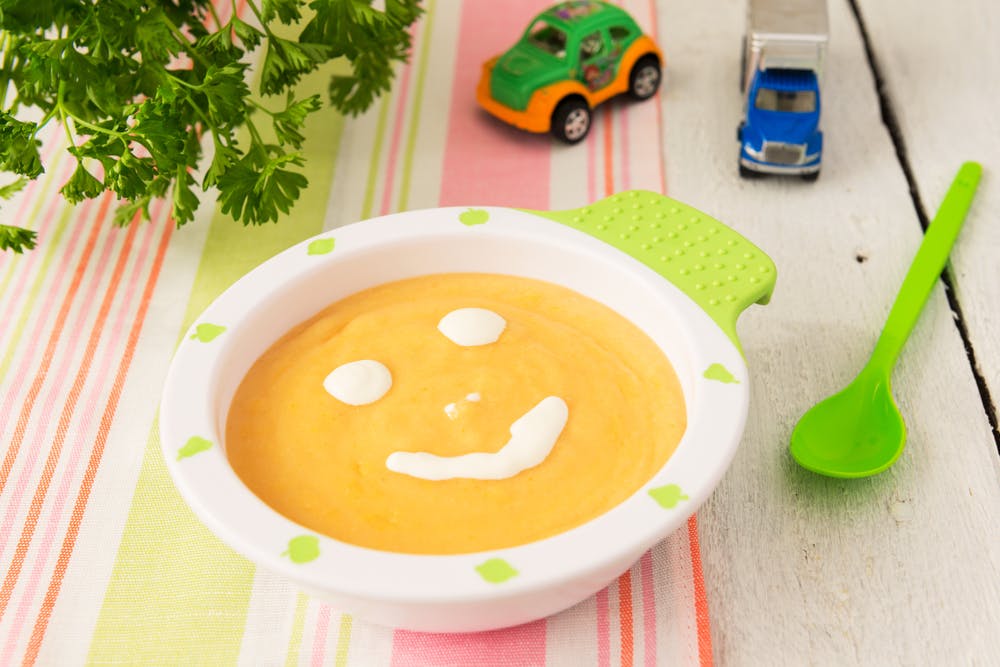 If you’re introducing cow’s milk at six months, offer iron-rich foods too, such as meat or lentils.
pamuk/Shutterstock[21]
If you’re introducing cow’s milk at six months, offer iron-rich foods too, such as meat or lentils.
pamuk/Shutterstock[21]
Read more: Infant formula companies are behind the guidelines on milk allergy, and their sales are soaring[22]
What are my options?
The latest WHO recommendation that formula-fed babies can switch to cow’s milk from six months could save you money. Infant formula can cost more than five times more than fresh milk (A$2.25-$8.30 a litre versus $1.50 a litre).
For families who continue to use infant formula, it may be reassuring to know that if infant formula becomes hard to get due to a natural disaster or some other supply chain disruption[23] fresh cow’s milk is fine to use from six months.
It is also important to know what has not changed in the latest feeding advice. WHO still recommends infants have only breastmilk for their first six months and then continue breastfeeding for up to two years or more[24]. It is also still the case that infants under six months who are not breastfed or who need extra milk should be fed infant formula. Toddler formula[25] for children over 12 months is not recommended[26].
All infant formula available in Australia must meet the same standard[27] for nutritional composition and food safety. So, the cheapest infant formula is just as good as[28] the most expensive.
Read more: If you're feeding with formula, here's what you can do to promote your baby's healthy growth[29]
What’s the take-home message?
The bottom line is your baby can safely switch from infant formula to fresh, full-fat cow’s milk from six months as part of a healthy diet with iron-rich foods. Likewise, cow’s milk can also be used to supplement or replace breastfeeding from six months, again alongside iron-rich foods.
If you have questions about introducing solids your GP, child health nurse or dietitian can help. If you need support with breastfeeding or starting solids you can call the National Breastfeeding Helpline[30] (1800 686 268) or a lactation consultant[31].
References
- ^ recommends (www.who.int)
- ^ advice (www.nhmrc.gov.au)
- ^ are confused (www.smh.com.au)
- ^ Why is toddler milk so popular? Follow the money (theconversation.com)
- ^ feeding guideline (www.who.int)
- ^ systematic review (cdn.who.int)
- ^ iron deficiency anaemia (www.rch.org.au)
- ^ iron-rich solid foods (www.who.int)
- ^ animal milk or infant formula (iris.who.int)
- ^ Mr Adi/Shutterstock (www.shutterstock.com)
- ^ Australian government guidelines (www.eatforhealth.gov.au)
- ^ review (www.nhmrc.gov.au)
- ^ Misleading food labels contribute to babies and toddlers eating too much sugar. 3 things parents can do (theconversation.com)
- ^ babies (www.sciencedirect.com)
- ^ six months of age (www.ncbi.nlm.nih.gov)
- ^ too quickly (www.who.int)
- ^ not a good source (www.ncbi.nlm.nih.gov)
- ^ has iron added (www.betterhealth.vic.gov.au)
- ^ taken up by babies’ bodies (www.ncbi.nlm.nih.gov)
- ^ is no more likely (www.ncbi.nlm.nih.gov)
- ^ pamuk/Shutterstock (www.shutterstock.com)
- ^ Infant formula companies are behind the guidelines on milk allergy, and their sales are soaring (theconversation.com)
- ^ supply chain disruption (www.ncbi.nlm.nih.gov)
- ^ up to two years or more (www.who.int)
- ^ Toddler formula (theconversation.com)
- ^ not recommended (iris.who.int)
- ^ standard (www.legislation.gov.au)
- ^ is just as good as (raisingchildren.net.au)
- ^ If you're feeding with formula, here's what you can do to promote your baby's healthy growth (theconversation.com)
- ^ National Breastfeeding Helpline (www.breastfeeding.asn.au)
- ^ lactation consultant (www.lcanz.org)
Read more https://theconversation.com/when-can-my-baby-drink-cows-milk-its-sooner-than-you-think-227044