Indigenous trailblazer Lowitja O'Donoghue dies aged 91
- Written by: Michelle Grattan, Professorial Fellow, University of Canberra
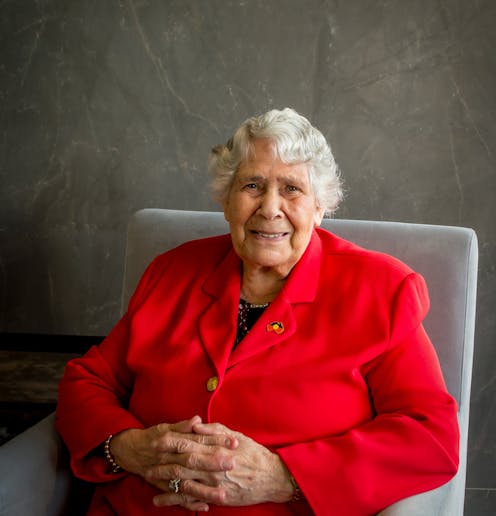
Aboriginal and Torres Strait Islander readers are advised this article contains the name and images of a deceased person.
One of Australia’s most highly-regarded Indigenous leaders, Dr Lowitja O’Donoghue, has died aged 91.
O'Donoghue, a Yankunytjatjara woman, was the inaugural chair of the Aboriginal and Torres Strait Islander Commission from 1990 to 1996, and a leading figure in debates over Indigenous rights and policy for multiple decades.
She suffered, and triumphed over, the privations and struggles of so many Aboriginal people, including being removed from her mother as a toddler and handed over to missionaries.
After facing initial resistance to her desire to enter nursing, because she lacked the required scholastic qualification, she became the first Aboriginal trainee nurse at the Royal Adelaide Hospital.
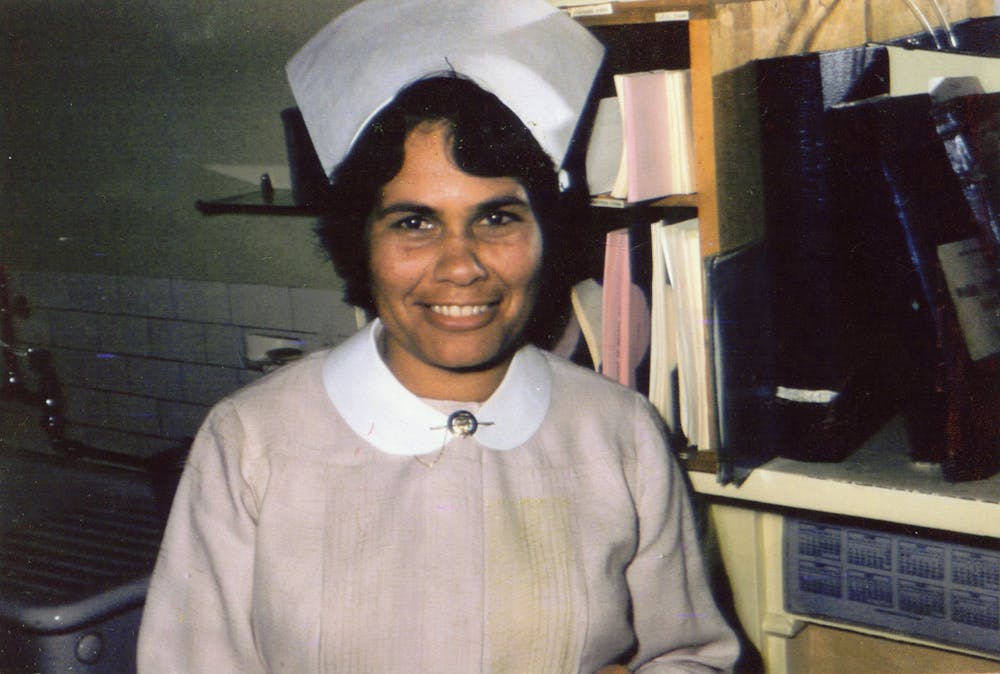
Later she was the first woman to be a regional director of an Australian federal department.
She was involved in Indigenous causes ranging in scope from the 1967 referendum to the native title legislation of the 1990s.
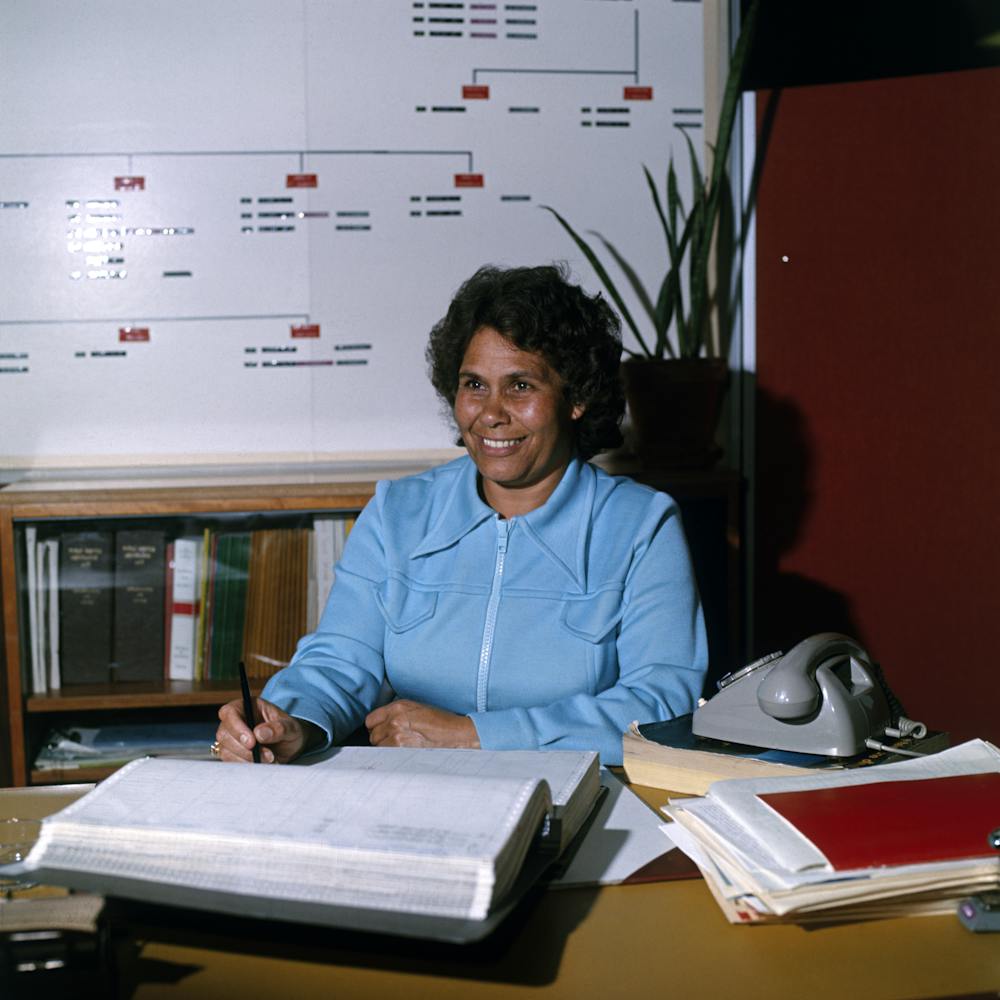 Working at the Department of Aboriginal Affairs in the 1970s.
Lowitja O'Donoghue Collection
Working at the Department of Aboriginal Affairs in the 1970s.
Lowitja O'Donoghue Collection
In 1984 she was Australian of the Year; in 1999 she became a Companion of the Order of Australia – the top honour – “for public service through leadership to Indigenous and non-Indigenous Australians in the areas of human rights and social justice”.
She turned down Paul Keating’s offer of the governor-generalship. She told The Australian, “I told him, ‘I’m a republican. And so are you.”
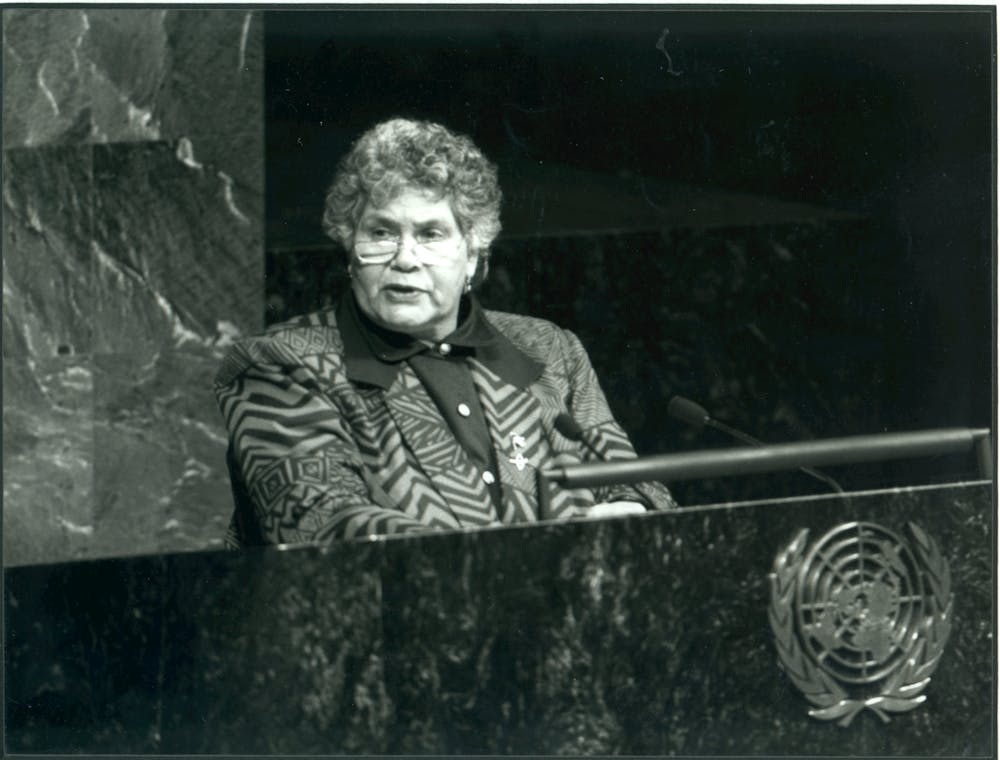 Lowitja O'Donoghue was the first Aboriginal person to address the United Nations General Assembly in 1992, in Geneva.
Lowitja O'Donoghue Collection
Lowitja O'Donoghue was the first Aboriginal person to address the United Nations General Assembly in 1992, in Geneva.
Lowitja O'Donoghue Collection
Her family said in a statement[1] announcing her death: “Aunty Lowitja dedicated her entire lifetime of work to the rights, health, and wellbeing of Aboriginal and Torres Strait Islander peoples”.
Prime Minister Anthony Albanese described O'Donoghue[2] as “a figure of grace, moral clarity, and extraordinary inner strength.
"With an unwavering instinct for justice and a profound desire to bring the country she loved closer together, Dr O’Donoghue was at the heart of some of the moments that carried Australia closer to the better future she knew was possible for us, among them the Apology to the Stolen Generation and the 1967 referendum. She provided courageous leadership during the Mabo debates and as chair of the Aboriginal and Torres Strait Islander Commission,” Albanese said.
“Dr O'Donoghue knew that our best future was a shared one built on the strong, broad foundations of reconciliation.”
The Minister for Indigenous Australians, Linda Burney, said[3]: “Lowitja was not just a giant for those of us who knew her, but a giant for our country.”
“Lowitja’s leadership and tenacity has been an inspiration for generations of Aboriginal and Torres Strait Islander Australians, including myself.”
Indigenous leader Tom Calma described O'Donoghue as “a real hero for Aboriginal and Torres Strait Islanders and for many other Australians. She always had all Australians in mind.
"She was a mentor of mine in my early days. She taught me how to be a good public servant and to operate ethically.”
Noel Pearson said O'Donoghue was “a leaders’ leader”.
“There were two ATSICs, one under Lowitja and the other after,” Pearson said. “It failed at the national level after Lowitja’s term as chair expired, but it was always a force for good in the regions and communities.
"Without Lowitja’s ATSIC we would never have defended Eddie Mabo’s great legacy and negotiated the Native Title Act and Indigenous Land Fund.”
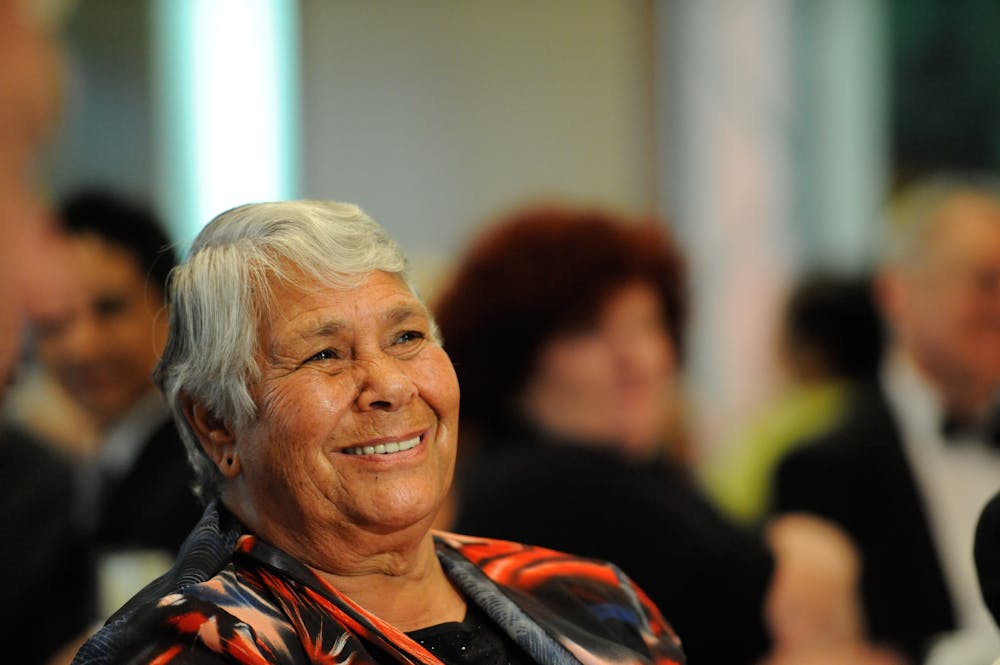 At the 2010 launch of the Lowitja Institute, a national Aboriginal and Torres Strait Islander health research body.
Lowitja Institute
At the 2010 launch of the Lowitja Institute, a national Aboriginal and Torres Strait Islander health research body.
Lowitja Institute
Lowitja Institute patron Pat Anderson said[4] she was “a national treasure”.
“Courageous and fearless in leading change, Lowitja was continually striving for better outcomes for Aboriginal and Torres Strait Islander peoples. She will remain in my heart as a true friend and an inspiration to Australians for years to come.”
References
- ^ a statement (www.lowitja.org.au)
- ^ described O'Donoghue (www.pm.gov.au)
- ^ said (ministers.pmc.gov.au)
- ^ said (www.lowitja.org.au)
Read more https://theconversation.com/indigenous-trailblazer-lowitja-odonoghue-dies-aged-91-222724