


Poor Things gets girls’ early sexual feelings right
- Written by: Saskia Roberts, PhD Candidate, School of History, Australian National University

This piece contains spoilers for Poor Things.
Poor Things can be described in one word: polarising. Yorgos Lanthimos’ film follows Bella Baxter (Emma Stone), a scientist’s experiment created from a woman’s body and a child’s mind.
It won two Golden Globes[1] and received a standing ovation[2] at the Venice Film Festival.
Yet others walked out of the Venice screening during its many sex scenes, one which depicts a father teaching his two sons the birds and the bees by letting them watch him and Bella in the act. (This scene has been re-edited[3] for the United Kingdom release to comply with local classification requirements.)
While some critics lauded Poor Things as a feminist exploration[4] of sexual liberation, others saw it as a male director and screenwriter’s exploitative attempt to portray female sexuality. Vulture writer Angelica Jade Bastién took the latter view, arguing[5] the film:
is not interested in the sex lives of women as much as the ways in which a young woman’s body can be positioned and used […] I want to see what a grown woman thinks and feels about sex!
But I think it is wrong to read Poor Things as a film about grown women. Its most controversial scene involves children witnessing sex, and Bella begins the movie with a child’s brain. Poor Things is about the sexuality of girls. It accurately depicts girls’ early sexual feelings and shows us some more positive ways of understanding girlhood sexual desire.
Discovering sexuality
I have interviewed 23 Australians who were teenage girls between 1970 and 2010 about how they learned about sex, and their experiences were echoed in Poor Things.
Early in the film, Bella teaches herself to masturbate and is delighted by her discovery. Many of my interviewees had similar memories, often describing themselves as “exploring” their bodies and finding enjoyable sensations in the process.
Nicole* grew up in the 2000s and told me she did not know what she was doing when she first masturbated, but
somehow when I was pretty young […] [I] discovered that it felt good.
Interviewees, including Nicole, were normally aged between five and 10 during these experiences (which are normal and common[6] among children).
Interviewees regularly described their early forays into masturbation as disconnected from adult sexuality. These were simply experiments with their bodies.
But this also meant my interviewees often believed nobody else masturbated. Sue, born in the 1960s, even created her own term for masturbation, because she had never heard anyone speak about it before:
It was my bobble wobble. I had no idea that it had a name.
Bella also thinks she is the first person to masturbate, and humiliates her maid by demonstrating her newfound discovery. This is the first of many incidents in which she learns “polite society” does not speak about sex, let alone perform it in public. While Bella mostly ignores these warnings, many of my interviewees were acutely aware of societal expectations about girlhood sexual desire.
Read more: 'Is it normal for girls to masturbate?'[7]
Girls are interested in sex
In the recent past, the media depicted boys as much more sexual than girls, who were supposedly interested in romance instead. Even magazines like Dolly – which catered to girls and spoke openly[8] about sex – assumed girls’ sexual impulses would be awakened by their boyfriends’ advances.
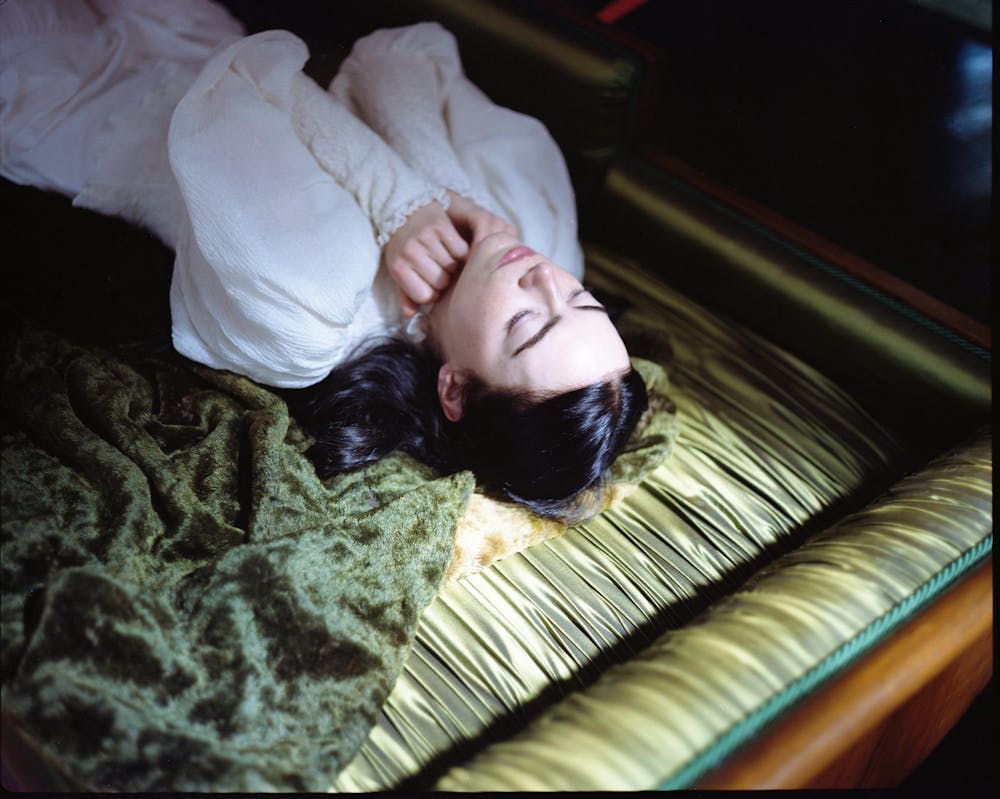
This is clear even in well-meaning advice to girls about not being “pressured” into sex, which presupposes girls would not initiate sex themselves. Studies about Dolly and Girlfriend have also found their columnists downplayed[9] girls’ sexual desires and insisted they were responsible for controlling[10] boys’ sexual behaviours.
These ideas clearly influenced my interviewees. Many were deeply ashamed of masturbating by the time they were teenagers. Some were told not to masturbate by their parents. Others became fearful when their friends called masturbation disgusting. Charlotte* even read a book that said masturbating children developed excess phlegm. She concluded:
obviously you’re not meant to have fun like that […] obviously you’re not meant to do it yourself.
None of this stopped my interviewees from masturbating. It only stopped them from talking about it or thinking anyone else did it too.
Read more: Goodbye, Dolly, the magazine that helped so many young women grow up[11]
A healthy sexuality
Teen media did not always have a negative influence. Several interviewees told me they learned the word “masturbation” from Dolly, which portrayed it as a normal and healthy practice. “Oh, that’s what I’ve been doing”, thought Nicole when she found instructions on how to masturbate in the magazine. This discovery was reassuring; so too were discussions about masturbation with friends (though very few people were brave enough to mention it out loud).
But my interviewees still felt conversations about sexual pleasure were missing from their media and their education. Jess, born in the 1990s, told me:
[In] high school, I had a great understanding of the mechanics. But pleasure had never been part of the discussion, you know?
Perhaps Poor Things could be instructive here.
Bella does not feel embarrassed about enjoying sex, nor in talking about it. This allows her to cast aside her controlling lovers and to question the conditions at her brothel workplace. She develops a healthy relationship to her sexuality; she knows sex should be enjoyable for her, not just for men, and that she should not be coerced into it.
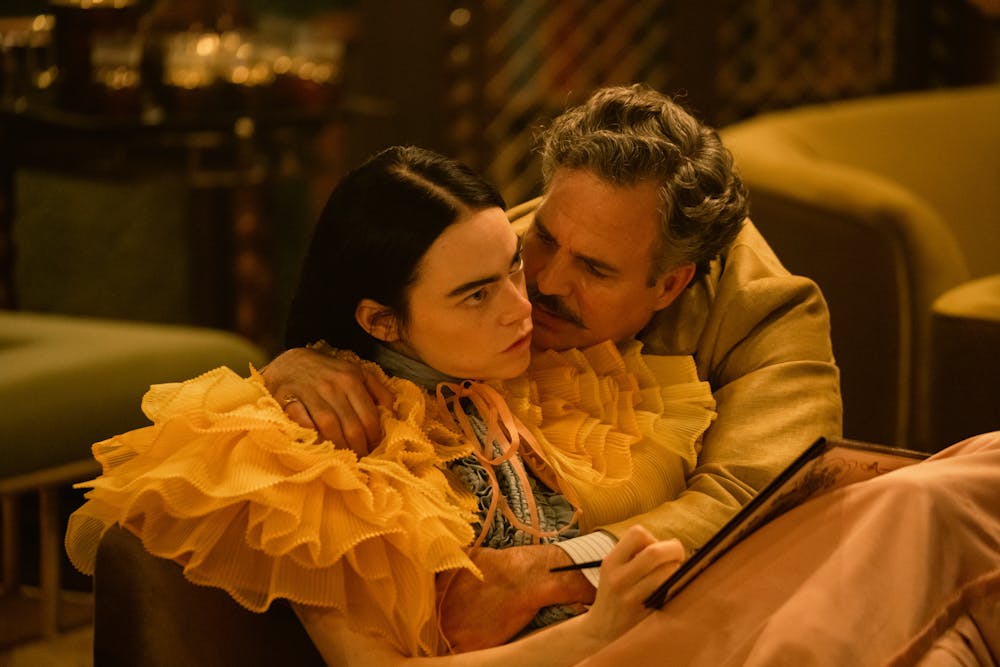 Bella does not feel embarrassed about enjoying sex, nor in talking about it.
Searchlight Pictures
Bella does not feel embarrassed about enjoying sex, nor in talking about it.
Searchlight Pictures
Bella Baxter may be a fairy tale character who makes her own sexual rules[12]. But we can learn from her. We can treat girls’ masturbation as natural and normal. We can show future generations there is nothing shameful about sexuality. And we can teach girls to know not just their sexual rights, but also their sexual pleasures.
Read more: Poor Things: meet the radical Scottish visionary behind the new hit film[13]
*Names have been changed.
References
- ^ won two Golden Globes (www.theguardian.com)
- ^ standing ovation (variety.com)
- ^ been re-edited (www.indiewire.com)
- ^ feminist exploration (www.timeout.com)
- ^ arguing (www.vulture.com)
- ^ normal and common (theconversation.com)
- ^ 'Is it normal for girls to masturbate?' (theconversation.com)
- ^ spoke openly (theconversation.com)
- ^ downplayed (journals-sagepub-com.virtual.anu.edu.au)
- ^ controlling (press-files.anu.edu.au)
- ^ Goodbye, Dolly, the magazine that helped so many young women grow up (theconversation.com)
- ^ her own sexual rules (www.vogue.com)
- ^ Poor Things: meet the radical Scottish visionary behind the new hit film (theconversation.com)










