With Taiwan's election just a month away, the China threat is emerging as the main talking point
- Written by: Rebecca Strating, Director, La Trobe Asia and Associate Professor, La Trobe University, La Trobe University
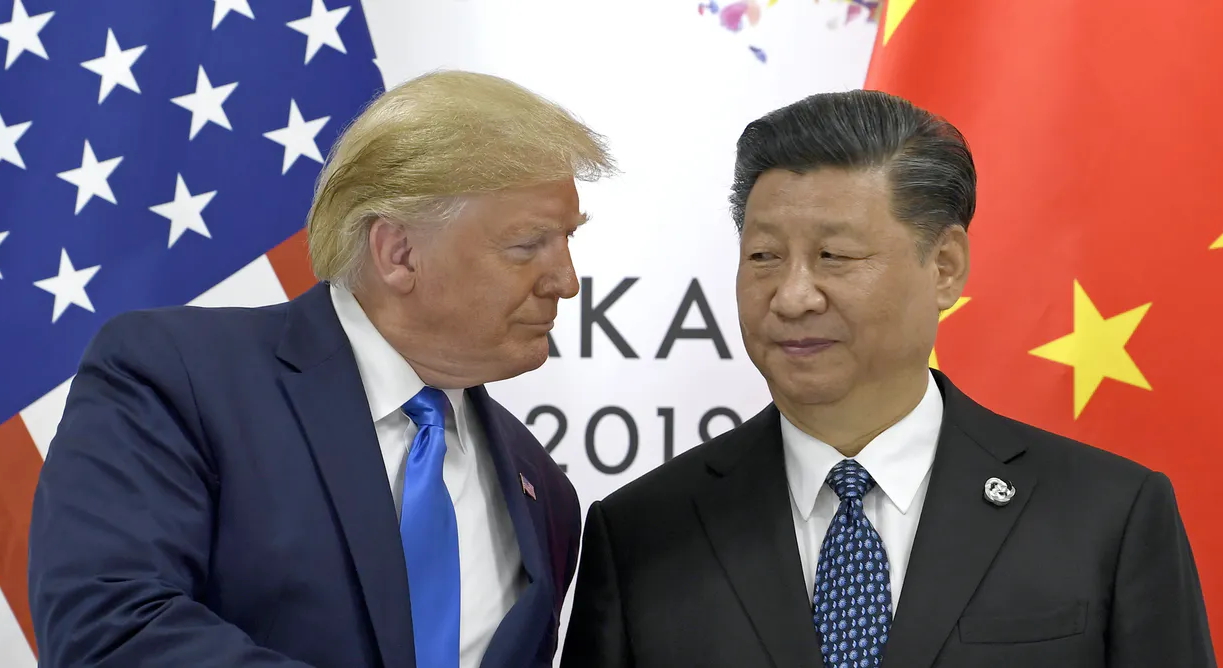
Taiwan is gearing up for important presidential and legislative elections next month. How to manage “cross-strait” relations with China is not surprisingly emerging as the critical issue of the campaigns.
Taiwan first held competitive presidential elections[1] in 1996. Democracy has proven popular with the people. In the 2020 elections, voter turnout was nearly 75%[2], which is high[3] for a system with non-compulsory voting.
Yet, there are concerns about China’s efforts to shape the election result through influencing public opinion. In a recent visit, one representative told me there are actually four parties in the January 13 election: the Democratic Progressive Party (DPP), the Kuomintang (KMT), Taiwan People’s Party (TPP) – and China.
Who is running?
President Tsai Ing-wen of the Democratic Progressive Party cannot run again due to term limits, so the DPP’s presidential candidate is Vice President Lai Ching-te (known also as William Lai).
The election is the DPP’s to lose. While Tsai’s approval ratings have dropped recently, and Lai’s ratings fell below 30%[4] for the first time since entering the presidential race, he is still leading the polls[5].
His election hopes were boosted when a negotiation between KMT and TPP to establish a unity, “pan-blue” ticket fell through[6]. In a first-past-the-post electoral system, the winner only needs to get the most votes. Now, the “pan-blue” vote - the Kuomintang’s party colour - will split between the KMT and TPP.
It will be a struggle, however, for the DPP to win a majority in the Legislative Yuan[7], meaning the president might have to negotiate with a potentially hostile legislature.
The main parties’ positions on China
Since Tsai was first elected president in 2016, her administration has sought to prevent China from isolating Taiwan internationally, partly through forging closer relations with the United States and other regional democracies, such as Japan and Australia.
The DPP is now concerned about China’s role in attempting to shape the outcome of the election.
There is growing evidence[8] China has sought to influence Taiwanese public opinion through disinformation campaigns, particularly targeting younger audiences through TikTok. In Taiwan, Chinese-owned TikTok is barred from government-issued devices[9]. This makes countering disinformation challenging, especially when it spreads to more popular social media sites and traditional media.
Read more: The microchip industry would implode if China invaded Taiwan, and it would affect everyone[10]
For example, a Taiwanese newspaper, United Daily News, published a story based on supposedly leaked government meeting minutes that the US had asked Taiwan[11] to make biological weapons at a lab run by its defence ministry. The minutes, however, contained official-sounding phrases[12] that are used in China, not in Taiwan.
At a recent La Trobe University[13] event, Taiwan’s foreign minister, Joseph Wu, also expressed concern about China’s “grey zone tactics”, such as the use of cognitive and cyber warfare, non-military assets like fishing vessels and the coastguard and economic coercion, to pressure Taiwan and regional countries.
The DPP’s policy platform is centred on building Taiwan’s ability to militarily deter and defend against a potential Chinese invasion, strengthening international partnerships (capitalising on the close coalitions that China does not have) and resisting attempts by China to subordinate Taiwan.
In contrast, the KMT views the current state of tense cross-strait relations as a consequence of DPP policies.
In dealing with China and regional security more broadly, KMT presidential candidate Hou Yu-ih has proposed a “three Ds” strategy: deterrence, dialogue and de-escalation.[14]. He says Taiwan needs to resume cross-strait interaction in a “low-level and stable[15]” way.
The KMT argues that DPP policies are escalating tensions. They also contend the DPP cannot maintain diplomatic relations with China, which is needed to buy time and stabilise cross-strait relations, especially as Taiwan waits for important military capabilities to arrive over the next three years.
According to one CIA report[16], 2027 is a critical year because Chinese President Xi Jinping has ordered the military to be ready by then to invade Taiwan.
Instead, the KMT argues it can lower the temperature and reduce risk. Hou has said that “there will be no war[17] on both sides of the Taiwan Strait” if the KMT is elected.
The DPP views this as an oversimplified “war” versus “peace” narrative. Lai says the presidential election is rather a choice between “democracy and autocracy[18]”.
The TPP’s candidate, Ko Wen-je, meanwhile, has focused on treading a middle path between the two other parties. Its representatives argue the DPP is too hostile and hawkish on China, while the KMT gives the impression they’re too submissive.
Policy-wise, the TPP promises to keep communication channels with Beijing open, viewing the current suspension in high-level talks as unhelpful. While broadly “pan-blue” in nature, the TPP’s position is that younger voters don’t like the KMT.
Who can bring Taiwan economic security?
While Taiwanese people are concerned about potential conflict - one poll finds more than 80%[19] of Taiwanese people believe the China threat is worsening – prospects for peace and stability are also affecting the island’s international business and investment outlook. This has consequences for Taiwan’s economic interests, as well as China’s and the rest of the world.
Read more: War in Ukraine is a warning to China of the risks in attacking Taiwan[20]
Like many other economies in the region, China is Taiwan’s largest trading partner, accounting for a quarter[21] of total trade in 2021. “De-risking” and diversifying the economy and providing economic security and supply chain stability is viewed as critical by the current government. As is encouraging businesses to see the security imperative in diversifying away from China.
The DPP is also concerned about China’s use of economic activities to affect political outcomes, targeting business people and lower-level political figures and using social, cultural and religious exchanges to influence public opinion in Taiwan. Yet, some of these public diplomacy activities are not unusual and Taiwan itself provides opportunities for similar exchanges.
In contrast to the DPP, the KMT argues it is not so easy to “decouple” Taiwan’s economy from China. There are still strong business links with China, and a democratic country cannot force businesses to pull out of China, particularly if their main competition comes from South Korea or Japan.
The TPP is hoping to capitalise on young voters’ dissatisfaction[22] with the DPP and KMT by focusing on domestic issues such as cost of living, income stagnation and housing affordability. While adopting a pragmatic relationship with Beijing is important given the economic realities, the TPP still views the US as a critical partner for Taiwan.
Ultimately, the DPP advocates for clarity[23] in cross-strait relations. The KMT finds value in maintaining an ambiguous and flexible stance. The relatively new TPP, meanwhile, positions itself somewhere in the middle.
References
- ^ first held competitive presidential elections (www.nytimes.com)
- ^ 75% (anfrel.org)
- ^ high (www.pewresearch.org)
- ^ below 30% (www.scmp.com)
- ^ leading the polls (asiasociety.org)
- ^ fell through (thediplomat.com)
- ^ Legislative Yuan (asiasociety.org)
- ^ growing evidence (www.taipeitimes.com)
- ^ barred from government-issued devices (www.taipeitimes.com)
- ^ The microchip industry would implode if China invaded Taiwan, and it would affect everyone (theconversation.com)
- ^ Taiwan (www.economist.com)
- ^ official-sounding phrases (www.economist.com)
- ^ La Trobe University (www.latrobe.edu.au)
- ^ deterrence, dialogue and de-escalation. (asiasociety.org)
- ^ low-level and stable (focustaiwan.tw)
- ^ CIA report (www.cbsnews.com)
- ^ there will be no war (www.usip.org)
- ^ democracy and autocracy (jp.reuters.com)
- ^ 80% (www.theguardian.com)
- ^ War in Ukraine is a warning to China of the risks in attacking Taiwan (theconversation.com)
- ^ a quarter (www.trade.gov)
- ^ dissatisfaction (www.wilsoncenter.org)
- ^ clarity (thediplomat.com)