What is Zionism? A history of the political movement that created Israel as we know it
- Written by: Andrew Thomas, Lecturer in Middle East Studies, Deakin University
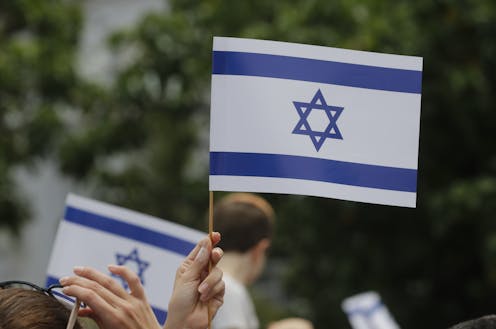
As the Israel-Hamas war continues, there’s been a lot of discussion around Zionism.
Put simply, Zionism is a nationalist movement that advocates for a homeland for the Jewish people in the Biblical Land of Israel[1]. It is the organisation of ideas that actively sought and achieved the existence of the Israeli state in 1948.
Basically, political Zionism underpins the country we today call Israel.
It’s a movement that encompasses a broad spectrum of political beliefs with common objectives at its centre. But perhaps more than other political movements, Zionism has evolved over time.
So what is the history of Zionism, and what has that evolution looked like?
Read more: On its 75th birthday, Israel still can't agree on what it means to be a Jewish state and a democracy[2]
Where did Zionism come from?
There are biblical underpinnings to Zionism, as religious Zionists often reference God promising the Land of Canaan to Abraham[3] and his descendants – the Israelites – and renaming it the Land of Israel.
For various reasons, Jews decided to relocate to Ottoman Palestine towards the end of the 19th century. The first mass migration (known as the First Aliyah) occurred between 1882 and 1901. Between 15,000 and 25,000 Jews migrated, essentially doubling the region’s Jewish population at the time.
However, the beginnings of modern Zionism are secular and constructed through political philosophy.
Although many Zionist ideas predate his works, Theodore Herzl is considered the father of modern Zionism as he was the first to set out its political aims clearly.
Herzl was raised in a secular Jewish household in Hungary. In Vienna, he had a brief career as a lawyer before becoming a journalist and writer of plays and literature. Initially, he firmly believed European Jews should assimilate into European culture, and he held this view for much of his early life.
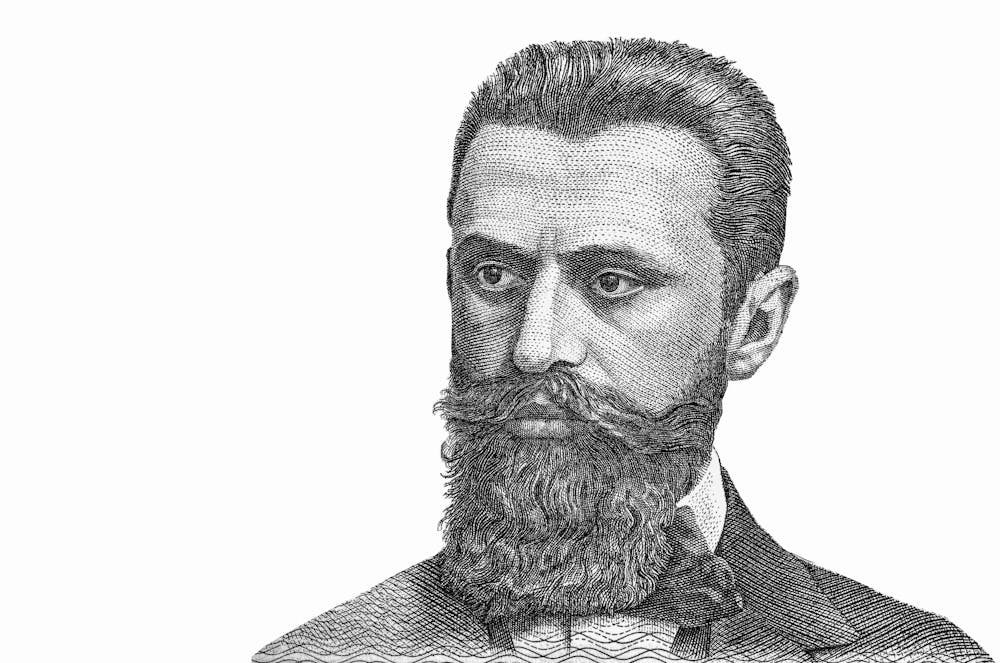
But his views changed after witnessing antisemitic riots in Paris[5] in 1898. He decided antisemitism was not something that could ever be defeated. Instead, he encouraged European Jews to abandon the continent and create their own national home.
In his 1896 work Der Judenstaat: Versuch einer modernen Lösung der Judenfrage[6] (The Jewish State: Proposal of a modern solution for the Jewish question), he argues Jews possess a national identity that should be embraced.
However, he said, they would never be safe from antisemitism unless they lived in a community in which they were the majority.
A Jewish state in the Middle East
In his diaries, Herzl mused about many places a Jewish state could take shape. This homeland would be outside Europe, potentially in Latin America. But by 1904, Herzl began to focus on the Promised Land (Eretz Yisrael) in the Middle East “from the brook of Egypt to the Euphrates (in Iraq)[7]”.
In the early 1900s, this area was controlled by the Ottoman Empire, and Herzl met with Ottoman dignitaries multiple times to lobby the Zionist cause.
Herzl’s vision is considered by many as eurocentric and colonial[8] with regard to the to the native Palestinian population.
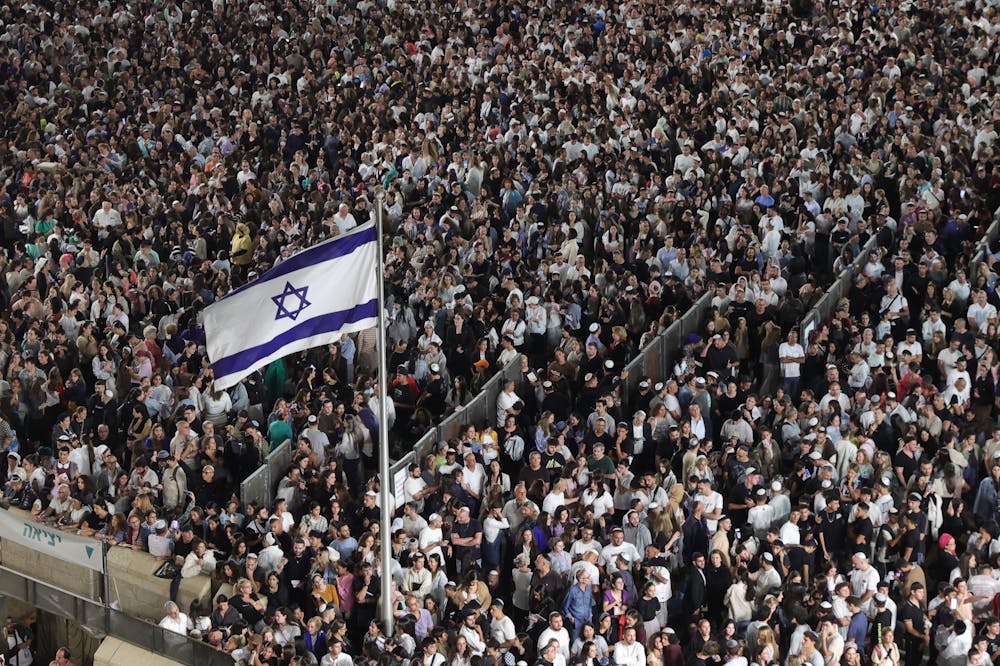 Tens of thousands of Israelis gather for the Selichot prayers (forgiveness) in Jerusalem.
Abir Sultan/EPA
Tens of thousands of Israelis gather for the Selichot prayers (forgiveness) in Jerusalem.
Abir Sultan/EPA
But given that Jews are also originally native to this land, the Anti Defamation League (ADL)[9] argues that the establishment of a Jewish state in Israel is not a form of settler colonialism.
It can be argued that political Zionism exhibits both anticolonial and colonial aspirations[10].
On one hand, it seeks to give self-determination to the Jewish people in a land to which they were once native. On the other, given early Zionists were trying to convince European colonial powers to create the Jewish national home, it adopted some colonial rationalisations and often saw the existing population, both Arabs and native Jews[11], as inferior.
Herzl rarely wrote about Arabs or other native populations, and when he did, he mused about how much their lives would be improved[12] by the best of European and Jewish culture.
A growing political force
As Jewish migration began to gather steam, Zionism became more politically influential internationally.
But as the first world war drew to a close, there were large geopolitical shifts in the region. The Ottoman Empire’s power was waning, and the British would eventually end up in control of Jordan and Palestine in 1919.
In 1917, in an effort to undermine Ottoman control, the British implicitly supported the existence of a Jewish homeland in the Balfour Declaration[13]:
His Majesty’s Government view with favour the establishment in Palestine of a national home for the Jewish people.
The British would later renege on the declaration in 1939, saying it was no longer British government policy to support a Jewish homeland.
As British colonial rule continued, not all Zionist action was peaceful. Paramilitary organisations such as Ze'ev Jabotinsky’s Irgun and the Lehi (also known as the “Stern Gang”) conducted bombings and attacks against the colonial British[14].
These groups would perpetrate the Deir Yassin massacre[15] in 1948, killing more than 100 Palestinians near Jerusalem.
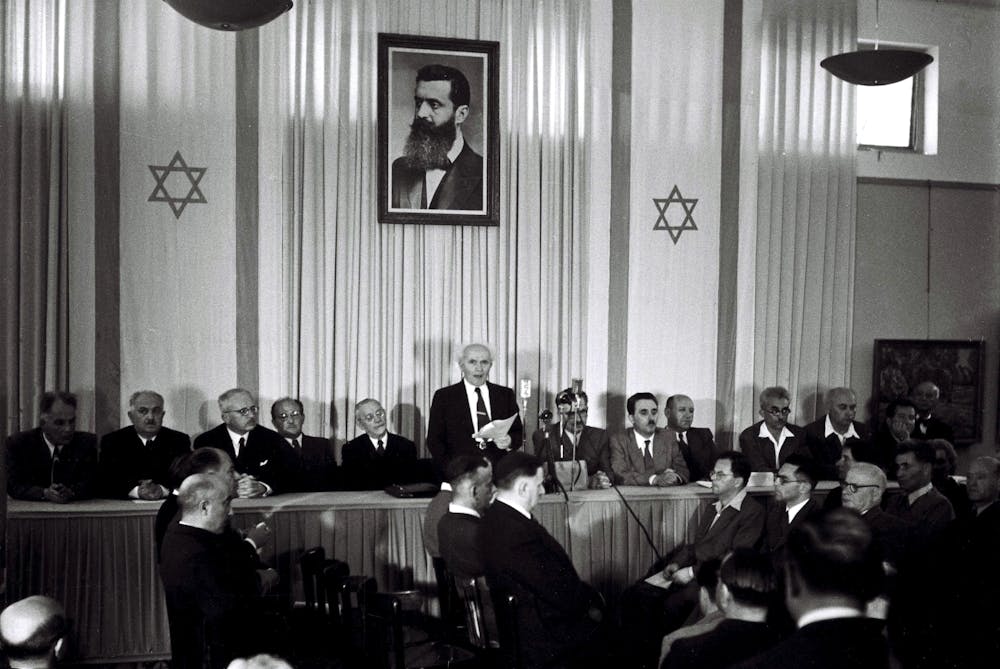 The state of Israel was founded on 14th May, 1948 by its first Prime Minister, David Ben-Gurion.
Kluger Zoltan-Israeli Government Press Office/EPA
The state of Israel was founded on 14th May, 1948 by its first Prime Minister, David Ben-Gurion.
Kluger Zoltan-Israeli Government Press Office/EPA
But it was the rise of Nazism in Europe and the Holocaust that solidified Zionism as a movement globally.
Jews fleeing Europe to settlements in Palestine (then under British rule) led to the Jewish population rising from 50,000 in the early 1900s to an estimated 650,000 by 1948[16].
Jewish calls for a “national home” turned into calls for a Jewish Commonwealth[17] with full sovereign authority over its lands.
The central goal of Zionism was achieved on May 14 1948, with new Prime Minister David Ben-Gurion declaring the establishment of the state of Israel.
The war of independence followed within hours. Some 700,000 Palestinians fled to the West Bank (then belonging to Jordan), Gaza (a part of Egypt) and the neighbouring Arab states. This is known among Palestinians as the Nakba; the Arabic word for “catastrophe”, and the point at which Palestinians lost self-determination.
Read more: A brief history of the US-Israel 'special relationship' shows how connections have shifted since long before the 1948 founding of the Jewish state[18]
Zionism in the current world
Over the decades, Zionism has changed considerably as new political questions raised themselves. With the state of Israel established, what should the state look like and how should it protect itself from its foreign adversaries?
One of these questions is: how should Zionism respond to Palestinian self-determination?
The annexation of the West Bank by Jordan and Gaza by Egypt after the war of independence seemed to answer this question in the short term. Israel offered citizenship to some Palestinians, who make up just under 20% of Israel’s population today. They are Israel’s largest minority and have often struggled with political representation and socio-economic outcomes[19].
But Israel’s swift defeat of Jordan, Syria and Egypt in the 1967 Six Day War[20] changed political realities again. Israel took control of the West Bank and Gaza, along with the millions of Palestinians living there - but they were not offered citizenship. This has left the Palestinians stateless.
This raised a question that has still not been adequately answered today: does an effective application of Zionism mean statelessness for Palestinians?
There are different schools of thought on this.
For liberal and modern Labor Zionists, factions that include members of the Yesh Atid party and the late former Prime Minister Ben-Gurion, the answer is no. They implicitly reject the idea that Palestinian and Jewish self-determination are at odds with one another.
For them, a political solution to the conflict is essential. For a long time they advocated for a two-state solution - the creation of a state of Palestine completely independent from Israel. The Palestinian Authority would transition into a state government with sovereignty over its land.
But some liberal Zionists have abandoned this idea, stating the only sustainable option is to offer Palestinians equal rights and citizenship in Israel[21], challenging the idea that the home of the Jewish people must be a Jewish state.
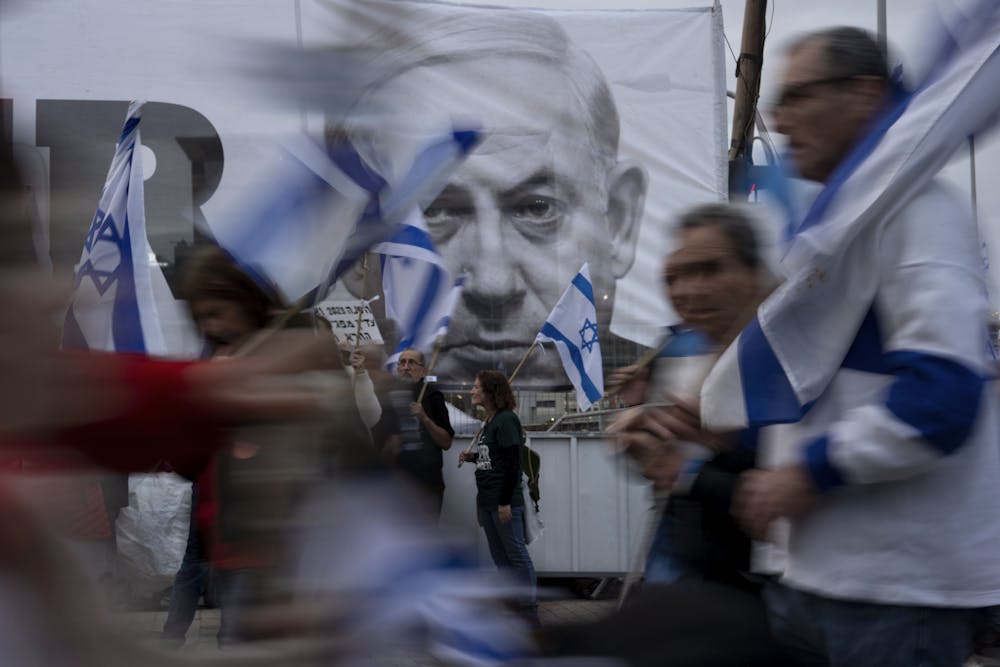 Zionism includes different schools of thought, but it’s the nationalist kind Israeli Prime Minister Benjamin Netanyahu spearheads.
Oded Balilty/AP
Zionism includes different schools of thought, but it’s the nationalist kind Israeli Prime Minister Benjamin Netanyahu spearheads.
Oded Balilty/AP
This is because of a combination of the failure to transition the West Bank and Gaza into a Palestinian state, and the contradiction of freedom for Israelis and statelessness for Palestinians.
Although the political power of liberal and Labor Zionism in the Knesset (Israel’s Parliament) has waned, it is certainly alive and well in Israeli civil society. For example, B'Tselem[22], the legacy of left wing Zionist Yossi Sarid, has been very active in documenting instances of apartheid and settler violence in the West Bank.
In short, Zionism does not preclude someone from being critical of the policies of the Israeli government.
However, for many nationalist, conservative religious and revisionist Zionists, Palestinian self-determination anywhere west of the River Jordan is a direct threat to the Jewish state. They, therefore, do not support Palestinian independence[23].
This form of Zionism has become the dominant form in Israeli politics today.
Under Prime Minister Benjamin Netanyahu, this approach has transcended rhetoric and become legislation in Israel’s Nation State Law[24] of 2018, which legally enshrines unique Jewish sovereignty in the state of Israel and settlement as a “national value”.
It is this kind of Zionism that has informed Israel’s response to Palestinian action - both political and violent - for decades.
It has attempted to justify the blockade of Gaza, the forcible transfer of Palestinians in the West Bank, bans on political speech, mandatory detention without trial, and disproportionate violence as policy solutions to Israeli-Palestinian tensions.
Read more: 10 books to help you understand Israel and Palestine, recommended by experts[25]
After the Hamas attacks on October 7, ultra-nationalist ministers have become loud and influential voices. With the help of the prime minister, their brand of Zionism has ensured that a political solution with the Palestinians is out of reach.
Notwithstanding his colonial aspirations and attitudes toward Palestinian natives, Herzl made at least some attempts to reconcile his views with liberal values and democracy. In his novel Altneuland[26] (The Old New Land) he envisaged that non-Jews would have the same rights as Jews in a democracy.
Contrast that with today, where the most powerful Zionist voices see liberal democracy – and the Palestinians – as an obstacle to security of the Israeli state.
References
- ^ Biblical Land of Israel (www.churchofjesuschrist.org)
- ^ On its 75th birthday, Israel still can't agree on what it means to be a Jewish state and a democracy (theconversation.com)
- ^ Land of Canaan to Abraham (www.bible.com)
- ^ Shutterstock (www.shutterstock.com)
- ^ antisemitic riots in Paris (www.britannica.com)
- ^ Der Judenstaat: Versuch einer modernen Lösung der Judenfrage (archive.org)
- ^ from the brook of Egypt to the Euphrates (in Iraq) (ia903407.us.archive.org)
- ^ eurocentric and colonial (mondoweiss.net)
- ^ the Anti Defamation League (ADL) (www.adl.org)
- ^ both anticolonial and colonial aspirations (academic.oup.com)
- ^ both Arabs and native Jews (cup.columbia.edu)
- ^ lives would be improved (archive.org)
- ^ Balfour Declaration (www.thoughtco.com)
- ^ colonial British (historynewsnetwork.org)
- ^ Deir Yassin massacre (www.aljazeera.com)
- ^ 650,000 by 1948 (www.jewishvirtuallibrary.org)
- ^ calls for a Jewish Commonwealth (nes.princeton.edu)
- ^ A brief history of the US-Israel 'special relationship' shows how connections have shifted since long before the 1948 founding of the Jewish state (theconversation.com)
- ^ political representation and socio-economic outcomes (www.cfr.org)
- ^ Six Day War (www.bbc.com)
- ^ Palestinians equal rights and citizenship in Israel (www.nytimes.com)
- ^ B'Tselem (www.btselem.org)
- ^ do not support Palestinian independence (www.nytimes.com)
- ^ Israel’s Nation State Law (www.timesofisrael.com)
- ^ 10 books to help you understand Israel and Palestine, recommended by experts (theconversation.com)
- ^ Altneuland (www.goodreads.com)