As Albanese heads to Washington, what can he hope to bring home?
- Written by: Victoria Cooper, Research Editor, United States Study Centre, University of Sydney
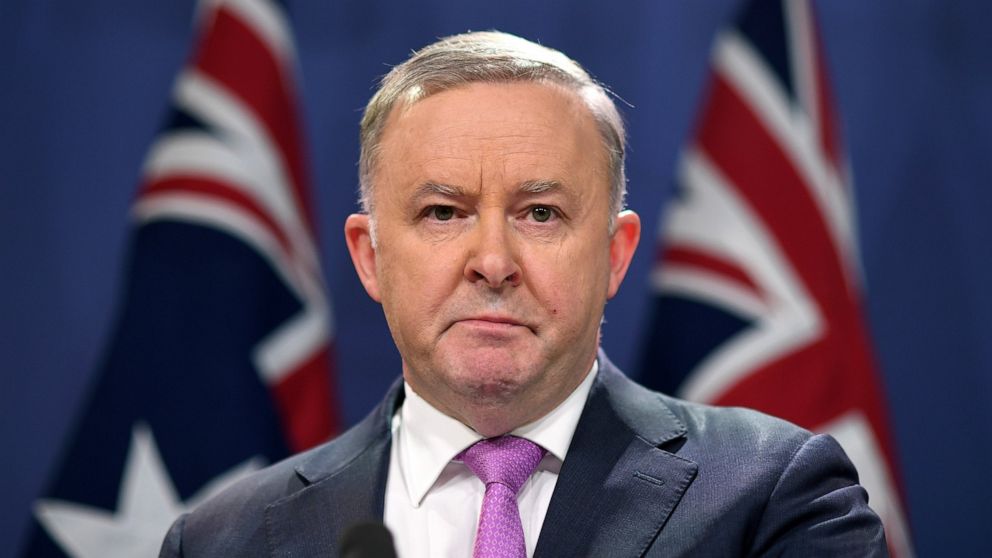
Prime Minister Anthony Albanese is due in Washington next week. He will be the fourth of US President Joe Biden’s international guests treated to the pomp and ceremony of an official state visit to the United States.
US state visits feature mostly ceremonial activities such as an exchange of symbolic gifts, a star-studded state dinner and a 21-gun salute. These are designed to honour the heads of state and the strength of friendship between the United States and its guest country.
First announced in August, the timing of the trip might put something of a dampener on the occasion given the rapidly evolving conflict in Gaza. In addition, both Australia and the United States have domestic political troubles.
So, given this context and the perpetual issue of getting the substance of the alliance front and centre with the press corps[1], what can Albanese hope to gain from this state visit?
Focusing on the now: a glitzy distraction from troubles at home?
Next week’s affair may indeed be glitzy, but no amount of ceremony is likely to distract attention from the immense challenges both Albanese and Biden face at home.
The “no” result from Australia’s referendum on an Aboriginal and Torres Strait Islander Voice to Parliament is a significant blow for the prime minister. He must now seek a new approach to Indigenous reconciliation efforts in the face of public fatigue and division.
Read more: Grattan on Friday: Anthony Albanese had good motives but his referendum has done much harm[2]
Indeed, opinion polls before the October 14 referendum showed[3] the public’s frustration with the referendum’s pre-eminence ahead of other national issues, especially the cost of living.
An extravagant official visit to Washington, where the public has long expressed confidence[4] in the stability of the relationship, is unlikely to boost Albanese’s declining approval rating[5].
Albanese is not alone in these domestic challenges. The brinkmanship in the US Congress over limits to government spending, which prevented Biden from coming to Australia[6] and prompted the invitation for this coming visit, has hardly resolved itself since May. If anything, it has only become more worrisome.
In the past three weeks alone, the US government narrowly avoided a shutdown following intense disagreements over how to fund its federal agencies. In addition, the US House of Representatives voted to remove Speaker Kevin McCarthy, then proved unable to elect a new leader, paralysing the legislative abilities of the chamber.
The appropriations bills needed to again avoid a government shutdown on November 17 are languishing, no closer to being resolved.
Focusing on the future: an important opportunity to push on?
Considering the competing priorities confronting both leaders, attending to the alliance relationship – one that will no doubt be lauded for its constancy and unbreakable nature – may seem an ill-fitting message at this moment.
However, it is exactly these “iron-clad bonds” between Australia and the US that make this visit so important for both countries. It’s not so much a distraction from domestic troubles as an opportunity to push on with addressing shared priorities.
The feeling of insecurity stirred by the potential for a widening regional conflict in the Middle East, exacerbated by Chinese President Xi Jinping hosting a state visit[7] for Russian President Vladimir Putin, should put a higher premium on the need for strong alliances.
Indeed, polling by the United States Studies Centre[8] suggests this is a good way to go, with 63% of Australians and 58% of Americans saying their alliance makes their country more secure.
Both the Australian and US governments have emphasised sharpening their Indo-Pacific strategies and deepening defence co-operation to enhance their national security. AUKUS is key to these efforts[9].
The state visit is a golden opportunity to make the case for the agreement’s importance with the Australian public[10] and some US senators[11] who still need convincing. Their support is essential for the agreement’s success.
One important possible win is the smoothed passage of measures to streamline collaboration on the technological and industrial base. This includes locking in US export control reforms and Australia’s incorporation into the Defense Production Act[12]. Making progress on this is essential for the timely implementation of AUKUS, as well as US investments in Australian critical minerals.
On another matter, both leaders can use the visit to advance co-operation on the “third pillar[13]” of the alliance – climate and clean energy. The state visit offers the first real chance to turn the intentions of the Climate Compact[14] into tangible actions.
One such action may be further detail on how Australia’s delivery of critical minerals might benefit both countries. Of particular importance is the minerals needed for electric vehicles and other climate-ambitious US technologies set out in the Inflation Reduction Act[15]. This is especially important as the US looks to “de-risk” its economic relationship with China.
Read more: The AUKUS deal will be hotly debated at the ALP national conference, but its real vulnerabilities lie in America[16]
A story to take home
For both Albanese and Biden, the challenge of selling the state visit will be to balance the ceremony with substance.
Pressing ahead with the policy priorities that will ensure Americans and Australians a more secure and prosperous future will bring home much more than the stories of a spectacular state dinner and the gifts exchanged in the Red Room ever could.
References
- ^ with the press corps (www.ussc.edu.au)
- ^ Grattan on Friday: Anthony Albanese had good motives but his referendum has done much harm (theconversation.com)
- ^ showed (www.afr.com)
- ^ long expressed confidence (www.ussc.edu.au)
- ^ declining approval rating (www.afr.com)
- ^ prevented Biden from coming to Australia (www.theguardian.com)
- ^ hosting a state visit (www.theguardian.com)
- ^ polling by the United States Studies Centre (www.ussc.edu.au)
- ^ AUKUS is key to these efforts (www.theaustralian.com.au)
- ^ Australian public (www.lowyinstitute.org)
- ^ some US senators (www.abc.net.au)
- ^ Defense Production Act (www.whitehouse.gov)
- ^ third pillar (www.pm.gov.au)
- ^ Climate Compact (www.pm.gov.au)
- ^ Inflation Reduction Act (www.cleanenergycouncil.org.au)
- ^ The AUKUS deal will be hotly debated at the ALP national conference, but its real vulnerabilities lie in America (theconversation.com)
Read more https://theconversation.com/as-albanese-heads-to-washington-what-can-he-hope-to-bring-home-214834