Top journalists reveal their trade secrets to Leigh Sales
- Written by: Kathryn Shine, Associate Professor, Journalism, Curtin University
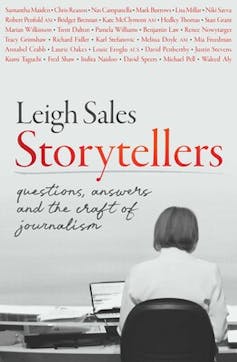
Journalist Samantha Maiden won Australia’s top award in journalism[1], the Gold Walkley, in 2022 for her coverage of the Brittany Higgins case[2]. When talking to Leigh Sales about the experience of covering this story, for Sales’ new book, Storytellers[3], she found herself in tears.
“Brittany Higgins was obviously a massive story and maybe it is the most important story I will ever write,” she says. “I just find it very hard to talk about it without getting emotional. I don’t have any complaints, but it has dominated my life for nearly two years.”
Review: Storytellers – Leigh Sales (Scribner)
Higgins came to her with the story, Maiden explains, because she’d pointed out on the ABC’s Insiders that political staffers don’t have the same access to unfair dismissal laws as other workers. Higgins felt this demonstrated an understanding of their “fragile” working conditions.
“She also felt that I would not be cowed by the government; she was very concerned about how the government would react so she wanted someone who was going to be fearless and not intimidated easily.”
“If you break enough stories,” says Maiden, “it becomes a bit of a self-saucing pudding, because people seek you out.”
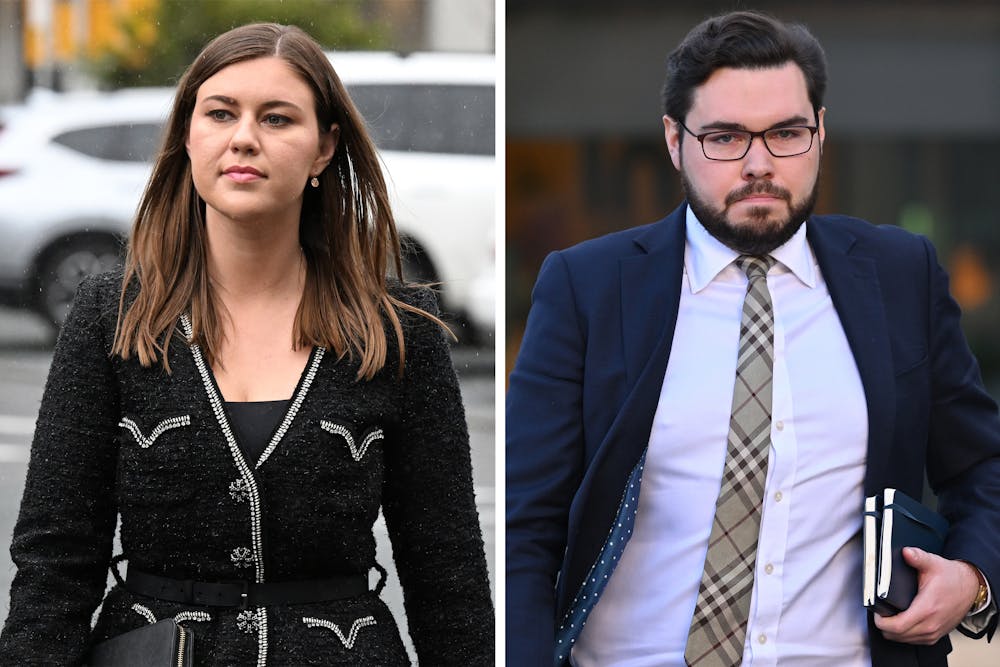
Journalists can have a reputation for being cynical and tough, but many of those featured in Storytellers talk about the emotional impact of the job.
Tracy Grimshaw, for instance, who has interviewed thousands of people, including international celebrities and world leaders, tells Sales her most memorable interview was with a policewoman from regional Australia.
Shelly Walsh had left her two children with her parents overnight while she worked a night shift. When she returned to collect them, she discovered her father had killed her mother and the children. He then attacked her with an axe.
“First of all, she found her mother,” Grimshaw recounts.
Then she had to use her wits […] her father’s saying, “Do you want a cup of tea?” And she’s thinking at a hundred miles an hour, “Where are the kids? Where are the kids?” I get chills up my spine as I talk about it […] I’ll never forget Shelly telling the story. God, it was traumatic. She was so honest, so unvarnished and so brave to tell her story. That is the interview that will always stay with me. Always.
Grimshaw’s anecdote, like Maiden’s reflections, are among many that highlight the privilege – and responsibility – that come with the distinctive job of journalism.
Tracy Grimshaw will always remember her ‘traumatic’ interview with ‘unvarnished’ Shelly Walsh.Read more: Inside the story: Leigh Sales, ordinary days and crafting empathy ‘between the lines’[4]
Storytellers is a series of conversations between Sales and more than 30 experienced Australian journalists about “questions, answers and the craft of journalism”.
Sales herself has had a diverse career as a journalist, starting in 1993 in local news for Channel 9 Brisbane, before moving to the ABC in 1994. She was the ABC’s Washington correspondent in the early 2000s, and has anchored Lateline and 7.30[5].
She says she’s fascinated by new ways of thinking about and practising journalism, but the basics of the craft are unchanged. She’s also committed to the ideal of objective journalism, as she made clear in recent public comments.
Leigh Sales was at 7.30 for 12 years.Last weekend, she told a Women in Media conference in Sydney she was worried about the blurring of activism and journalism, and the loss of “independent journalism”.
“I’m so big on things like setting aside your own opinion and trying to go into things with an open minded mindset,” she said.
In her introduction to the new book, Sales argues an extraordinary amount of experience and knowledge has been drained from newsrooms in recent years, due to staffing cuts. Storytellers is an attempt to fill that gap.
Where do story ideas come from?
The focus is “entirely on the practicalities of the craft”, aiming to answer questions such as: Where do story ideas come from? How do you make contacts? What does a good voiceover sound like? How do you make a one-minute video story compelling? How do you know when to interrupt a politician during an interview?
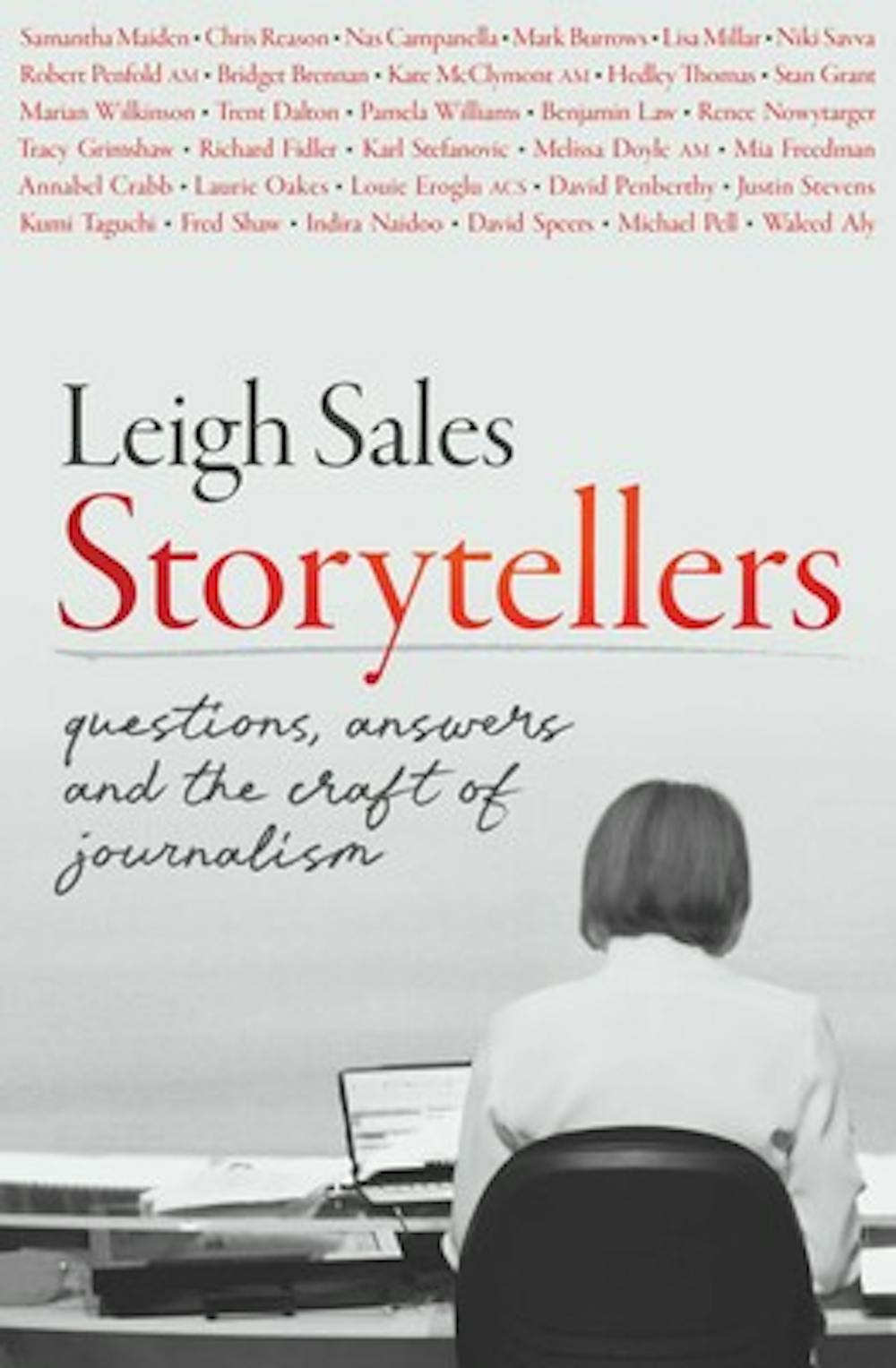 Sales is not convinced university journalism courses are covering this sort of content. My own experience of working in journalism education is that tertiary courses are highly practical. But Storytellers contains plenty of valuable insights and lessons, to complement and confirm what is taught to aspiring journalists. Whether the book will interest a wider readership is harder to predict. While emphasis is on storytelling, there’s a lot about process, particularly in regard to broadcast journalism. It might be too much detail for some. The question-and-answer format can be a bit clunky at times, but the idea is for the reader to see how Sales formulates her questions and “learn from her approach”. The line-up of top journalists featured is testament to Sales’ own reputation and extensive experience. With talent as smart and articulate as novelist and feature writer Trent Dalton[6], investigative reporter Kate McClymont, Teachers’ Pet podcast creator Hedley Thomas[7] and SBS Insight host Kumi Taguchi[8], Sales could not really go wrong. Storytellers is divided into ten sections, including news reporting, foreign correspondence, interviewing, anchoring, and commentary and analysis. Some of the most engaging parts of the book relate to interviewing. Kate McClymont talks to Barrie Cassidy about her journalism career. The art of the interview It’s fascinating to see how these professionals approach and interact with the people they interview. Grimshaw is included in the chapter dedicated to interviewing, as are Laurie Oakes[9] and Richard Fidler[10]. They’re all veteran interviewers with quite different styles. But almost all the journalists in the book discuss their interviewing approaches and practices. Read more: Interested, curious and empathetic, Michael Parkinson helped bridge the gap between Australia and England[11] Feature writer and novelist Trent Dalton adds some humour with his unorthodox techniques for getting interview subjects to talk about sensitive topics. Sales put it to him that a journalist can “pretty much ask anything if you preface it with ‘I hope I don’t seem insensitive, and you don’t have to answer this if you don’t want to’”. To which Dalton replies: Oh Leigh, that is powerful. I phrase that sentence in so many different ways. Sometimes I’ll say that like, “Mate, please tell me to fuck off” or “Listen, I know this is so hard to talk about. But if you don’t mind, I think we might be able to go to places that mean a lot to people.” Several of the journalists say they’re often surprised by people’s willingness to be interviewed. This aligns with research[12] that’s found most people are receptive to giving a news interview and that the benefits of the experience tend to outweigh the negatives. Award-winning Sydney Morning Herald investigative reporter Kate McClymont[13], who has exposed corruption in politics, unions and sport, has been able to persuade many reluctant sources, including criminals, to be interviewed over the years. While she acknowledges she’s “gonna piss people off” and that’s part of her job, she says it’s crucial to treat everyone with respect. “People are very skeptical about journalists and feel that we just use and abuse them,” she says. “If you try to make people feel as though you value and appreciate even the smallest things they have done for you, it helps.” Read more: In Plagued, journalists have traded their independence for access, resulting in a kind of political pornography[14] Storytellers demonstrates how diverse and exciting the job of journalism can be. Many of the journalists recount being at history-making events such as the September 11 terrorist attacks[15] in the United States, or the Boxing Day tsunami[16] of 2004.
 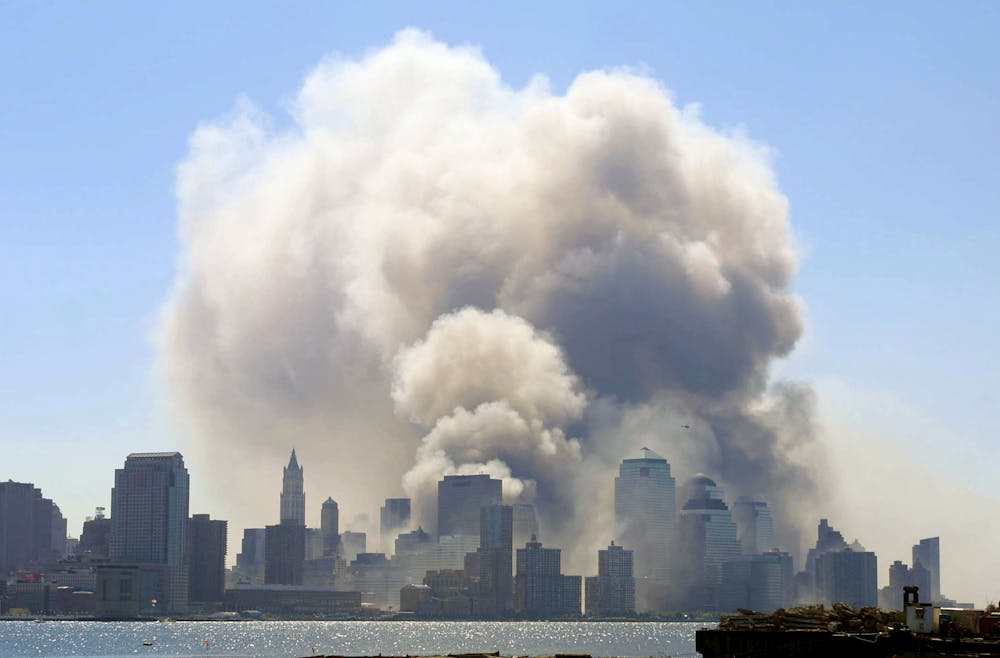 Many of the journalists Sales features remember being at history-making events like the September 11 terrorist attacks. zz/Mitch Gerber/STAR MAX/IPx/AAP Journalism can be demanding and challenging. And it requires a lot of courage. Former Four Corners executive producer Marian Wilkinson[17] talks about the knot she feels in her stomach before a big story breaks – and the repercussions that follow. The person who’s the subject of the story will come back at you […] powerful people almost always fight – a lawsuit, defamation threats, it goes on and on – and often quite viciously. While acknowledging the demands of the job and the trauma that can be associated with it[18], Storytellers’ overriding message is that to be a journalist is a privilege. “There’s no job like journalism,” veteran Channel Seven reporter Chris Reason[19] tells Sales. “There’s no job that gives you the passport to get to the sorts of places, incidents, moments in our community and our history that journalism provides.” For many of Sales’ subjects, the best part of being a journalist is the interactions with people. And often the most profound conversations and exchanges are with “ordinary” people. As Grimshaw says: They’re always the interviews that are far more revelatory to me than celebrities or politicians. It’s how ordinary people navigate the extraordinary that keeps me doing the job. References^ won Australia’s top award in journalism (www.walkleys.com)^ the Brittany Higgins case (theconversation.com)^ Storytellers (www.simonandschuster.com.au)^ Inside the story: Leigh Sales, ordinary days and crafting empathy ‘between the lines’ (theconversation.com)^ 7.30 (www.abc.net.au)^ Trent Dalton (theconversation.com)^ Hedley Thomas (theconversation.com)^ Kumi Taguchi (www.theguardian.com)^ Laurie Oakes (halloffame.melbournepressclub.com)^ Richard Fidler (www.abc.net.au)^ Interested, curious and empathetic, Michael Parkinson helped bridge the gap between Australia and England (theconversation.com)^ research (theconversation.com)^ Kate McClymont (www.smh.com.au)^ In Plagued, journalists have traded their independence for access, resulting in a kind of political pornography (theconversation.com)^ September 11 terrorist attacks (theconversation.com)^ Boxing Day tsunami (theconversation.com)^ Marian Wilkinson (halloffame.melbournepressclub.com)^ trauma that can be associated with it (dartcenter.org)^ Chris Reason (www.walkleys.com)