Business Blockbuster - Helpng business to be more visible on Google
The Times Australia

Australia's system of taxing alcohol is 'incoherent', but our research suggests a single tax rate isn't the answer

  • Written by: Ou Yang, Research Fellow, The University of Melbourne
Australia's system of taxing alcohol is 'incoherent', but our research suggests a single tax rate isn't the answer

The best word to describe the way Australia taxes alcoholic drinks is “incoherent[1]”.

It was the word used by the 2010 Henry Tax Review[2] to describe a system[3] in which some wine effectively faces no alcohol tax[4], expensive wine is taxed heavily and cask wine lightly, beer (but not wine) is taxed by alcohol content, brandy[5] is taxed less than other spirits, and cider[6] is taxed differently to beer.

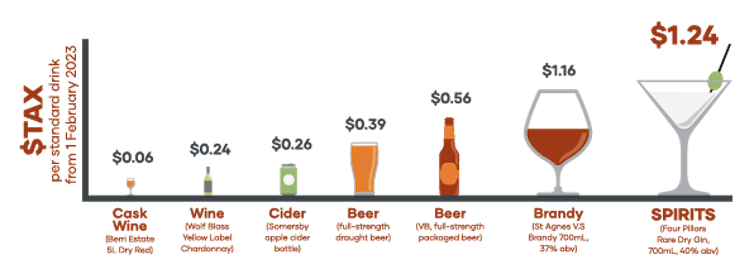
Industry calculations suggest cask wine is taxed at as little as six cents[7] per standard drink, mid-price wine at 26 cents, bottled beer at 56 cents, and spirits at $1.24.
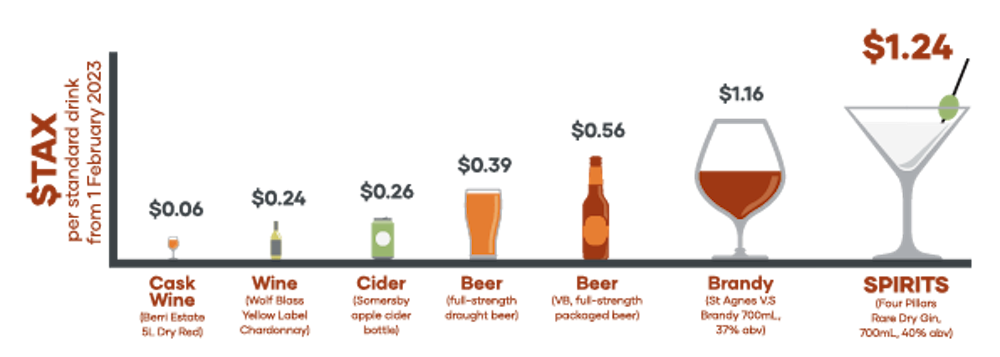
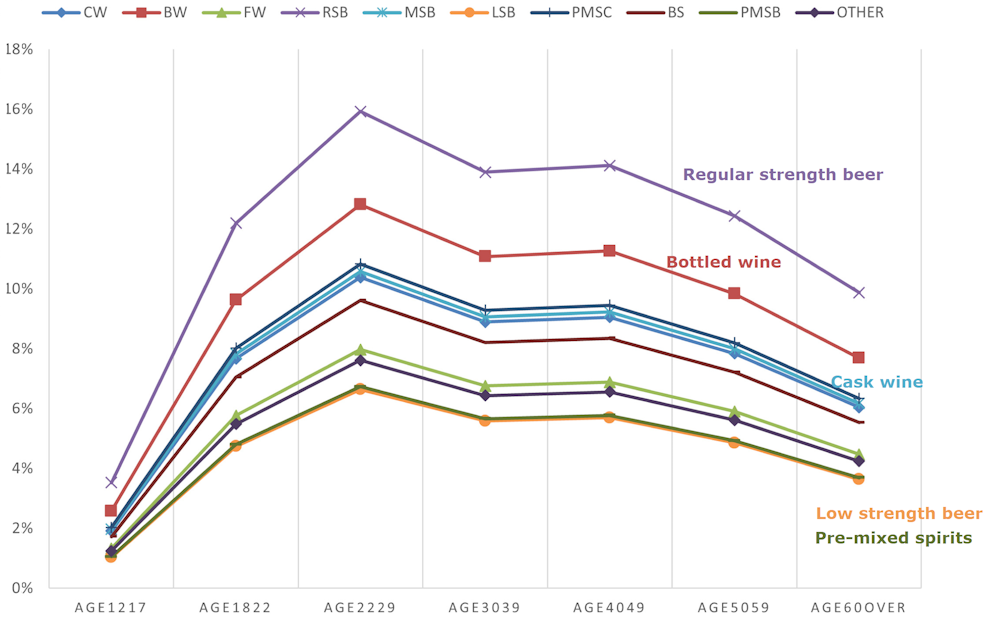
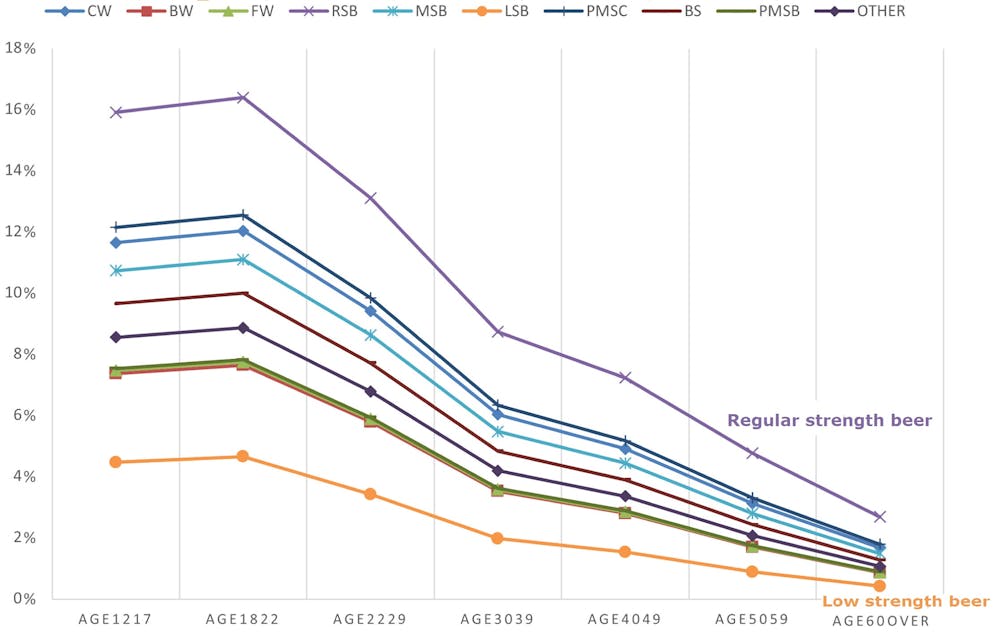
Australian Distillers Association[8] And yet it is cask wine that is often said to do the most damage[9]. The Henry Review recommended taxing all drinks containing more than a small amount of alcohol at the same rate[10] per unit of alcohol, regardless of type. It was a recommendation backed by specialists in Australia’s tax system[11]. Implicit, and largely unexamined, in these recommendations is the assumption that alcohol does the same damage in whatever form it is taken. Our new study[12], linking drinkers’ risky behaviours to the types of alcoholic beverages they mostly consume, finds this isn’t so. Using data from six waves of an Australian recreational drug survey[13], we find that regular-strength beer and pre-mixed spirits in a can rank among the highest in their links to both drink-driving and hazardous, disturbing or abusive behaviours. Mid-range are mid-strength beer, cask wine, and bottled spirits and liqueurs. At the bottom are low-strength beer and pre-mixed spirits in a bottle, which have the weakest links to risky and abusive behaviours when intoxicated. Probability of drink driving, by age and beverage type RSB = Regular-Strength Beer; LSB = Low-Strength Beer; MSB = Mid-Strength Beer; BW = Bottled Wine; FW = Fortified Wine; CW = Cask Wine; PMSC = Pre-Mixed Spirits in a Can; PMSB = Pre-Mixed Spirits in a Bottle; BS = Bottled Spirits and Liqueurs. Source: Economic Record[14] Some of the relationships vary with the type of damage. While bottled wine is linked to a moderate to high probability of drink-driving, it is also linked to a low probability of hazardous, disturbing or abusive behaviours. Pre-mixed spirits in a bottle are related to a low probability of both drink driving and hazardous, disturbing and abusive behaviours. But when account is taken of the gender of the drinkers (so-called alcopops are typically drunk by females), we find them no longer as safe. Probability of hazardous, disturbing or abusive behaviour RSB = Regular-Strength Beer; LSB = Low-Strength Beer; MSB = Mid-Strength Beer; BW = Bottled Wine; FW = Fortified Wine; CW = Cask Wine; PMSC = Pre-Mixed Spirits in a Can; PMSB = Pre-Mixed Spirits in a Bottle; BS = Bottled Spirits and Liqueurs. Source: Economic Record[15] Our study suggests that Australia’s haphazard system of taxing alcohol might have got some things right. Beer, which is typically taxed more highly than wine, seems to do more damage. But it has got some things wrong. Cask wine appears to be significantly undertaxed relative to the damage it does. More broadly, our findings suggest that if alcohol is to be taxed according to the damage it does, the tax system we adopt will need to be more complicated than a single rate for every unit of alcohol regardless of the form in which it comes. References^ incoherent (cdn.theconversation.com)^ Henry Tax Review (cdn.theconversation.com)^ system (www.aph.gov.au)^ no alcohol tax (www.ato.gov.au)^ brandy (www.thespiritsbusiness.com)^ cider (www.cideraustralia.org.au)^ six cents (australiandistillers.org.au)^ Australian Distillers Association (australiandistillers.org.au)^ do the most damage (www.news.com.au)^ same rate (cdn.theconversation.com)^ Australia’s tax system (doi.org)^ new study (doi.org)^ Australian recreational drug survey (www.aihw.gov.au)^ Source: Economic Record (onlinelibrary.wiley.com)^ Source: Economic Record (onlinelibrary.wiley.com)

Read more https://theconversation.com/australias-system-of-taxing-alcohol-is-incoherent-but-our-research-suggests-a-single-tax-rate-isnt-the-answer-195907

Times Magazine

What is a passkey — and should you use one instead of a password?

Websites increasingly invite users to create a passkey. The unfamiliar name describes a simpler wa...

A quality cut to bills for Beaufort butcher

Victorians are increasingly turning to Easy Electric SEC to better understand their home energy op...

Mentoring - Raising a child is more than providing for one

Food, shelter, safety and schooling are essential. But the guidance children receive about how to ...

Technology

What is a passkey — and should you …

Websites increasingly invite users to create a passkey. The unfamiliar name describes a simpler wa...

Local News

Brisbane Airport’s second runway ha…

Two parallel runways give Queensland’s main airport more capacity and greater flexibility. For tra...

Culture

Health is connected. Your data should be too.

Why health data matters most when it helps people make better decisions in everyday life. The healt...

Travel

Travel Trends 2027: Why Asia-Pacific Travelle…

Travellers from Australia and Southeast Asia are spending more on what they do and less on where t...

The Times Features

Choosing the Right Childcare for Your Family

Selecting the appropriate childcare for your family represents a significant decision, impacting bot...

Health is connected. Your data should be too.

Why health data matters most when it helps people make better decisions in everyday life. The healt...

Why Construction Heavyweights Are Backing This Brisbane…

Backed by Antler, McNab Group, Hutchinson Builders, KPAT and private investors, Casu is building a...