Real-life autism disclosures are complex – and reactions can range from dismissal to celebration
- Written by: Chris Edwards, Postdoctoral Researcher and Adjunct Research Fellow, Griffith University
Media personality Em Rusciano has expressed shock after another radio presenter accused her[1] of “leaping on the bandwagon” by widely sharing her autism diagnosis and its impact on her daily life.
The prevalence of autism in our society is increasing as awareness and research escalates. At least one in 100[2] people are Autistic, yet only a minority[3] openly disclose due to uncertainty over how it will be received.
There has been an assumption that “blanket disclosure[4]”, sharing with everyone the Autistic adult knows, is the best option. But new research[5] challenges this simplistic approach.
Here’s what Autistic people told us about what real-life disclosure experiences look like. And what workplaces should do to make it safer for people to share this aspect of their identity[6] if they choose to.
Read more: Autism is still underdiagnosed in girls and women. That can compound the challenges they face[7]
Tracking experiences in real time
A major study by the Aspect Research Centre for Autism Practice (ARCAP)[8] documented 231 disclosure experiences of 36 Autistic adults, aged 21 to 71, over two months.
Using a specially designed smart-phone application[9] meant we could track experiences across different environments and get a glimpse of real-time, daily disclosure opportunities that Autistic people experience.
We learnt about the thought processes behind a decision to disclose, or not disclose. We noted positive and negative experiences and which environments were more conducive.
Why disclose – or decide not to?
Sharing being Autistic can lead to understanding and support[10], but it also exposes the Autistic person to greater risks of discrimination and bullying[11].
The decision can be a “lose-lose” one for the Autistic person. Not disclosing can contribute to mental health concerns[12] such as stress and anxiety. Whereas sharing being Autistic can have life-changing outcomes, for instance, the loss of job opportunities[13].
During our study, 153 opportunities were categorised as “disclosure”, where the participant shared they were Autistic. We labelled 78 opportunities as “non-disclosure”, where the participant felt there was an opportunity, but decided not to share.
The most common way our participants shared they were Autistic was a face-to-face conversation (43%). The least common ways participants disclosed were via email (4%), phone call (3%), text (3%) and doctor’s letter (0.4%).
Safety was a key consideration behind disclosure, where participants shared they were Autistic when others were “already aware of my sensory issues. I felt safe disclosing to him”.
But it required time and energy, and other participants didn’t disclose because they “felt exhausted socially” or “had an uncomfortable vibe” about a work leader.
Words and reactions can be positive or negative
The research provided insight into the most common negative and positive reactions that followed a disclosure.
For example, one respondent felt “dismissed or gaslighted”. Others experienced shocked reactions and were asked how they could be a hairdresser if they had autism. Or received an odd look and no response.
Positive responses ranged from neutral reactions, such as “normal, almost no reaction” and not being treated any differently, to a feeling of liberation “not to be judged but rather encouraged and celebrated”.
Some environments were better than others
The research shows disclosure experiences are influenced by context. The most common place for disclosure by Autistic adults was in the workplace (31%), followed by the community (21%), education settings (11%), home (11%), health care (9%) and retail (6%).
Of these disclosure contexts, the workplace proved to be the environment with the most negative disclosure experiences, with frequent references to discrimination and bullying[14].
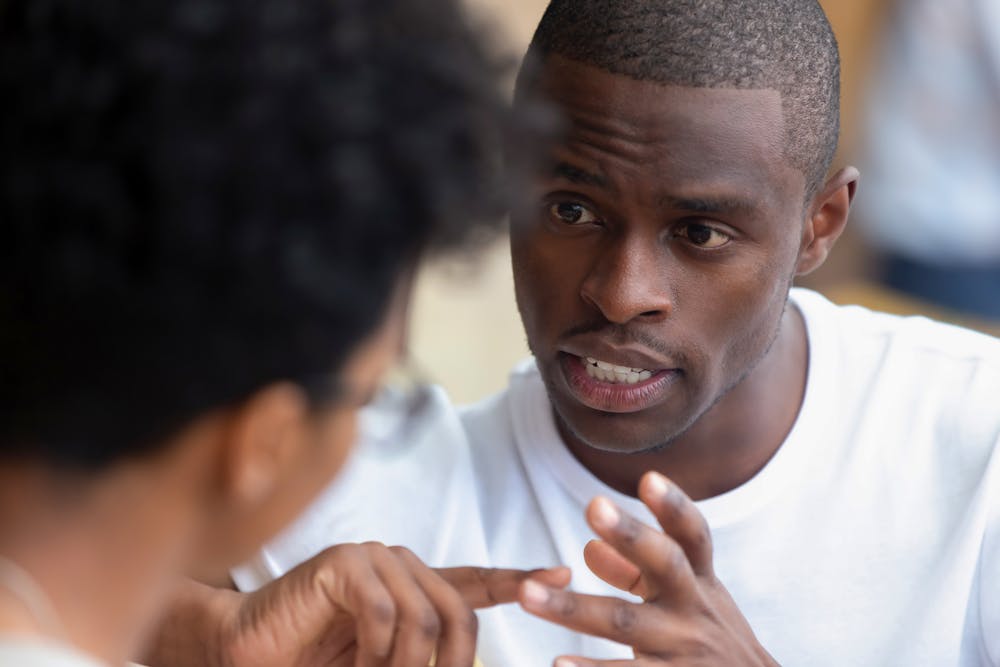
The workplace was the environment in which research participants reported the most negative reactions to disclosure. Shutterstock[15]
Read more: Australia is lagging when it comes to employing people with disability – quotas for disability services could be a start[16]
So what would make disclosure decisions easier?
Employers need to assume more responsibility in creating[17] a safe environment where Autistic staff can disclose if they choose to. This can include adjustments to the hiring process[18] (such as work trials compared to interviews), working conditions[19] (more flexibility to work from home), sensory environoment[20] (such as lighting or sound modification) and methods of communication[21] (such as clear written guidance).
Disability awareness training[22] would be beneficial[23] across all workplaces, including with health-care professionals[24]. This is particularly important as this group[25] is key to providing education and reducing misunderstanding across contexts.
On a broader societal level, we need to value and support people who may think or act differently to what’s expected. Nobody should feel they have to share something private and personal in order to be treated with respect.
And people on the receiving end of disclosure need to know this is often a scary decision. It may mean your colleague or friend feels safe and trusts you with this information. Believe them and accept them. They are still the same person as before.
Read more: Disability and dignity – 4 things to think about if you want to 'help'[26]
Practical guides for disclosure
Society has a long way to go before we can simply promote blanket disclosure. Until then, Autistic people need support to decide whether to disclose their identity.
We’ve developed a series of practical evidence-based resource guides[27] based on our findings.
The guides support Autistic[28] people[29] in their disclosure experiences, and provide helpful advice for colleagues, employers, friends, educators and family[30].
If this article has raised issues for you, or if you’re concerned about someone you know, call Lifeline on 13 11 14.
References
- ^ accused her (www.dailymail.co.uk)
- ^ one in 100 (onlinelibrary.wiley.com)
- ^ minority (www.sciencedirect.com)
- ^ blanket disclosure (www.sciencedirect.com)
- ^ research (www.autismspectrum.org.au)
- ^ aspect of their identity (www.tandfonline.com)
- ^ Autism is still underdiagnosed in girls and women. That can compound the challenges they face (theconversation.com)
- ^ Aspect Research Centre for Autism Practice (ARCAP) (www.autismspectrum.org.au)
- ^ application (pielsurvey.org)
- ^ understanding and support (pubmed.ncbi.nlm.nih.gov)
- ^ discrimination and bullying (pubmed.ncbi.nlm.nih.gov)
- ^ mental health concerns (pubmed.ncbi.nlm.nih.gov)
- ^ loss of job opportunities (journals.sagepub.com)
- ^ discrimination and bullying (www.tandfonline.com)
- ^ Shutterstock (www.shutterstock.com)
- ^ Australia is lagging when it comes to employing people with disability – quotas for disability services could be a start (theconversation.com)
- ^ creating (www.tandfonline.com)
- ^ hiring process (pubmed.ncbi.nlm.nih.gov)
- ^ working conditions (www.tandfonline.com)
- ^ sensory environoment (journals.sagepub.com)
- ^ methods of communication (journals.sagepub.com)
- ^ Disability awareness training (www.tandfonline.com)
- ^ beneficial (pubmed.ncbi.nlm.nih.gov)
- ^ health-care professionals (pubmed.ncbi.nlm.nih.gov)
- ^ this group (www.sciencedirect.com)
- ^ Disability and dignity – 4 things to think about if you want to 'help' (theconversation.com)
- ^ guides (www.autismspectrum.org.au)
- ^ Autistic (www.autismspectrum.org.au)
- ^ people (www.autismspectrum.org.au)
- ^ colleagues, employers, friends, educators and family (www.autismspectrum.org.au)