the crazed, compelling voice of William's Trevor's 40something photographer Ivy Eckdorf
- Written by: Carol Lefevre, Visiting Research Fellow, Department of English and Creative Writing, University of Adelaide

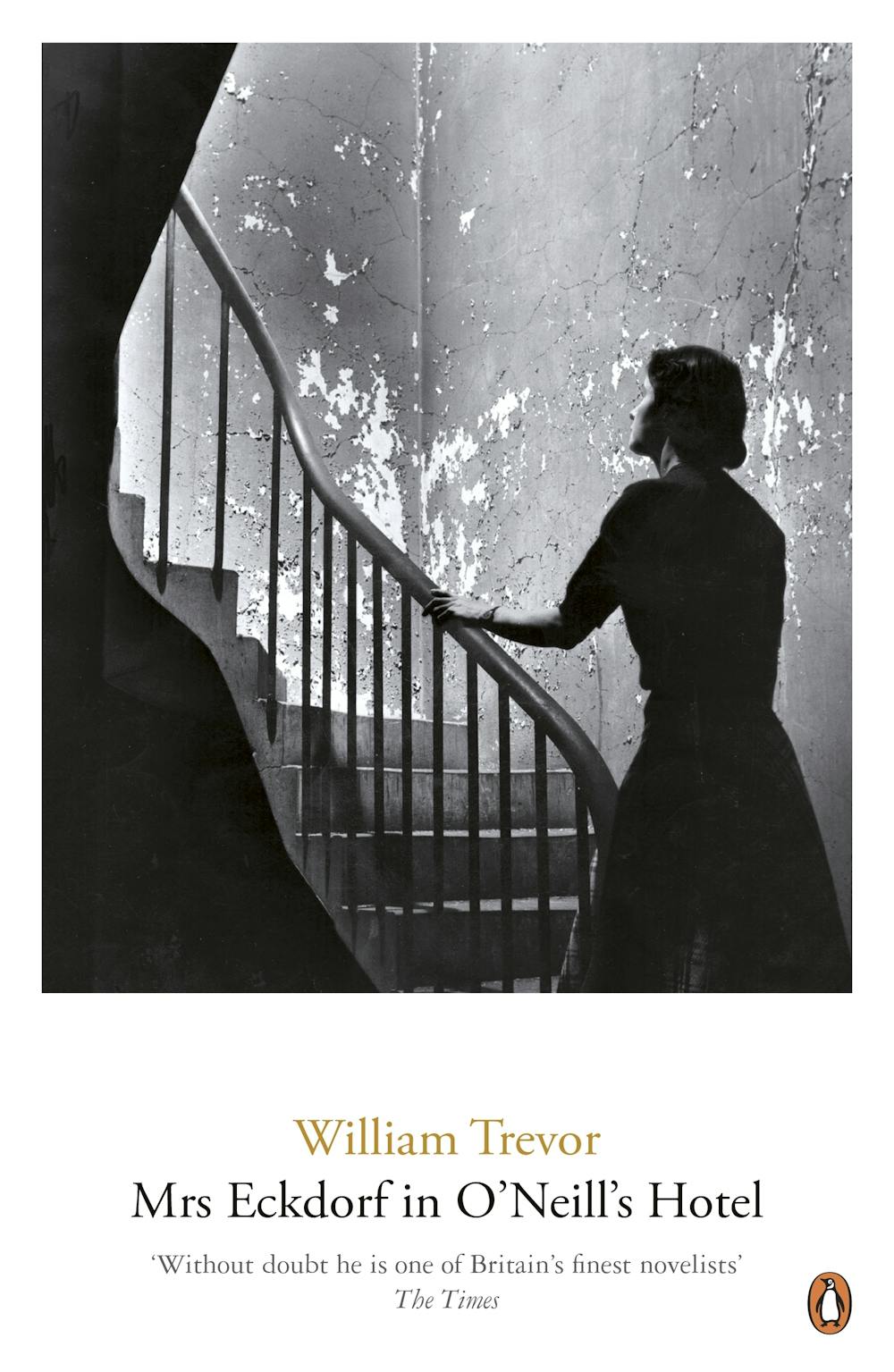
Although I have been a long-time fan of the Irish writer William Trevor, it was only in 2016 – amid the flood of tributes following his death – that I first heard of what has become one of my favourite novels, Mrs Eckdorf in O’Neill’s Hotel[1].
In honouring Trevor, fellow Irishman John Banville described[2] Mrs Eckdorf in O’Neill’s Hotel, first published in 1969, as “an inexplicably neglected 20th-century masterpiece”. His recommendation sent me scurrying to source a copy.
From the first page, it is evident that Mrs Eckdorf is someone with no sense of private boundaries, either her own or other people’s. Just how disconcerting this can be becomes clear when she introduces herself to a stranger, a fellow traveller on a flight to Dublin.
“I’m Ivy Eckdorf,” said Mrs Eckdorf as the aeroplane rose from the ground. “How d’you do?”
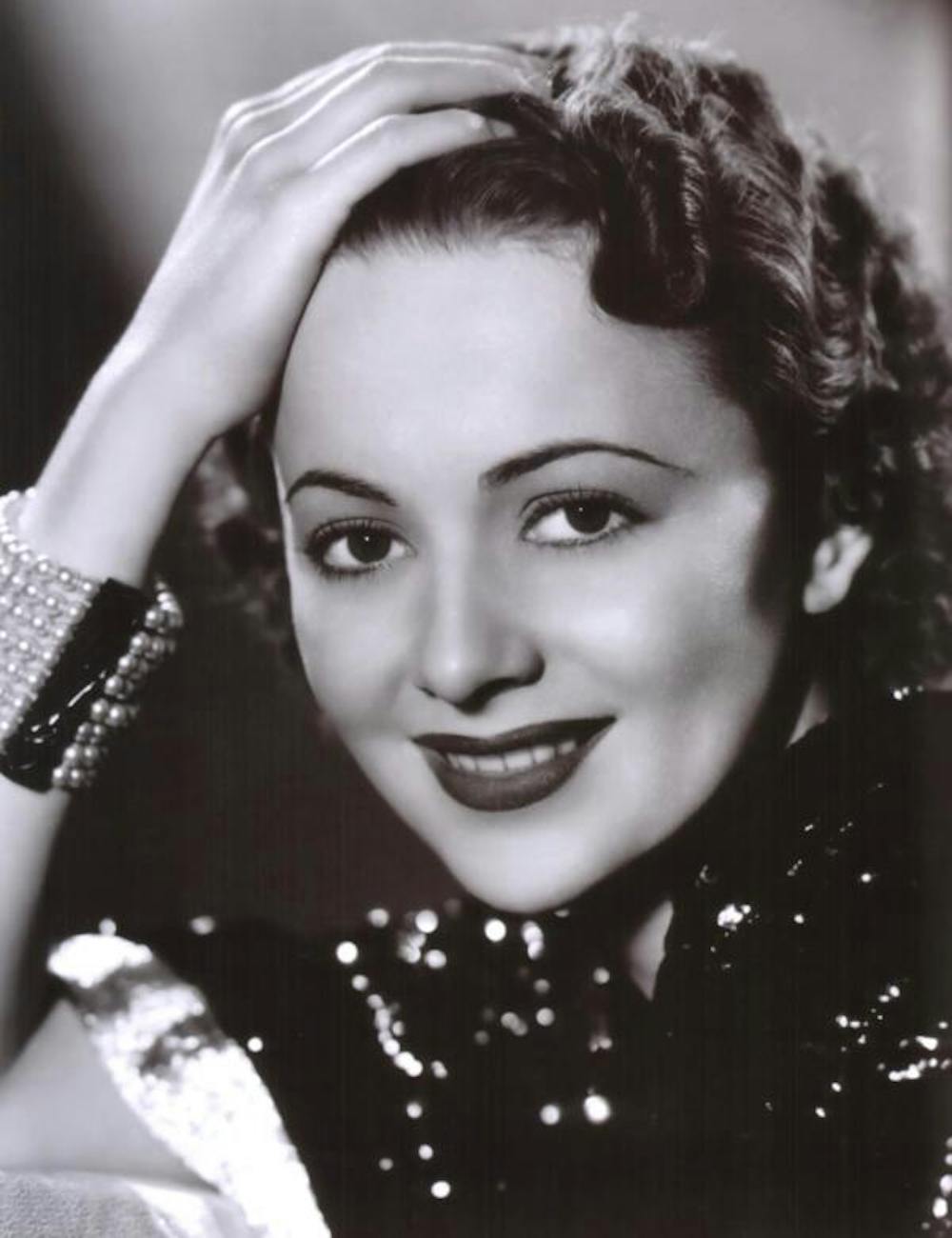 One of the hotel’s orphans, Agnes Quinn, dreams of swapping places with Olivia de Havilland.
Stockvault, CC BY[5]
Flecked throughout with dark humour, there is genuine pathos, too: William Trevor had a compassionate (if unsentimental) eye for the lost and the wounded. Mrs Eckdorf herself is one of them, sustained only by her creativity and a sense of herself as an artist.
This, perhaps, is where her character sinks its teeth into me deepest, because I do not love Ivy Eckdorf, I dread becoming her. For Mrs Eckdorf’s quest to make art refuses to acknowledge her subjects’ resistance, or even their distress. She inserts herself unwanted into their private spaces, stooping at times to voyeurism, manipulative untruths, and even criminal trespass.
“It’s an unpleasant contemporary thing,” cried the man with sudden passion, “this poking into people’s privacy with cameras in the cause of truth […] I can well imagine your shiny books.”
For those of us with shiny books, Mrs Eckdorf’s behaviour is cause for reflection around questions of ethics[6] and the crossing of boundaries; of artistic arrogance, appropriation[7], and the telling of other people’s stories – even if those stories are closely entwined with our own.
Read more:
Friday essay: the wonder of Joyce's Ulysses[8]
‘Without doubt’, a masterpiece
Is the book a masterpiece? It is, without doubt, and it seems to have been a kind of creative breakthrough for William Trevor. Until then, he had written novels set in urban England, but afterwards there flowed stories and further novels set in provincial Ireland. Trevor, who by then was living in rural Devon (where he would remain for the rest of his life) began to insist on his identity as an Irish writer.
One of the hotel’s orphans, Agnes Quinn, dreams of swapping places with Olivia de Havilland.
Stockvault, CC BY[5]
Flecked throughout with dark humour, there is genuine pathos, too: William Trevor had a compassionate (if unsentimental) eye for the lost and the wounded. Mrs Eckdorf herself is one of them, sustained only by her creativity and a sense of herself as an artist.
This, perhaps, is where her character sinks its teeth into me deepest, because I do not love Ivy Eckdorf, I dread becoming her. For Mrs Eckdorf’s quest to make art refuses to acknowledge her subjects’ resistance, or even their distress. She inserts herself unwanted into their private spaces, stooping at times to voyeurism, manipulative untruths, and even criminal trespass.
“It’s an unpleasant contemporary thing,” cried the man with sudden passion, “this poking into people’s privacy with cameras in the cause of truth […] I can well imagine your shiny books.”
For those of us with shiny books, Mrs Eckdorf’s behaviour is cause for reflection around questions of ethics[6] and the crossing of boundaries; of artistic arrogance, appropriation[7], and the telling of other people’s stories – even if those stories are closely entwined with our own.
Read more:
Friday essay: the wonder of Joyce's Ulysses[8]
‘Without doubt’, a masterpiece
Is the book a masterpiece? It is, without doubt, and it seems to have been a kind of creative breakthrough for William Trevor. Until then, he had written novels set in urban England, but afterwards there flowed stories and further novels set in provincial Ireland. Trevor, who by then was living in rural Devon (where he would remain for the rest of his life) began to insist on his identity as an Irish writer.
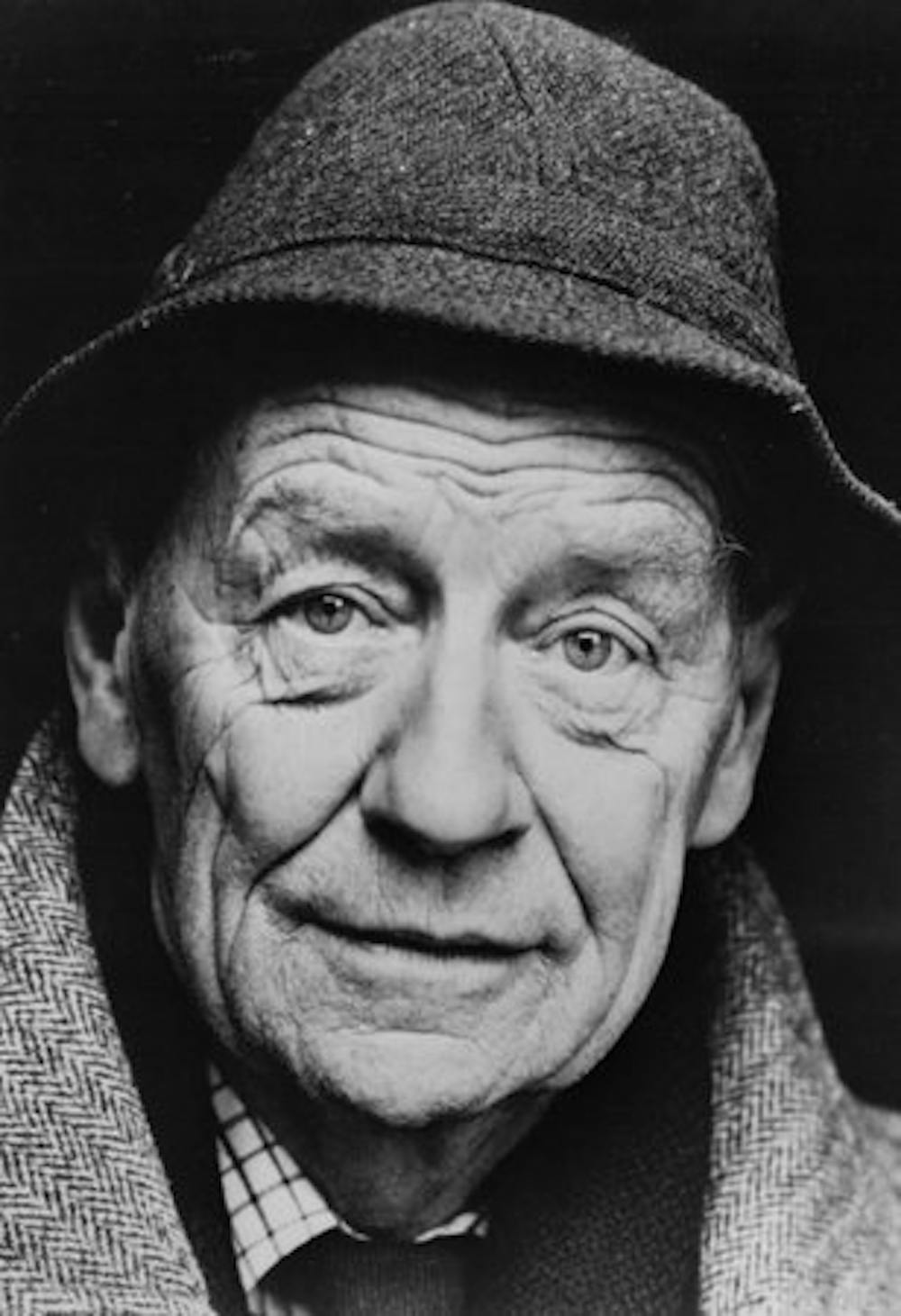 William Trevor.
Penguin Random House, Author provided
William Trevor was nominated five times[9] for the Booker Prize, including in 1970 for Mrs Eckdorf In O'Neill’s Hotel. But although he won the Whitbread Prize[10] three times and his name was often mentioned[11] in relation to the Nobel Prize for Literature, he was destined to always be a Booker bridesmaid.
While Mrs Eckdorf often occupies centre stage in the novel, it is not only she who rises luminously from its pages but silent Mrs Sinnott, her son Eugene (who cares only for drink and horse-racing), poor tortured Morrissey and Agnes Quinn, and stoic O’Shea in his faded porter’s uniform.
I often imagine O’Shea, shadowed by his greyhound, making his way to the hotel’s bare and cavernous kitchen. There, under the paper chain he has hung in preparation for Mrs Sinnott’s birthday, he lovingly fries for her – in a pan with butter – the nicest of the five herrings he has bought, and “makes tea in the small tin teapot that is offered only to her”.
One cannot help but adore O’Shea, his dogged devotion and his optimism. Indeed, O’Neill’s Hotel itself lingers beyond the pages of the novel, with its dusty, down-at-heel appearance overlaying its past – of commercial success, restrained elegance, even glamour.
But in the end, it is Ivy Eckdorf who refuses to let go of the reader. Ivy by name and ivy by nature: once you have encountered Mrs Eckdorf, she will always be with you. At odd moments you will feel her hand grasp your sleeve and hear her crazed, yet compelling, voice in your ear.
“We are all part of one another, my dear, and we must all know one another better.”
References^ Mrs Eckdorf in O’Neill’s Hotel (www.penguin.com.au)^ described (www.irishtimes.com)^ Barbara Trapido's 'undeniably sexy' novel of academic bohemia still dazzles at 40 (theconversation.com)^ Friday essay: the uncanny melancholy of empty photographs in the time of coronavirus (theconversation.com)^ CC BY (creativecommons.org)^ ethics (theconversation.com)^ appropriation (theconversation.com)^ Friday essay: the wonder of Joyce's Ulysses (theconversation.com)^ nominated five times (thebookerprizes.com)^ won the Whitbread Prize (www.independent.co.uk)^ mentioned (www.theguardian.com)
William Trevor.
Penguin Random House, Author provided
William Trevor was nominated five times[9] for the Booker Prize, including in 1970 for Mrs Eckdorf In O'Neill’s Hotel. But although he won the Whitbread Prize[10] three times and his name was often mentioned[11] in relation to the Nobel Prize for Literature, he was destined to always be a Booker bridesmaid.
While Mrs Eckdorf often occupies centre stage in the novel, it is not only she who rises luminously from its pages but silent Mrs Sinnott, her son Eugene (who cares only for drink and horse-racing), poor tortured Morrissey and Agnes Quinn, and stoic O’Shea in his faded porter’s uniform.
I often imagine O’Shea, shadowed by his greyhound, making his way to the hotel’s bare and cavernous kitchen. There, under the paper chain he has hung in preparation for Mrs Sinnott’s birthday, he lovingly fries for her – in a pan with butter – the nicest of the five herrings he has bought, and “makes tea in the small tin teapot that is offered only to her”.
One cannot help but adore O’Shea, his dogged devotion and his optimism. Indeed, O’Neill’s Hotel itself lingers beyond the pages of the novel, with its dusty, down-at-heel appearance overlaying its past – of commercial success, restrained elegance, even glamour.
But in the end, it is Ivy Eckdorf who refuses to let go of the reader. Ivy by name and ivy by nature: once you have encountered Mrs Eckdorf, she will always be with you. At odd moments you will feel her hand grasp your sleeve and hear her crazed, yet compelling, voice in your ear.
“We are all part of one another, my dear, and we must all know one another better.”
References^ Mrs Eckdorf in O’Neill’s Hotel (www.penguin.com.au)^ described (www.irishtimes.com)^ Barbara Trapido's 'undeniably sexy' novel of academic bohemia still dazzles at 40 (theconversation.com)^ Friday essay: the uncanny melancholy of empty photographs in the time of coronavirus (theconversation.com)^ CC BY (creativecommons.org)^ ethics (theconversation.com)^ appropriation (theconversation.com)^ Friday essay: the wonder of Joyce's Ulysses (theconversation.com)^ nominated five times (thebookerprizes.com)^ won the Whitbread Prize (www.independent.co.uk)^ mentioned (www.theguardian.com)