Queensland shootings highlight increase in anti-police sentiment around the world
- Written by: Kelly Hine, Lecturer in Criminology, University of the Sunshine Coast
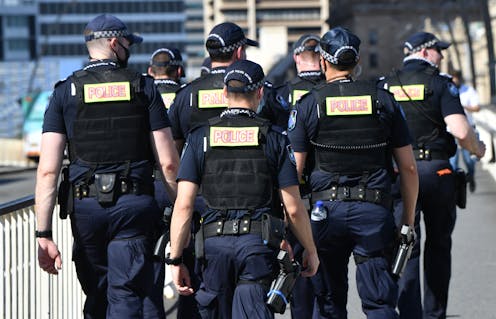
In an horrific incident on Monday night, two police officers and a member of the public were fatally shot in an ambush attack in Queensland. Another two officers were injured in the attack.
Our research shows attacks on police are increasing both domestically and internationally, which may be a result of growing civil unrest.
Data prior to the COVID pandemic revealed that civil unrest had doubled globally[1] in the past decade, including an increase in violent riots and demonstrations. This tension between authorities and the public is thought to have intensified further during the COVID pandemic.
Read more: 6 dead, including 2 police, in Queensland shooting. How dangerous is policing in Australia?[2]
Serious assaults against police appear to be more common and more violent, with recent protests (such as Black Lives Matter, anti-lockdown, and #defundthepolice) intensifying conflicts between sections of society and police.
For example, anti-lockdown protests produced the “most violent” Victorian protests in 20 years[3], putting at least nine officers in hospital.
The rise of ‘anti-police’ sentiment
This phenomenon is not unique to Australia. In the US, officers have been shot and police stations burnt down[4] by protesters. In Hong Kong, violent and organised protesters have attacked and beaten officers with umbrellas, batons, and bricks[5]. And in the UK, the Metropolitan Police recently reported a 38% increase in assaults[6] on officers during high-profile protests. Understanding why these assaults are occurring is key to preventing further harm to police officers.
There are several potential catalysts for this “anti-police” ideology and consequent behaviour. First, citizens may feel frustrated about political issues, such as COVID lockdowns and vaccination laws. Here, anti-police behaviour, such as violence and lawbreaking, are a by-product of frustration towards the government. The police are simply the most present and visible government representative.
Second, and more concerning, are that anti-police ideologies are capturing the attitudes of those in society who are frustrated with how they perceive police to be conducting themselves.
The Australia New Zealand Policing Advisory Agency[7] predicts distrust in “big government” to be a major policing challenge post-2020. There is growing concern about groups or individuals who act violently towards police to express these attitudes, leading to the injuries, assaults, and even homicides of Australian police officers. This is also exacerabted by widespread social media access and conspiracy-driven extremism.
Read more: Road crashes, assaults and being spat on: the dangers facing Australian police in the line of duty[8]
What do assaults on police look like?
The public rely on the police to protect them from harm. But there has been an increasing rate of attacks on police officers. Moreover, these attacks are becoming more violent and serious.
Research[9] has found that 31% of Australian police fatalities between 2001 and 2019 were the result of assaults. Like the recent incident, almost all cases involved shootings.
More recently, violent anti-lockdown protests in Australia have resulted in several officers being assaulted and hospitalised. In 2021, for example, the Western Australian Police Union[10] reported that assaults on Western Australian police were higher than the past four years. Assaults in Perth were the highest in ten years. Research into officer injuries found that officers were more likely to sustain injuries with physically aggressive suspects[11], and young, offenders who had consumed alcohol/drugs in the early hours of the weekend[12] were more likely to resist officers.
When assaults on police officers occur, they can have devastating consequences for a wide range of people. Aside from the physical impact (such as injuries, permanent disabilities, or even death), assaults on police officers can have psychological impacts (such as PTSD, anxiety, and depression).
Police have ranked the top three significant stressors[13] as killing someone, a fellow officer being killed, and being physically attacked. The physical and psychological impact of assaults on police is exemplified by the Capitol riots in the US, which resulted in 138 police officer injuries, one officer fatality and the subsequent suicide of four officers[14].
Subsequently, these physical and psychological consequences carry an economic burden. These costs can include medical, legal, and wage costs among others. The cost of police assaults are likely to be much higher when considering economic impacts beyond the officer themselves (for example, the economic impact on colleagues, family, and friends as well as organisational costs such as low morale and high staff turnover).
Furthermore, assaults on police can have societal impacts, leading to a lack of confidence in police to be able to protect members of the community. In addition, attacks on police may also reflect “an attack on the rule of law and defiance of the justice system itself[15]”, in turn, leading to societal breakdowns. This lack of confidence and trust in police and authorities is illustrated in the #defundthepolice social movement.
The role of police requires them to encounter some of the most violent and dangerous situations. Understanding attacks on police will help identify ways to reduce the impact of harms and prevent such incidences from occurring. We need to better understand these situations so we can protect those who protect us.
References
- ^ civil unrest had doubled globally (www.visionofhumanity.org)
- ^ 6 dead, including 2 police, in Queensland shooting. How dangerous is policing in Australia? (theconversation.com)
- ^ most violent” Victorian protests in 20 years (www.theguardian.com)
- ^ shot and police stations burnt down (thehill.com)
- ^ umbrellas, batons, and bricks (www.theatlantic.com)
- ^ 38% increase in assaults (www.bbc.com)
- ^ Australia New Zealand Policing Advisory Agency (www.anzpaa.org.au)
- ^ Road crashes, assaults and being spat on: the dangers facing Australian police in the line of duty (theconversation.com)
- ^ Research (www.tandfonline.com)
- ^ Western Australian Police Union (www.wapu.org.au)
- ^ sustain injuries with physically aggressive suspects (www.tandfonline.com)
- ^ alcohol/drugs in the early hours of the weekend (journals.sagepub.com)
- ^ top three significant stressors (pubmed.ncbi.nlm.nih.gov)
- ^ suicide of four officers (edition.cnn.com)
- ^ an attack on the rule of law and defiance of the justice system itself (journals.sagepub.com)