Indonesia's new criminal code isn't just about sex outside marriage. It endangers press and religious freedom
- Written by: Tim Lindsey, Malcolm Smith Professor of Asian Law and Director of the Centre for Indonesian Law, Islam and Society, The University of Melbourne
Indonesia’s controversial new criminal code was passed into law on Tuesday, replacing a clunky old code dating back to at least 1918. Lawmakers have tried for decades to replace it. In fact, the last time legislators tried in 2019, it triggered the largest public protests in Indonesia since the 1998 fall of former president Soeharto.
This time, politicians rushed it through at short notice, despite widespread criticism and limited opportunities for public consultation. In the end, the code passed with the support of all but two small parties.
Many of its provisions are dangerously vague and wide in their scope – “rubber provisions”, as Indonesians say – that empower the state at the expense of citizens.
The provisions that have attracted the most criticism are those that impose conservative moral values about sexuality, and those that restrict rights to freedom of expression.
Read more: For Indonesia's transgender community, faith can be a source of discrimination – but also tolerance and solace[1]
A probationary period for death sentences
One positive change in the new code is the introduction of a probationary period for death sentences. A death row inmate who demonstrates good behaviour during this period and exhibits remorse can now have his or her sentence changed from death to a term of imprisonment.
This signals a welcome step away from the “no mercy” approach adopted under President Joko Widodo (known as Jokowi). If this provision had been in place in the past, it might have allowed Australian drug offenders Myuran Sukumaran and Andrew Chan to escape the firing squad.
However, this reform is a lonely one. Too many of the changes introduced by the new code are highly regressive, removing or restricting freedoms previously won.
Extramarital sex and other ‘morality’ provisions
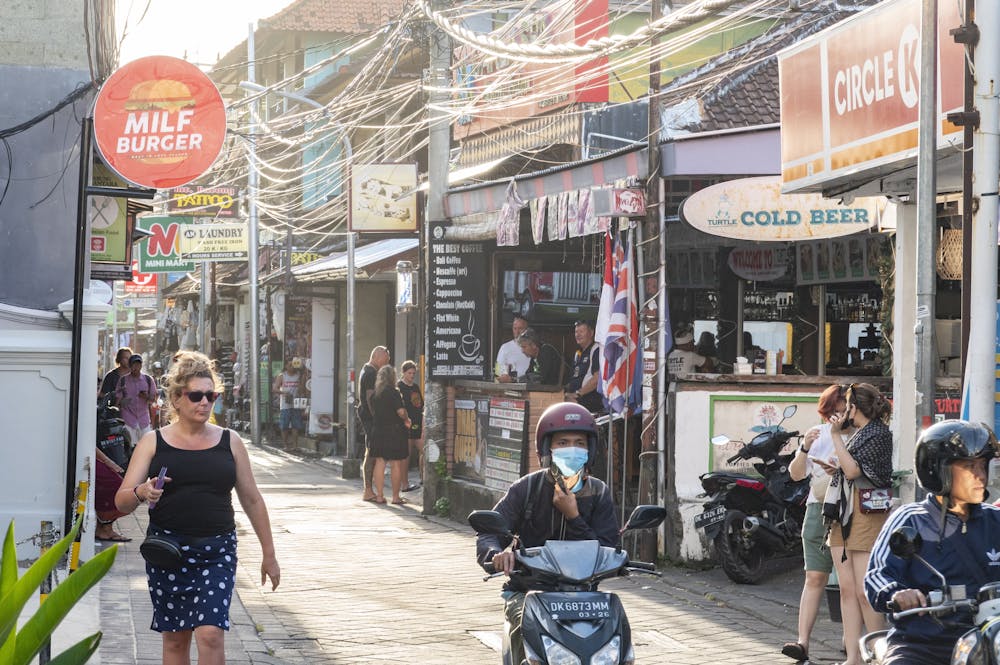
Two provisions have already attracted attention internationally. One punishes extramarital sex with up to a year in prison, and the other says couples who live together without being legally married also face jail. There are fears unmarried foreign couples visiting Bali, Indonesia’s holiday island, might be targeted.
However, these two offences are delik aduan, that is, complaint offences. This means they cannot apply unless a close member of the family – a husband or wife, a parent or child – report the matter to the police. That makes it unlikely the new provisions would ever be deployed against an unmarried foreign tourist couple (although it’s possible they could be used against a foreigner with an Indonesian partner if the Indonesian’s family reports them).
There is more concern about the impact of these provisions on Indonesians, especially young couples. They allow families to use the police and the courts to enforce their views about sexuality and choice of partner.
It is also feared the new law will be used to target gay and lesbian people, who cannot marry under Indonesian law. Homosexuality is not illegal in Indonesia (except in the province of Aceh) but opponents of the new code say it criminalises gay and lesbian people by stealth.
Gay and lesbian people are also likely to be targeted under another provision prohibiting “indecent acts”. This is only very vaguely defined and would probably catch public acts of affection between people of the same gender.
The new code also contains provisions that impose jail terms for the dissemination of information about contraception – even explaining how to obtain it. There are exceptions for government family planning activities, but this provision clearly limits women’s freedom to choose.
Other provisions impose a four-year sentence on any woman who has an abortion, and longer terms for those who perform it (although there are exceptions for rape victims and medical emergencies).
Restrictions on freedom of expression
The new code contains provisions that criminalise insulting public officials, including the president and members of the government. There is no defence of truth. In other words, an offence is committed if the official is insulted, even if the allegations are true.
The chilling effect this would have on open debate and press freedom are obvious. In fact, equivalent provisions were struck out of the previous code by the Constitutional Court as unconstitutional. This is a flagrant attempt to reinstate those provisions, empowering the government to crack down on its opponents.
Other provisions ban the spreading of teachings that contradict the state ideology, Pancasila. This could also be deployed against government critics.
Human rights activists are also concerned about press freedom implications of two other provisions. The first prohibits the broadcasting and distribution of fake news (which is undefined) resulting in disturbance or unrest in the community and imposes a sentence of up to two years.
The second is even more dangerous for journalists. It states any person who broadcasts or distributes news that is unverified or exaggerated or incomplete (terms that are also not defined) will also face jail.
Other very controversial provisions deal with blasphemy. The code introduces increased restrictions on religion and religious life that will strengthen and expand the bases on which minority religious groups can be persecuted. This will aggravate a growing problem in post-Soeharto Indonesia.
Constitutional Court challenge
This deeply flawed new criminal code is likely to meet with stiff opposition from lawyers and activists, including protests, even though the new code bans “unannounced demonstrations”. And it’s inevitable it will end up in the Constitutional Court, which has certainly been willing to strike out legislation that contradicts the Constitution in the past.
However, activists are now worried the recent dismissal of a Constitutional Court judge by the national legislature may have changed this.
Lawmakers claimed Justice Aswanto, who had originally been nominated by them, had acted contrary to the legislature’s interests by doing his job and striking down unconstitutional laws. Without a clear legal basis, they had him “recalled” and President Jokowi swore in a replacement.
Some predict this will make the remaining judges much more cautious when the code comes before them.
A long campaign
Most Indonesia-watchers agree democratic regression has increased over the last decade. The new code certainly fits that pattern. But it may also be linked to the hugely important presidential and legislative elections scheduled for February 2024.
President Jokowi is in his second term and cannot run again, so the elections will likely result in a major recalibration of power and wealth in Indonesia that will last for five or even ten years (if the new president wins a second term).
Politicians are already jostling for position and some have begun campaigning. The identity politics of religion and morality have played a central role Indonesia’s bitterly fought electoral contests in recent years, and the new code reflects this.
It allows the politicians who backed it to claim a “law and order” success where others had failed for years, and to assert conservative morality “family values” they think will resonate with their voters. This is particularly important for nationalist politicians seeking to bolster their religious credentials.
And, of course, the new code also delivers the government potent new legal weapons it can deploy against its critics.
Read more: At 50, Indonesia's Legal Aid Institute continues to stand on the side of victims[2]