Are you haunted by ghosts of the past and phantoms of your future? Welcome to the spooky realm of hauntology
- Written by: Alasdair Macintyre, Associate lecturer visual arts, artist, PhD, Australian Catholic University
Do you believe in ghosts? Every year, Halloween serves up the usual images of spooks, skeletons and witches – but these ideas aren’t just the domain of fiction or trick-or-treating. There is also a philosophical concept that embraces ghosts.
It is called “hauntology”, and it might just make you a believer.
The word hauntology was invented by the French philosopher Jacques Derrida for his 1993 lecture Spectres of Marx[1].
Derrida was a whimsical guy, and the words “hauntology” and “ontology” both sound identical when spoken in French.
Ontology[2] is the philosophical study of existence and being, dating back as far as ancient Greece. In Derrida’s mind, ontology was shadowed by hauntology, a state of non-being.
Hauntology is that eerie zone where time collapses and our past memories and associations haunt our minds, like a ghost.
Haunted by past and future
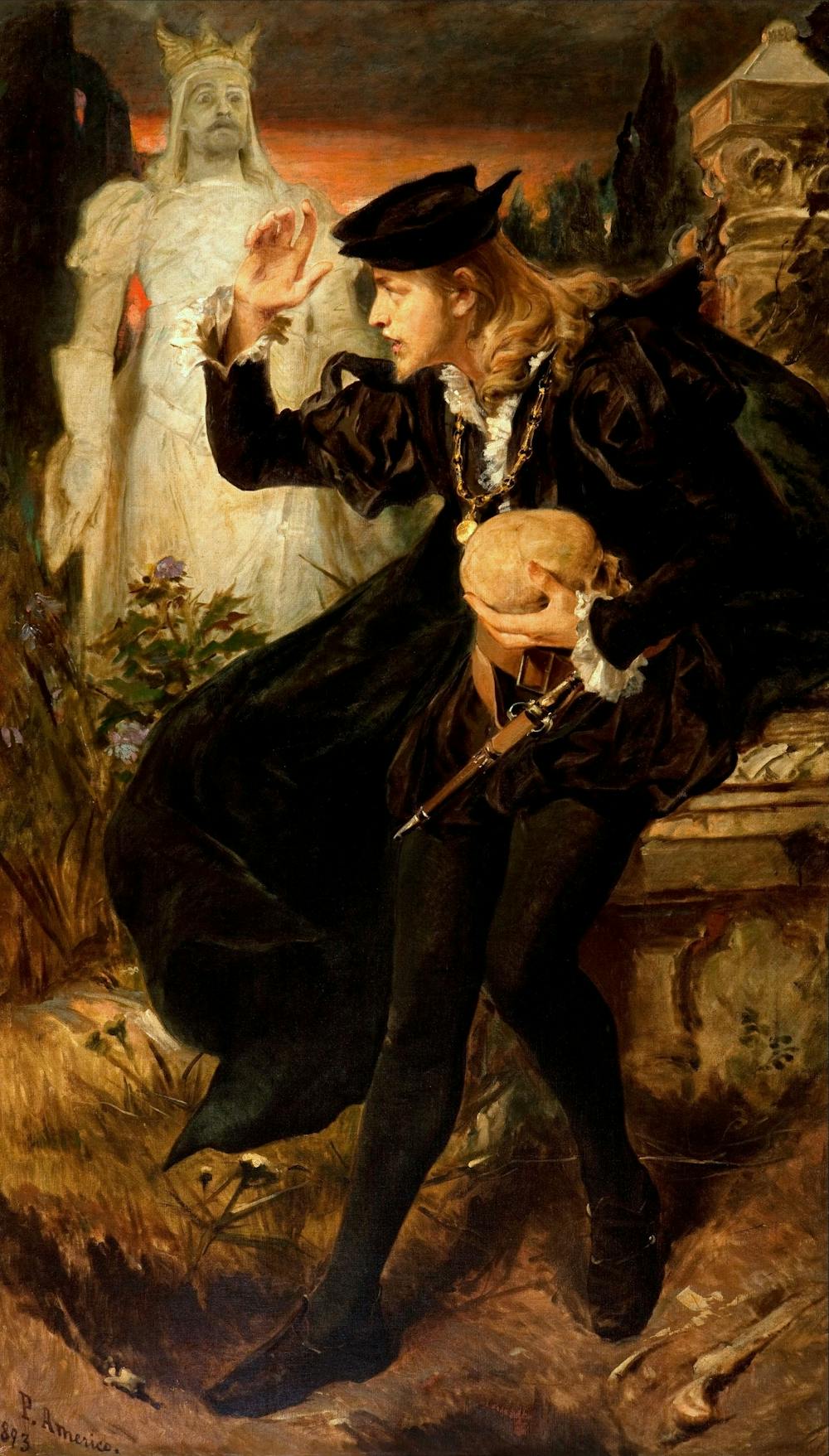
In his lecture, Derrida invoked Shakespeare’s Hamlet, both through the phantom of Hamlet’s father and particularly the phrase “time is out of joint”.
Not only does hauntology look back to your past experiences, it looks forward. You are haunted by the future – or, at least, haunted by futures that did not eventuate.
Are you in the job you planned to have ten years ago? Do you live in the house you dreamed of when you were younger? Do these unfulfilled dreams weigh on your mind? Dare I ask, do these unmet expectations haunt you?
English theorist Mark Fisher called this concept “cancelled futures” and associated it with cultural stagnation. In a 2014 lecture[3] he bemoaned little forward progress in music and films: an endless repetition and recycling of old ideas, just in high definition.
Fisher was an important catalyst in the transformation of ghosts. Along with music journalist Simon Reynolds, Fisher appropriated Derrida’s hauntology by analysing pop culture, music and movies through a hauntological lens: considering how contemporary culture is haunted by our pasts and impossible futures.
This area of “spectral studies” developed in the new millennium mainly through blogs. The traditional idea of ghosts evolved from a supernatural phenomenon (fictional or otherwise) into a philosophical concept, discussed vigorously in the digital realm.
Those studying spectral studies turned to sources as diverse as Freud’s observations of the “uncanny[4]” and Sartre’s suggestion[5] that, although invisible, the dead survive and are all around us.
Read more: From Black Death to COVID-19, pandemics have always pushed people to honor death and celebrate life[6]
Haunted popular cultures
Many creatives have embraced the motif and connotations of the ghost. Richard Littler’s blog Scarfolk[7] (2013-) imagines a fictional English village stuck forever looping on 1979. The retro electronica musicians of the Ghost Box Records label[8] (2004-), seem to capture the soundtrack[9] of a parallel world outside of time.
Hauntology also describes a post-traumatic-like disquiet of those born in the 1960s and ‘70s. Dubbed by Bob Fisher as “the haunted generation[10]”, Fisher says kids of this era grew up in an age of “cosy wrongness”, consuming lots of media – especially television.
Not all of it was suitable for children.
Think of films like Watership Down[11] (1978) with its blood-soaked fields and scary rabbits, or those fuzzy Jon Pertwee/Tom Baker-era episodes of Doctor Who.
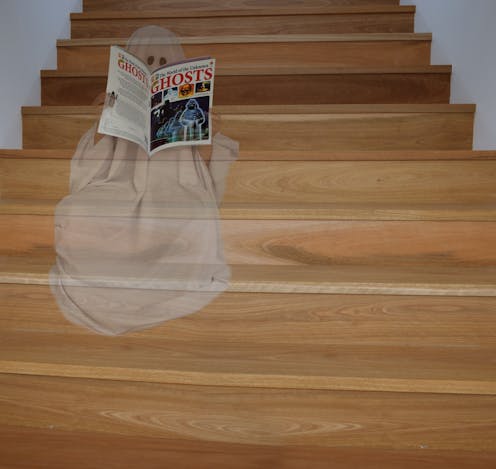
Are you of an age where the memory of those grainy black and white ghost photographs you saw as a child in Usborne’s World of the Unknown: Ghosts[12] (1977) still freak you out? Does the recollection of the shrill screams in Disney’s read-along book and record of The Haunted Mansion[13] (1970) still send shivers down your spine?
Much hauntological writing discusses popular culture artefacts such as these, and the way they haunt our minds through recurring memories that return again and again.
Walking with ghosts
Films like Stanley Kubrick’s The Shining (1980), especially its setting at the vast and secluded Overlook hotel, strongly reflect key features of hauntology. The emotional disintegration of Jack Torrance (Jack Nicholson) mirrors the very hauntological collapsing of time within the walls of the hotel.
People and events from decades past appear and influence his behaviour. Then, of course, there are the ghosts of those two little girls in their blue dresses.
This depiction of ghosts we knew returning to us dressed in the attire they wore in life reflects a long tradition. Hamlet’s father returns dressed in battle armour. The ghosts of Charles Dickens’ A Christmas Carol are decked out in their burial suits.
It was not until the 20th century that ghosts began to appear in their ubiquitous white sheets, most notably in the works of MR James. In James’ Oh, Whistle and I’ll Come to You, My Lad[14] (1904), a holidaying academic inadvertently conjures up a terrifying entity swathed in linen bedsheets.
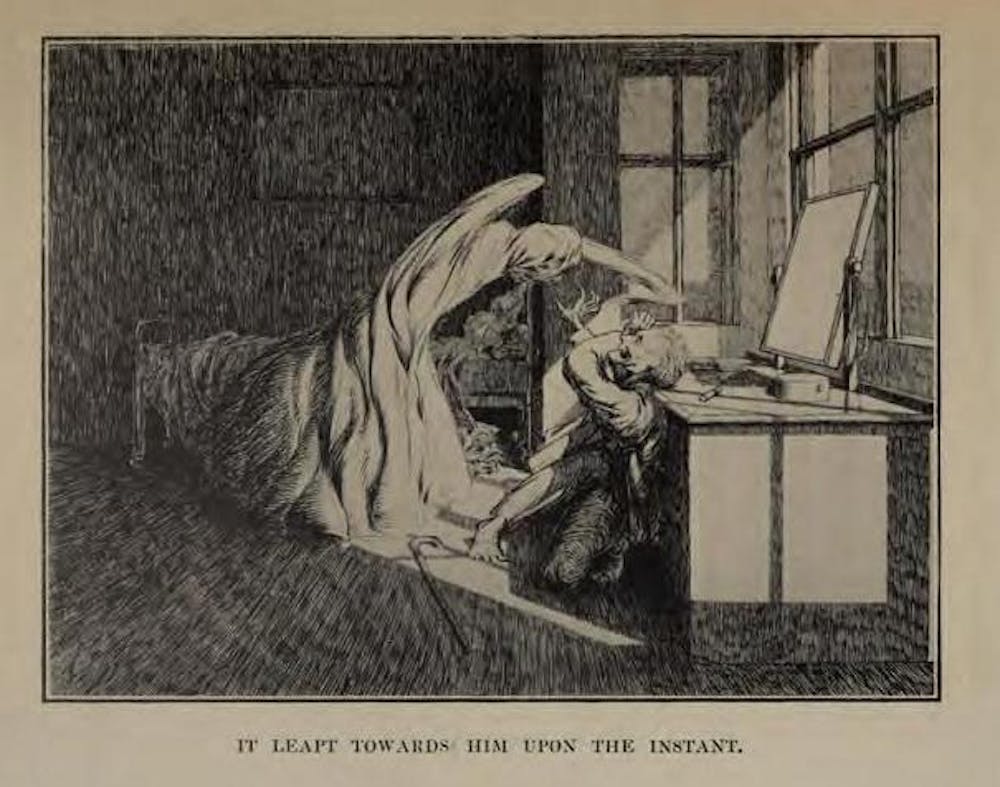 Illustration by James McBryde for MR James’s story, Oh, Whistle, And I’ll Come To You, My Lad.
Wikimedia Commons
Illustration by James McBryde for MR James’s story, Oh, Whistle, And I’ll Come To You, My Lad.
Wikimedia Commons
So in a sense, hauntology has brought us full circle, returning to these ideas of ghosts we knew from our lives returning once more to haunt us.
Now you know it, hauntology is a name you can give to those slightly eerie memories from your childhood, or that nagging feeling that you took a wrong turn in life somewhere along the road.
Whether ghosts be the Scooby Doo-style spooks chasing us around old castles, or the psychological phantoms gatecrashing our own minds, hauntology is all around.
Read more: Looking for love on a dating app? You might be falling for a ghost[15]
References
- ^ Spectres of Marx (en.wikipedia.org)
- ^ Ontology (en.wikipedia.org)
- ^ 2014 lecture (www.youtube.com)
- ^ uncanny (en.wikipedia.org)
- ^ Sartre’s suggestion (philpapers.org)
- ^ From Black Death to COVID-19, pandemics have always pushed people to honor death and celebrate life (theconversation.com)
- ^ Scarfolk (scarfolk.blogspot.com)
- ^ Ghost Box Records label (en.wikipedia.org)
- ^ soundtrack (soundcloud.com)
- ^ the haunted generation (hauntedgeneration.co.uk)
- ^ Watership Down (www.imdb.com)
- ^ World of the Unknown: Ghosts (usborne.com)
- ^ The Haunted Mansion (www.youtube.com)
- ^ Oh, Whistle and I’ll Come to You, My Lad (en.wikipedia.org)
- ^ Looking for love on a dating app? You might be falling for a ghost (theconversation.com)