Albanese seeks 'new culture of co-operation' out of summit
- Written by: Michelle Grattan, Professorial Fellow, University of Canberra
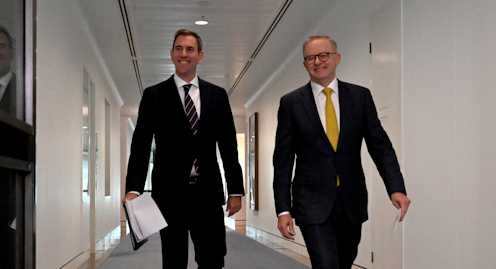
Prime Minister Anthony Albanese says the biggest outcome he wants from this week’s jobs and skills summit “is the beginning of a new culture of co-operation”.
In a Monday speech to mark his first 100 days in office, Albanese will say he is looking for progress on skills and training, wages and apprenticeships, and hopes there will be “some immediate actions” out of the summit.
But the basic aim is “a renewed understanding – between unions and industry and small business and government and community groups – that building a stronger, fairer and more productive economy is our shared responsibility, and our common interest.
"This is how we get employers and employees and small business negotiating for genuine win-win outcomes,” Albanese says in his speech, excerpts of which were released ahead of delivery.
“It’s how we make the federation work better, lifting efficiency, improving services and boosting productivity.
"This is how we sweep aside the persistent, structural barriers that prevent women from securing decent jobs and careers and enjoying financial security over their lives.”
The sharpest issue in the lead up to the Thursday-Friday summit, to be attended by about 140 participants, is the ACTU’s bid for the wages system to allow multi-employer bargaining – that is, bargaining across sectors.
Read more: Grattan on Friday: Can Albanese government wring consensus from union-business impasse over industrial relations?[1]
This sectoral bargaining, which could be accompanied by industrial action, would strengthen the hands of unions and employers in winning pay rises.
The government has said it is very interested in the proposal but there has been push back from employers.
Albanese in his speech stresses the end of the summit is not the end of the story. Summit ideas would feed into an Employment White Paper expected to take about a year to complete.
Participants will hope some more immediate initiatives that the government accepts could be included in the October budget.
In a joint statement on skills and training[2], the ACTU and business groups at the weekend called for the budget to include more funding to reinvigorate the apprenticeship system.
“Investment must increase apprentice wage subsidies, provide incentive completion payments for both employers and apprentices, and payments for mentoring programs for apprentices.”
The groups also called for the Albanese government to work with unions and employers and state and territory governments to “guarantee foundational skills, including digital literacy, for all Australians”, and “support lifelong learning”.
The business groups that signed the joint statement were the Australian Industry Group, the Business Council of Australia and the Australian Chamber of Commerce and Industry.
Asked about the union push for multi-employer bargaining. Treasurer Jim Chalmers told Sky: “We don’t kid ourselves that everybody’s got an identical view about it. But if there’s a view about fixing enterprise bargaining, then it should be heard and it should be teased out on the floor at the summit for sure.”
Chalmers said:
We’re not looking for unanimity. We’re just looking for those areas of broad common ground so that we can move forward together, whether it be on getting wages growing again after a decade of stagnation, whether it’s boosting productivity by investing in our people and their skills, whether it’s dealing with these skills and labour shortages.
“We’ve been really energised and really enthused by the genuine spirit of collaboration and cooperation that has emerged in the lead up to the Summit.”
Read more: The Morrison inquiry, Robodebt royal commission, and the jobs summit[3]
NSW Premier Dominic Perrottet expressed concern that “it seems to be that the jobs summit to many degrees has been overtaken by the unions”.
On the pandemic, Albanese in his speech spells out the phases the government sees. “We’ve been through the pandemic response. We are in the middle of the recovery.
"And reform will be the key to renewal. From response and recovery, to reform and renewal.” This would be “the guiding focus of government action for the coming years”.
References
- ^ Grattan on Friday: Can Albanese government wring consensus from union-business impasse over industrial relations? (theconversation.com)
- ^ joint statement on skills and training (www.aigroup.com.au)
- ^ The Morrison inquiry, Robodebt royal commission, and the jobs summit (theconversation.com)