it's not the costume that matters, but falling in love with reading
- Written by: Joanne O'Mara, Associate Professor in Education, Deakin University
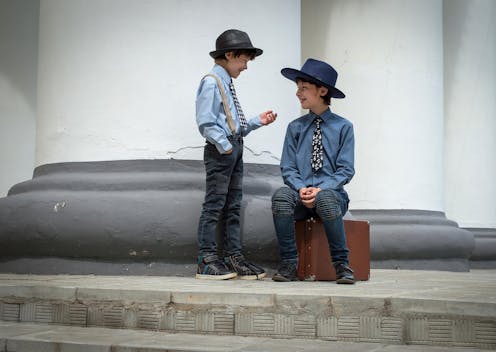
My phone pings and it’s a message from my brother. Do we have an old white dress my niece could borrow for a Book Week costume for school?
Book Week[1] is upon us once again and all around Australia, family WhatsApp groups are lighting up with similar requests from parents and carers of primary school aged children.
Mothers are staring at cardboard boxes wondering how they can help their child transform into a rainbow fish. Fathers are corralling children down the aisles of Spotlight trying to find the costume section. Carers are asking children about how they want to dress for the Book Week parade, and what’s needed to complete the look.
In the scramble for costumes, which can add to the work of already stressed parents and carers, the point of Book Week – for kids to fall in love with reading – can get lost.
In fact, a vast body of research evidence[2] shows what’s crucial to building a love of reading is allowing children the time and freedom to read what interests them.

Dressing up as a fictional character does have benefits
I’m not saying the Book Week costume is pointless; dressing up as your favourite book character is a great way to celebrate reading, particularly when all students and teachers take part.
In Australia – where most school students wear uniforms – every school day out of uniform has a sense of celebration.
Some children will use their Book Week costume to play around with the fictional character and interact in role.
A child I know revelled in dressing up as Professor Snape from Harry Potter and playfully patrolled the playground in character. He was pursued by a gang of younger Potter fans with their house colours on, yelling out to him in role and giggling when he responded gruffly as Snape.
These children were playing but they were also learning; it was an opportunity to improvise scenes based on a novel they loved to read, and to celebrate this reading across the school.
“Snape” himself had read the novels when he was younger; his love of the text and pleasures of the fictional world spurred him on to read a much more difficult text than he normally would at that age.
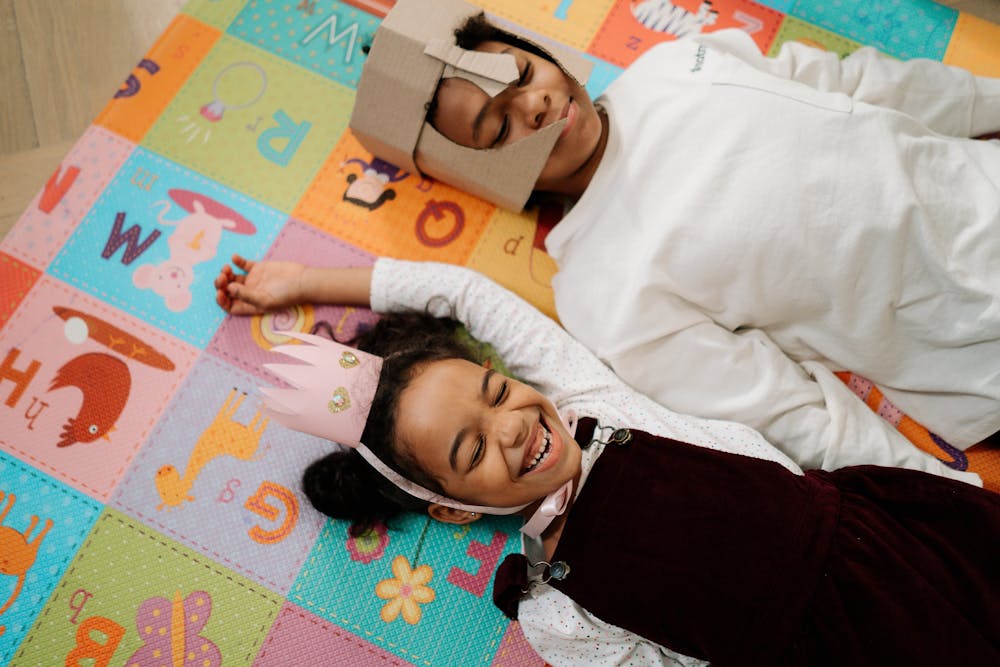 Dressing up can allow a child to celebrate the character and texts they love.
Photo by cottonbro/Pexels, CC BY[4]
Dressing up can allow a child to celebrate the character and texts they love.
Photo by cottonbro/Pexels, CC BY[4]
What really matters is not the costume, but falling in love with reading
Extensive research[5] shows reading for pleasure improves young people’s overall reading skills, as well as test outcomes.
Creating a culture of reading in school can help children fall in love with reading, where children read books they choose themselves for their own pleasure.
Some schools provide a time and place for silent reading[6] as part of the school day, but sadly this is not always the case.
Providing time for sustained, self-selected reading is important, as many children do not read for pleasure outside school time.
Finding a book they love, with help from another child, a teacher, or librarian, can help a child to develop the habit of reading.
 Finding a book they love can help a child develop a reading habit.
Photo by Ksenia Chernaya/Pexels, CC BY[7]
Finding a book they love can help a child develop a reading habit.
Photo by Ksenia Chernaya/Pexels, CC BY[7]
So what would work to help my child fall in love with reading?
Encourage your child’s reading of fiction and let them choose books for themselves.
Facilitate trips to the library if you can, and spend time with them selecting what interests them.
Don’t judge your kids on what they love, and don’t force your kids to read what you deem a “worthy” book.
Too often kids experience what author and teacher Kelly Gallagher calls “readicide”[8]: the “systematic killing of the love of reading, often exacerbated by the inane, mind-numbing practices of schools”.
It’s possible to commit readicide in the home if it becomes a forced, systematic chore where your child has no choice over what they are reading.
 Don’t judge your kids on what they love or force them to read books you deem ‘worthy’.
Image by Victoria_Borodinova from Pixabay, CC BY[9]
Don’t judge your kids on what they love or force them to read books you deem ‘worthy’.
Image by Victoria_Borodinova from Pixabay, CC BY[9]
So, rather than judging, enjoy their pleasures and invite them to share their books with you.
Share your own reading with them, and make it visible to them.
I read novels on my phone, which I love, as I can read in bed with the light off. But it’s not as obvious when I am reading fiction as it would be if I was reading a printed book – so I try to bring up my reading in my conversations with my children.
It’s a small action, but anything you can to do help establish a culture of reading in the family helps establish reading for pleasure as a normalised behaviour.
So this Book Week, don’t stress about the costume, and don’t worry about what the other mums or dads are sewing or buying.
Just let your kid read what they want and enjoy it together.
References
- ^ Book Week (cbca.org.au)
- ^ evidence (assets.publishing.service.gov.uk)
- ^ CC BY (creativecommons.org)
- ^ CC BY (creativecommons.org)
- ^ Extensive research (assets.publishing.service.gov.uk)
- ^ time and place for silent reading (theconversation.com)
- ^ CC BY (creativecommons.org)
- ^ Kelly Gallagher calls “readicide” (books.google.com.au)
- ^ CC BY (creativecommons.org)