the benefits for and the pressures on First Nations sportswomen
- Written by: Michelle O'Shea, Senior Lecturer, School of Business, Western Sydney University
A record number[1] of female Aboriginal and/or Torres Strait Islander athletes represented Australia at the 2022 Birmingham Commonwealth Games.
While embracing their role model status, it is worth considering the weighty expectations and costs that accompany this visibility.
On top of the pressures of representing Australia at the elite level, First Nations sportspeople also have to contend with the politicisation that still surrounds their very identity.
Read more: Sport and physical activity play important roles for Aboriginal and Torres Strait Islander communities, but there are barriers to participation[2]
The Commonwealth Games’ colonial history
The Commonwealth Games were originally known as the British Empire Games[3] (1930-50), then the British Empire and Commonwealth Games (1954-66), the British Commonwealth Games (1970-74), and finally the Commonwealth Games.
The Empire Games aimed to celebrate imperial prestige, and Australia’s sporting authorities considered them worthier than the Olympics[4]. The motto “Empire above all else, Australia second[5]” was illustrative of their status and influence at the time of the 1930s Empire Games.
At the 1962 games, a time when Aboriginal and/or Torres Strait Islander people were not counted as citizens in Australia, high-jumper and Ngemba man Percy Hobson was told to deny his Aboriginality[6] as “it wouldn’t look good for the gold medal winner to be a "darkie” (sic)“. He had also previously been overlooked[7] for Australian selection owing to his cultural background.
Read more: What the Ash Barty and 'Special K' tennis triumphs say about Australia and the buttoned-up sport industry[8]
Pride in identity is finally becoming accepted
Following her win in the 400 metres final at the 1994 Commonwealth Games in Victoria, Canada, Cathy Freeman wrapped herself in both the Aboriginal and Australian flags in a symbolic reconciliatory gesture. She reflected on this in her book Cathy: Her Own Story:
I wanted to shout, "Look at me. Look at my skin. I’m black, and I’m the best.” There was no more shame.
She received widespread support, including a telegram from the then prime minister Paul Keating:
…in the circumstances, your carrying of both flags was an important reminder of your pride in your heritage as an Aboriginal Australian.
Unfortunately, the support wasn’t unanimous. Australia’s Chef de Mission for the games, Arthur Tunstall, issued a media statement[9] reprimanding Freeman:
She should have carried the Australian flag first up, and we should not have seen the Aboriginal flag at all.
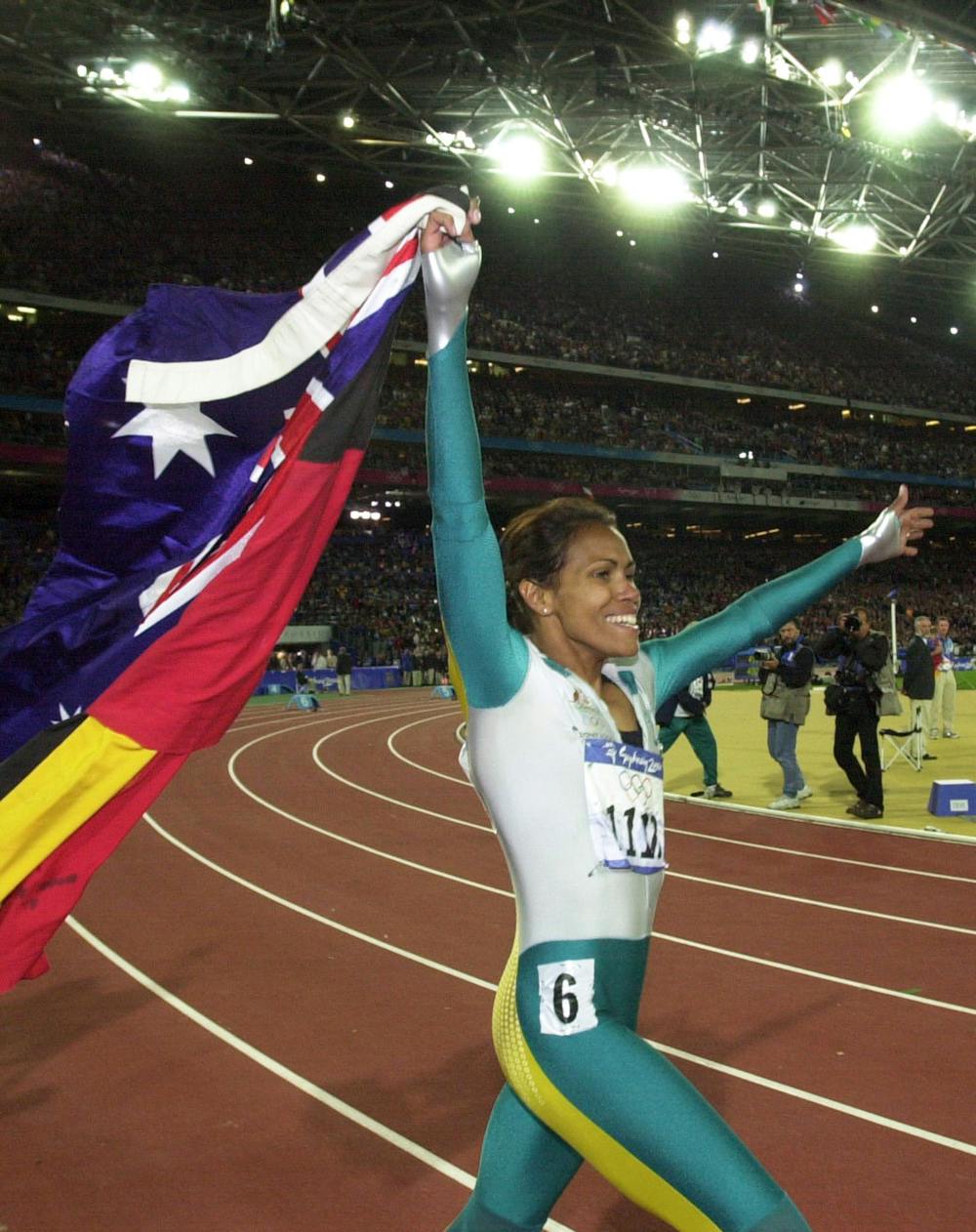
Competitors at this year’s Commonwealth Games were allowed to take a knee or display a symbol in solidarity with a cause, after organisers unveiled a revised set of “guiding principles[11]” for athlete advocacy.
Considered sporting advocates and ambassadors one day, and too political[12] the next, Freeman’s experience demonstrates how Indigenous athletes are always carrying the weight of the politics[13] around their identity.
Read more: Our national anthem is non-inclusive: Indigenous Australians shouldn't have to sing it[14]
Inspirational role models giving back
In 1958, Adnyamathanha woman Faith (Coulthard) Thomas became the first[15] (and until 2019, the only) Indigenous woman to represent Australia in cricket. Thomas was highly critical of the sport’s racial and gender inequities and had no qualms in calling them out[16].
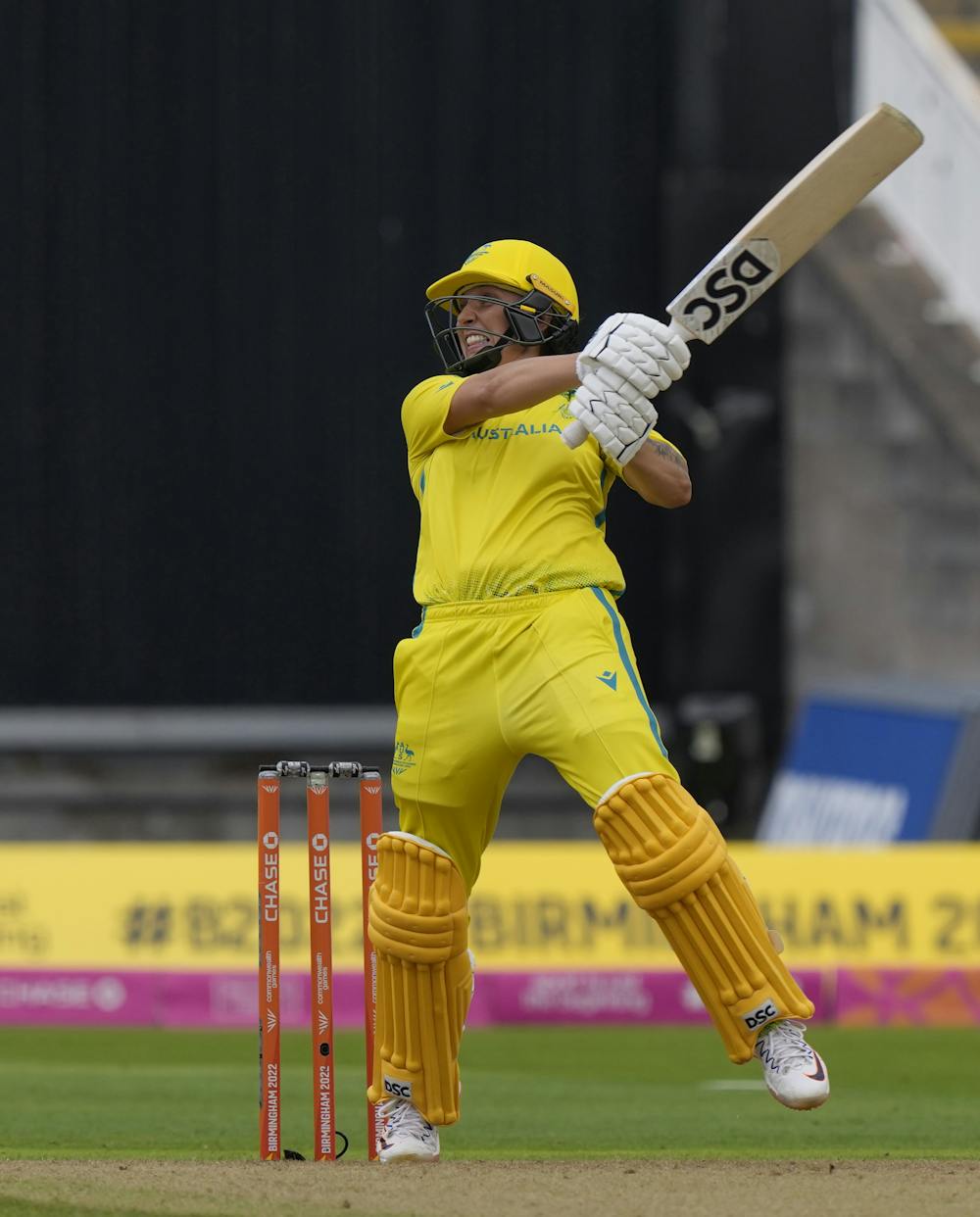 Ashleigh Gardner bats during the women’s cricket at the 2022 Commonwealth Games.
Manish Swarup/AAP[17]
Ashleigh Gardner bats during the women’s cricket at the 2022 Commonwealth Games.
Manish Swarup/AAP[17]
Following in Thomas’s footsteps, and a key member of the Australian women’s cricket team at the Birmingham 2022 Commonwealth Games, Ashleigh Gardner is only the second female Indigenous cricket player to represent Australia on the international stage. A Muruwari woman, she has created her own foundation[18] which links sport, health and education.
The power and influence of Gardner and other Indigenous female athletes’ advocacy and commitment to taking back to community is perhaps best summed up by Minister for Indigenous Australians Linda Burney[19]. Burney states:
It is not so much about the physical athleticism itself, as it is about what those sporting achievements represent and the valuable lessons they have for our young people in fields beyond sport: discipline, persistence, unity, strength and dignity.
Read more: Sit on hands or take a stand: why athletes have always been political players[20]
Being the ‘only one’ can often lead to burnout
Netball Australia has struggled to recruit First Nations players – Noongar netballer Donnell Wallam, who played at the Birmingham games, was the first Indigenous player in 32 years to represent the Diamonds at a Commonwealth Games. The sports governing body recently announced a commitment[21] to breaking down the barriers that prevent Aboriginal and/or Torres Strait Islander people from reaching their full potential in the sport.
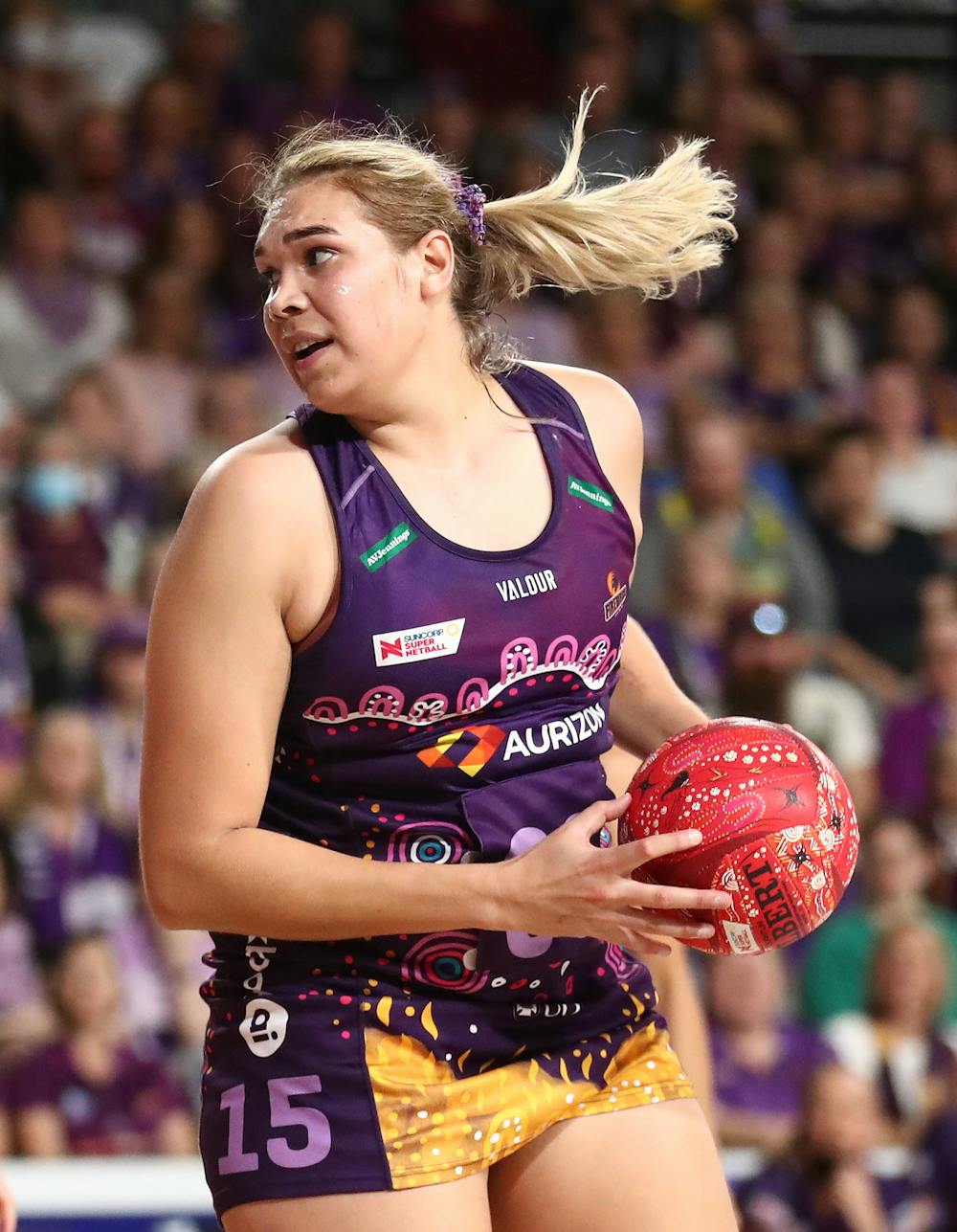 Donnell Wallam.
Jason O'Brien/AAP[22]
Donnell Wallam.
Jason O'Brien/AAP[22]
In 2020, Netball Australia held its first Indigenous Round. Jemma MiMi, having only just discovered she was First Nations, was the only identified Indigenous player in the round. Despite being essentially the face of the round’s marketing campaign, the Queensland Firebirds did not select MiMi for the game[23], prompting accusations[24] the Indigenous round was purely tokenistic.
This is work that both Indigenous and non-Indigenous people need to share. It involves truth-telling and taking responsibility for past injustices that Aboriginal and/or Torres Strait Islander people continue to face as a result of oppression through ongoing colonisation. The shame that Australia has placed on Aboriginal and/or Torres Strait Islander people belongs to the colonisers, so let’s not wait till 2026 to dismantle it.
References
- ^ record number (commonwealthgames.com.au)
- ^ Sport and physical activity play important roles for Aboriginal and Torres Strait Islander communities, but there are barriers to participation (theconversation.com)
- ^ British Empire Games (www.naa.gov.au)
- ^ worthier than the Olympics (www.urban.com.au)
- ^ Empire above all else, Australia second (theconversation.com)
- ^ deny his Aboriginality (search.informit.org)
- ^ previously been overlooked (www.sbs.com.au)
- ^ What the Ash Barty and 'Special K' tennis triumphs say about Australia and the buttoned-up sport industry (theconversation.com)
- ^ media statement (www.smh.com.au)
- ^ Dean Lewins/AAP (photos.aap.com.au)
- ^ guiding principles (thecgf.com)
- ^ too political (www.sbs.com.au)
- ^ politics (sirensport.com.au)
- ^ Our national anthem is non-inclusive: Indigenous Australians shouldn't have to sing it (theconversation.com)
- ^ the first (www.nativetitlesa.org)
- ^ calling them out (www.theguardian.com)
- ^ Manish Swarup/AAP (photos.aap.com.au)
- ^ foundation (ashgfoundation.com)
- ^ Linda Burney (www.sbs.com.au)
- ^ Sit on hands or take a stand: why athletes have always been political players (theconversation.com)
- ^ commitment (netball.com.au)
- ^ Jason O'Brien/AAP (photos.aap.com.au)
- ^ did not select MiMi for the game (www.theguardian.com)
- ^ accusations (www.sbs.com.au)