


Australia's special visa program for Ukrainians to end, despite war raging on
- Written by: Olga Oleinikova, Senior Lecturer and Director of the SITADHub (Social Impact Technologies and Democracy Research Hub) in the School of Communication, University of Technology Sydney
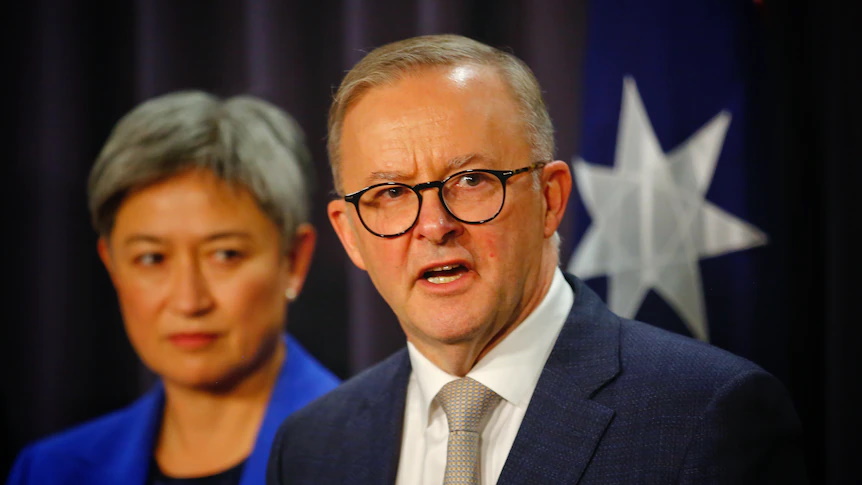
Australian Prime Minister Anthony Albanese visited Ukraine this month, promising an extra A$100 million[1] in military aid and pledging to help the country for “as long as it takes”.
So when a humanitarian visa program[2] allowing Ukrainians to live and work in Australia was announced to end on July 14[3], it caught many by surprise[4].
Such short-notice visa changes are an impossible challenge for Ukrainians facing the many complexities and stresses of fleeing the war. In response to these concerns, the deadline has since been extended[5], but only by two more weeks.
The decision to end the visa program is disappointing, given heavy fighting continues and the humanitarian crisis worsens[6].
While understanding there may be economic and other reasons for the visa program change, we hope the government considers exemptions and other alternatives[7] to continue supporting displaced Ukrainians.
Worsening humanitarian crisis
Civilians continue to be killed and injured by Russian forces[8].
Houses, hospitals[9], schools[10] and other infrastructure are being consistently damaged or destroyed.
Food production has been disrupted as there’s evidence Russian forces have placed landmines to contaminate agricultural areas[11], and stolen[12] and set fire[13] to Ukrainian grain harvests.
Since Russia invaded Ukraine in February 2022, about one third of Ukrainians[14] have been forced to flee their homes.
More than nine million people[15] – around a quarter of the country’s population[16] – have had to seek refuge abroad. This has created the largest current refugee crisis in the world[17].
Several countries in Europe and other parts of the world opened their doors to host displaced Ukrainians. Poland remains at the top, sheltering more than 1.2 million[18] refugees, while other popular destinations include Germany, Czech Republic, Italy, as well as the United States, Canada and Australia.
Why do Ukrainians choose Australia?
Australia is one of the most distant destinations offering shelter to displaced Ukrainians.
I (Olga) have researched and written a book on Eastern European migration[19] to Australia, and am currently leading a project with the University of Technology Sydney on Ukrainian migration to Australia[20].
I’m undertaking a follow-up pilot study[21] on the pathways to humanitarian protection for recent Ukrainian arrivals fleeing the war.
Unpublished preliminary results from my interviews reveal four main reasons why some Ukrainians choose Australia over very attractive humanitarian programs in countries like Poland, Germany and Norway.
These reasons are:
-
relatives and friends in Australia
-
distant location from war-torn Europe
-
attractive three-year humanitarian program (Europe offers one year)
-
job opportunities.
Anna Kolieda, one of the participants, escaped Ukraine and went to Germany before coming to Australia. She said:
I didn’t know much about the country. Except that it is safe, far away from other world, has beautiful landscapes and English like first language. It is also harder in Europe with jobs. But the very big factor was that I had a support from friends here. They invited me and were supporting on my way. [Settlement Services International] and government do a great job in providing help also, so it create a good start - I feel very comfortable on my second month here.
Australia’s response
Despite very few direct interests in the region, Australia has shown extraordinary support for Ukraine[22].
The Australian government has contributed over A$385 million[23] in aid to date.
Support for Ukrainians in Australia is also strong on the ground. For example, the NSW Government has generously donated over 350 Opal travel cards[24] to newly arrived Ukrainians, pre-loaded with money.
Settlement Services International[25], the Red Cross[26], other services, and the local Ukrainian community[27] have organised airport pickups, hotel accommodation, food vouchers, and phone cards.
The Adult Migrant English Program[28] and community groups have provided language instruction locally[29] and free of charge. Such initiatives play a crucial role in speedily integrating[30] them into Australia.
The impact of the visa program cut-off
Since February, Australia has granted more than 8,500 visas to Ukrainians[31]. According to The Australian newspaper, around 4,100[32] of these people have accepted the offer and are now in the country.
Under the visa program[33], displaced Ukrainians can work, study, and access Medicare.
Because Ukrainians have to be physically in Australia to accept the visa offer, many people have had to hurriedly alter their travel plans[34] to arrive before the deadline, creating a wave of disappointment, fear and pressure[35] on those who had made plans for the coming months.
According to a survey[36] by the Australian Federation of Ukrainian Organisations (AFUO) with over 530 responses, the key issues facing Ukrainians from the changes to Australia’s humanitarian visa program include:
-
having purchased tickets for a later date
-
delays trying to escape territories occupied by the Russian armed forces
-
waiting for passports or other key travel documents to be issued or updated
-
caring for sick relatives
-
men 18 - 60 years old not being permitted to leave the country due to martial law.
AAP reports[37] there’s concern that displaced Ukrainians who miss the deadline will have to reside in Australia on tourist visas, with no ability to work or access to Medicare.
Gendered impacts of the war are another concern. As most of those fleeing Ukraine are women and children[38], there are numerous further issues affecting them, including: a fear of sexual violence, worry for husbands and sons left behind, lack of access to sexual and reproductive health, vulnerability to trafficking, and loss of livelihoods.
It’s crucial that support for Ukraine from Australia and other countries doesn’t get phased out[39] as the war drags on.
Read more: Russia's Ukraine invasion is slowly approaching an inflection point. Is the West prepared to step up?[40]
References
- ^ A$100 million (theconversation.com)
- ^ humanitarian visa program (www.homeaffairs.gov.au)
- ^ end on July 14 (www.sbs.com.au)
- ^ caught many by surprise (www.abc.net.au)
- ^ extended (www.crikey.com.au)
- ^ worsens (disasterphilanthropy.org)
- ^ other alternatives (www.theguardian.com)
- ^ continue to be killed and injured by Russian forces (www.amnesty.org)
- ^ hospitals (www.businessinsider.com)
- ^ schools (reliefweb.int)
- ^ contaminate agricultural areas (reliefweb.int)
- ^ stolen (www.bbc.com)
- ^ set fire (edition.cnn.com)
- ^ one third of Ukrainians (www.unhcr.org)
- ^ nine million people (data.unhcr.org)
- ^ country’s population (en.wikipedia.org)
- ^ largest current refugee crisis in the world (en.wikipedia.org)
- ^ sheltering more than 1.2 million (data.unhcr.org)
- ^ Eastern European migration (link.springer.com)
- ^ Ukrainian migration to Australia (sitad.com.au)
- ^ study (www.booktopia.com.au)
- ^ extraordinary support for Ukraine (theconversation.com)
- ^ A$385 million (www.minister.defence.gov.au)
- ^ donated over 350 Opal travel cards (ucnsw.org)
- ^ Settlement Services International (www.ssi.org.au)
- ^ Red Cross (www.redcross.org.au)
- ^ Ukrainian community (www.youtube.com)
- ^ Adult Migrant English Program (immi.homeaffairs.gov.au)
- ^ locally (www.sbs.com.au)
- ^ speedily integrating (www.homeaffairs.gov.au)
- ^ 8,500 visas to Ukrainians (www.homeaffairs.gov.au)
- ^ 4,100 (www.theaustralian.com.au)
- ^ visa program (www.homeaffairs.gov.au)
- ^ hurriedly alter their travel plans (www.abc.net.au)
- ^ disappointment, fear and pressure (www.change.org)
- ^ survey (ukrainians.org.au)
- ^ AAP reports (www.sbs.com.au)
- ^ women and children (womensenews.org)
- ^ phased out (theconversation.com)
- ^ Russia's Ukraine invasion is slowly approaching an inflection point. Is the West prepared to step up? (theconversation.com)










