Women's job opportunities in the spotlight at Albanese's summit
- Written by: Michelle Grattan, Professorial Fellow, University of Canberra
Ensuring equal opportunities and pay for women is one of the wide range of topics laid down for the federal government’s jobs summit, to be held September 1-2.
About 100 invitees will come from business, unions, civil society groups, and other levels of government. The summit was flagged by Anthony Albanese in the election campaign, and he and Treasurer Jim Chalmers announced details on Monday.
It is modelled on the Hawke economic summit of 1983, although it will only run half as long.
Some of the summit’s outcomes could be implemented in the October budget.
Individual ministers will lead the work in particular areas.
Minister for Women Katy Gallagher will co-ordinate work on the women’s labour market. Employment Minister Tony Burke will lead the job security and wages area.
Other areas will be led by Home Affairs Minister Clare O'Neil (migration); Social Services Minister Amanda Rishworth (workforce participation and barriers to employment); Skills and Training Minister Brendan O'Connor (skills and training); and Industry Minister Ed Husic (renewables, digital and manufacturing).
Apart from women’s employment, topics for the summit include
keeping unemployment low and boosting productivity and incomes
promoting secure well-paid jobs and strong, sustainable wages growth
expanding employment opportunities, including for the most disadvantaged
addressing skills shortages and getting the skills mix right
improving migration settings
maximising jobs and opportunities from renewable energy, tackling climate change, the digital economy, the care economy and a “Future Made in Australia”.
An employment white paper will be produced following the summit, led by Treasury. It will be informed by the summit’s outcomes, but there will also be a call for public submissions and community consultations. The white paper would be completed in about a year.
Albanese told a news conference there was “a lot of good will and real enthusiasm” from business groups and the ACTU to make the summit a success.
“I’ve said before that people have conflict fatigue. People want less argument and they want more solutions. My government is determined to deliver that.”
Chalmers said the challenges in the economy were “thick on the ground, but so are the opportunities”. The summit was about “picking the brains of people around Australia”.
He said the government changed hands at a time of rising inflation, falling real wages, labour shortages and the attendant challenges.
“We owe it to the Australian people to try and find that common ground so that we can reach the common objectives together. That’s what the summit will be about.”
“Our goal is to build a better trained workforce, boost incomes and living standards, and try to create more opportunities for more people in more parts of Australia.”
Invitations will be sent out about the start of August and discussion papers will be issued.
The Business Council of Australia said this was “a chance to seize the opportunity and end the deadlock on workplace relations, restore the Hawke-Keating enterprise bargaining system to lift productivity and let Australians earn more.
"And, we need a migration system that fills workforce shortages across the economy with the right targeting and incentives.”
The ACTU said the summit was “an opportunity to fix an underfunded and neglected skills sector, ensure that migration is providing opportunities rather than exploitation and address a broken bargaining system which has failed to deliver wage growth for almost a decade and has inflicted real wage cuts on workers during a cost of living crisis”.
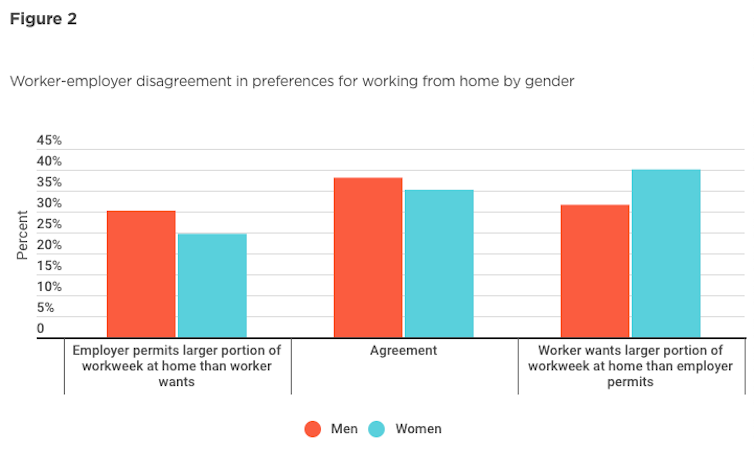
Meanwhile, the Melbourne Institute’s Taking the Pulse of the Nation report, released Monday, found a significant difference between employers and employees over working from home, as well as a gender difference among workers.
Read more https://theconversation.com/womens-job-opportunities-in-the-spotlight-at-albaneses-summit-186743