US Supreme Court overturns Roe v. Wade – but for abortion opponents, this is just the beginning
- Written by: Prudence Flowers, Senior Lecturer in US History, College of Humanities, Arts, and Social Sciences, Flinders University
The United States Supreme Court has handed down a ruling[1] overturning Roe v. Wade, the landmark 1973 decision that found there was a constitutional right to abortion.
In Dobbs v. Jackson Women’s Health Organization, the Court ruled 6-3 that
The Constitution makes no reference to abortion, and no such right is implicitly protected by any constitutional provision.
Abortion regulation has now been returned to the individual states. Yet rather than resolving the debate over abortion in the US, we will likely see a dramatic escalation of abortion lawsuits and legislation.
That is because the goal of abortion opponents has always been to stop abortion nationwide. Overturning Roe v. Wade is just the beginning.
Read more: Roe overturned: What you need to know about the Supreme Court abortion decision[2]
Roe v. Wade has been under constant attack
For 49 years, Roe v. Wade has been under constant attack from opponents of reproductive rights, surviving repeated legal challenges and reaffirmed on multiple occasions by the Supreme Court.
Despite the political controversy and polarising rhetoric from Republican politicians, 2021 polling[3] indicated 80% of Americans support abortion in all or most cases, and at least 60% support Roe v. Wade.
However, after former President Donald Trump was able to fill three Supreme Court vacancies, conservatives had a 6-3 majority on the bench.
The end of Roe v. Wade seemed inevitable[4] and the question became whether the judgement would be gradually gutted or overturned in one fell swoop.
What can Biden and the Democrats do?
In early May, a draft[5] of Justice Samuel Alito’s majority decision was leaked, indicating it would be overturned.
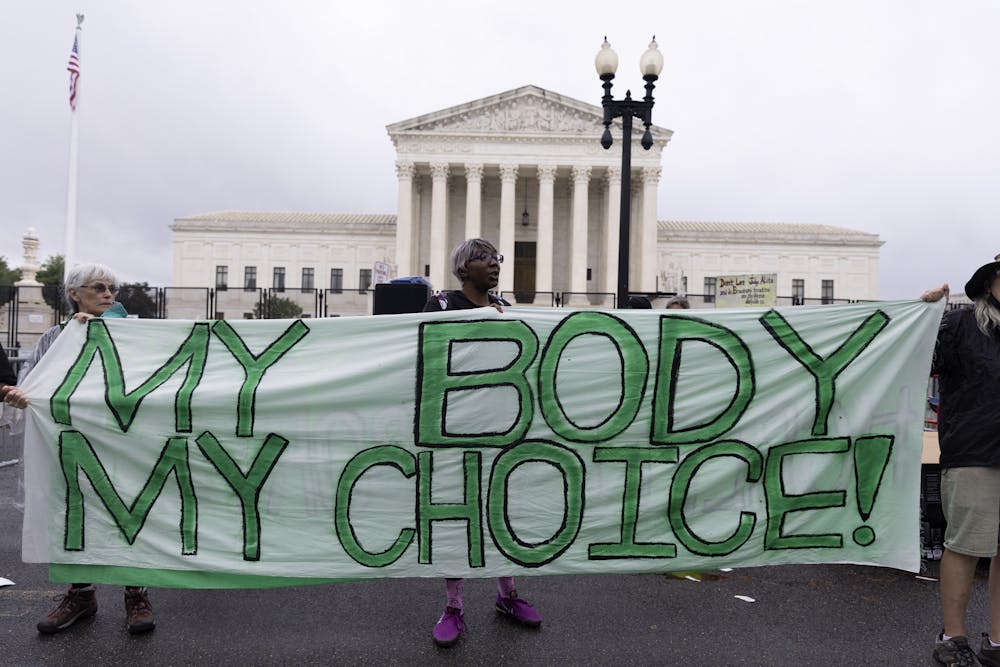
Protests from abortion rights supporters erupted, including outside the Supreme Court and the homes of conservative justices[6].
President Joe Biden swiftly issued a statement insisting a “woman’s right to choose is fundamental[7]” and his administration has spent the intervening months meeting with abortion rights advocates[8]. However, there is little of substance the president or Congressional Democrats can do to reverse the decision.
In mid May, the Women’s Health Protection Act[9], which sought to codify abortion rights, was defeated in the Senate.
And although Democrats have a majority in both houses of Congress, without filibuster reform[10] they do not have the numbers to pass legislation, which has stymied much of the Democratic agenda during Biden’s presidency.
While Biden promised[11] to issue Executive Orders on reproductive rights if Roe v Wade is overturned, these would work to offset only some of the likely consequences of the new abortion landscape.
Meanwhile, in the days after the May leak, Congressional Republicans met with prominent anti-abortion leaders to discuss a nationwide ban on abortion after six weeks[12].
Such a move would shift the contours of the abortion fight back to the national stage and would ensure abortion is front and centre in the 2024 presidential elections.
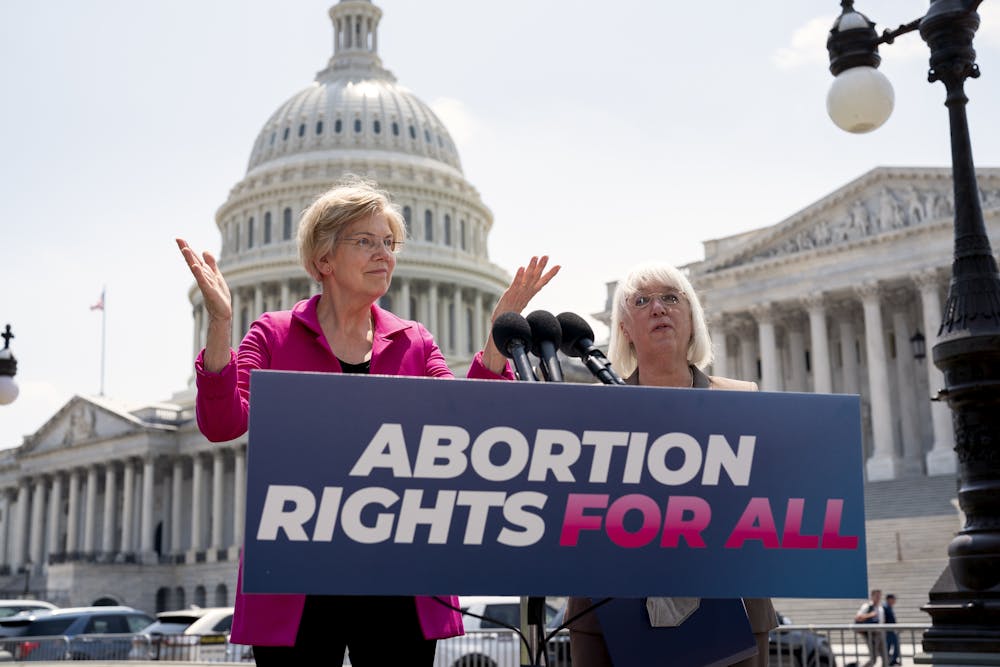 There is little of substance the president or Congressional Democrats can do.
AP Photo/J. Scott Applewhite
There is little of substance the president or Congressional Democrats can do.
AP Photo/J. Scott Applewhite
Read more: How the US right-to-life movement is influencing the abortion debate in Australia[13]
State laws on abortion access and provision
With the overturning of Roe v. Wade, abortion access and provision will be shaped by a patchwork of state laws[14].
13 states already have “trigger” laws on the books that criminalise abortion if Roe is overturned. A further 10 are expected to move quickly to ban the procedure.
States hostile to abortion have also begun debating how to close legislative “loopholes”, considering laws that are more extreme than any previously proposed.
In addition to pursuing abortion bans, including from the moment of conception, many of the new laws no longer allow for abortion in cases of rape or incest[15].
Provisions that would allow abortion to protect maternal health are being so narrowly defined[16] as to render them almost meaningless.
In Oklahoma, one Republican complained[17] the proposed law did not ban abortion in instances of ectopic pregnancy, a condition fatal to the pregnant person if left untreated.
Louisiana Republicans debated language that would have charged abortion patients with homicide[18].
Opponents of abortion are also strategising about how to prevent patients from accessing abortion from out-of-state providers[19], including discussing banning interstate travel and making abortion providers and support networks subject to legal sanction.
Nineteen states already ban virtual provision[20] of abortion care, and opponents of abortion are particularly keen to criminalise and limit[21] patient access to medication abortion provided via telehealth.
The National Right to Life Committee has drafted model state legislation that would make it illegal to provide information[22] on self-managed abortion via phone, internet, or website, effectively targeting the First Amendment right to free speech.
 Opponents of abortion will be emboldened by the decision.
EPA/Shawn Thew
Opponents of abortion will be emboldened by the decision.
EPA/Shawn Thew
Some states have laws enshrining the right to abortion
Supporters of reproductive rights have also been galvanised by the looming end of Roe v. Wade.
Sixteen states, primarily on the east and west coasts, as well as the District of Columbia, have laws enshrining the right to abortion[23].
California has passed laws protecting abortion providers and patients accessing care[24] from out-of-state civil lawsuits, while New York has passed a package of laws that would make it an abortion “safe haven[25]”.
Advocates are pushing the White House[26] to challenge any law criminalising out-of-state travel to receive an abortion.
A Jewish synagogue is suing the state of Florida, claiming the state’s abortion ban violates religious freedoms[27] protected by the First Amendment.
Read more: 'A revolutionary ruling – and not just for abortion’: A Supreme Court scholar explains the impact of Dobbs[28]
Impact on abortion patients
Politically and legally, the struggle over abortion rights is primed to explode nationwide, with no foreseeable end in sight.
Yet the impact of today’s Supreme Court decision will be most acutely felt by abortion patients.
Most of the toughest abortion bans and regulations are in the South and Midwest, rendering abortion inaccessible in a vast geographic stretch of the country.
Approximately half of US women and girls of reproductive age[29] live in states where abortion is or will become illegal.
Overturning Roe v. Wade will result in the closure of more than a quarter[30] of the nation’s abortion clinics, placing huge pressure on the remaining providers to offer time-sensitive care to patients likely travelling hundreds of kilometres from home.
Banning abortion does not stop abortion
Banning abortion does not stop abortion, nor does it reduce the number of abortions[31]. Regardless of their home state, pregnant people will still seek abortions, although they may need significant resources to do so and could face criminal sanctions.
The majority of abortion patients in the US are already from vulnerable and marginalised populations[32].
The devastating consequences of this decision will fall primarily on the shoulders of those least able to bear it.
Read more: The end of Roe v. Wade would likely embolden global anti-abortion activists and politicians[33]
References
- ^ ruling (www.supremecourt.gov)
- ^ Roe overturned: What you need to know about the Supreme Court abortion decision (theconversation.com)
- ^ 2021 polling (www.forbes.com)
- ^ end of Roe v. Wade seemed inevitable (theconversation.com)
- ^ draft (theconversation.com)
- ^ homes of conservative justices (www.theguardian.com)
- ^ woman’s right to choose is fundamental (www.whitehouse.gov)
- ^ meeting with abortion rights advocates (edition.cnn.com)
- ^ Women’s Health Protection Act (www.npr.org)
- ^ filibuster reform (www.reuters.com)
- ^ promised (www.politico.com)
- ^ nationwide ban on abortion after six weeks (www.washingtonpost.com)
- ^ How the US right-to-life movement is influencing the abortion debate in Australia (theconversation.com)
- ^ patchwork of state laws (www.guttmacher.org)
- ^ rape or incest (www.npr.org)
- ^ so narrowly defined (www.washingtonpost.com)
- ^ complained (www.theguardian.com)
- ^ charged abortion patients with homicide (www.washingtonpost.com)
- ^ prevent patients from accessing abortion from out-of-state providers (edition.cnn.com)
- ^ ban virtual provision (www.guttmacher.org)
- ^ particularly keen to criminalise and limit (www.washingtonpost.com)
- ^ provide information (prismreports.org)
- ^ enshrining the right to abortion (www.guttmacher.org)
- ^ protecting abortion providers and patients accessing care (edition.cnn.com)
- ^ safe haven (www.politico.com)
- ^ pushing the White House (edition.cnn.com)
- ^ violates religious freedoms (www.nytimes.com)
- ^ 'A revolutionary ruling – and not just for abortion’: A Supreme Court scholar explains the impact of Dobbs (theconversation.com)
- ^ half of US women and girls of reproductive age (www.nytimes.com)
- ^ more than a quarter (www.cbsnews.com)
- ^ nor does it reduce the number of abortions (www.who.int)
- ^ vulnerable and marginalised populations (www.usatoday.com)
- ^ The end of Roe v. Wade would likely embolden global anti-abortion activists and politicians (theconversation.com)