


Australia has a once in a lifetime opportunity to break the stranglehold fossil fuels have on our politics
- Written by: Fergus Green, Lecturer in Political Theory and Public Policy, UCL
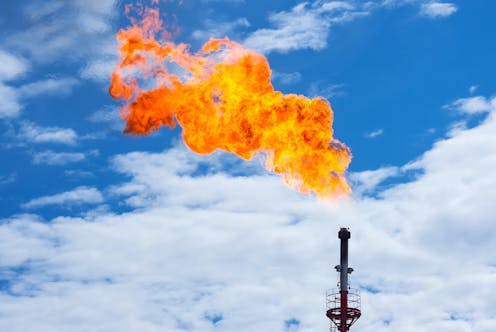
In the wake of the Green and teal wave[1] that crashed through the federal Parliament, attention has inevitably turned to what the new cross-benchers will say and do about climate policy. So far, attention[2] has focused[3] on Australia’s 2030 emissions reduction target, and whether they will pressure the new Labor Government to increase its relatively unambitious[4]) target, to which it has now formally committed[5].
There’s a much more important question to ask. That is, how will any new target actually be reached. The history of Australian climate policy — under both Labor and Coalition governments — shows us very clearly that our large and powerful fossil fuel industry and its political clients are adept at devising “innovative” ways to ensure targets are achieved without obstructing the Lemming-like march[6] toward ever more coal and gas production.
Cynical? Hardly. We’ve met previous targets not by shrinking the fossil fuel industry, but through accounting tricks[7] using inscrutable “land sector abatement”. The Morrison Government took this to new levels, allowing its signature “Emissions Reduction Fund[8]” to become a super-generator[9] of dodgy offsets[10] and a figleaf[11] for the expansion of the gas industry[12]. Our previous government even projected it would meet its 2050 net zero emissions target through a combination of business as usual[13] and unspecified “technological breakthroughs[14]”. Australians are now paying the price[15] in not only climatic terms, but also financial terms, for being too dependent[16] on polluting methane gas and on electricity produced from ageing, unreliable and even-more-polluting coal-fired power generators.
Both teal independents and Greens have built their reputations on restoring integrity to politics. This gives them a mandate to scrutinise accounting rules, offset methodologies and assumptions behind whatever target Labor sets. That’s a start. But to foster climate politics based on integrity, they’ll have to go much further to get to the root of the problem.

We need a reckoning
First, we need an honest conversation about the extent to which the fossil fuel industry has captured Australian politics[17] and wider society, and how this has crippled our response to the climate crisis.
To expose the depth of our gas, oil and coal industry’s influence on public perceptions and elite institutions such as political parties, the media, and virtually every aspect of government — from international diplomacy[18] to the school curriculum[19] – would require something like a royal commission.
Read more: The teal independents want to hold government to account. That starts with high-quality information[20]
In recent years, investigations have been launched into the fossil fuel industry’s knowledge and practices around climate change by investigative bodies ranging from the Massachusetts Attorney General[21] to the Philippines Human Rights Commission[22]. In the Massachusetts case, the Attorney-General’s three-year investigation of oil giant Exxon Mobil was followed by a lawsuit[23] against the company, which is ongoing.
Investigating the practices and influence of Australia’s fossil fuel industry would lead naturally into a discussion of what can and must be done to restore integrity to our democracy — from bans on fossil fuel advertising and sponsorship to restrictions on lobbying, donations, and revolving-door and “golden escalator[24]” relationships.
We could look to Victoria’s pioneering approach[25] to tobacco in the 1980s, including banning tobacco advertising and promotion and buying out tobacco sponsorships from sports and arts bodies.
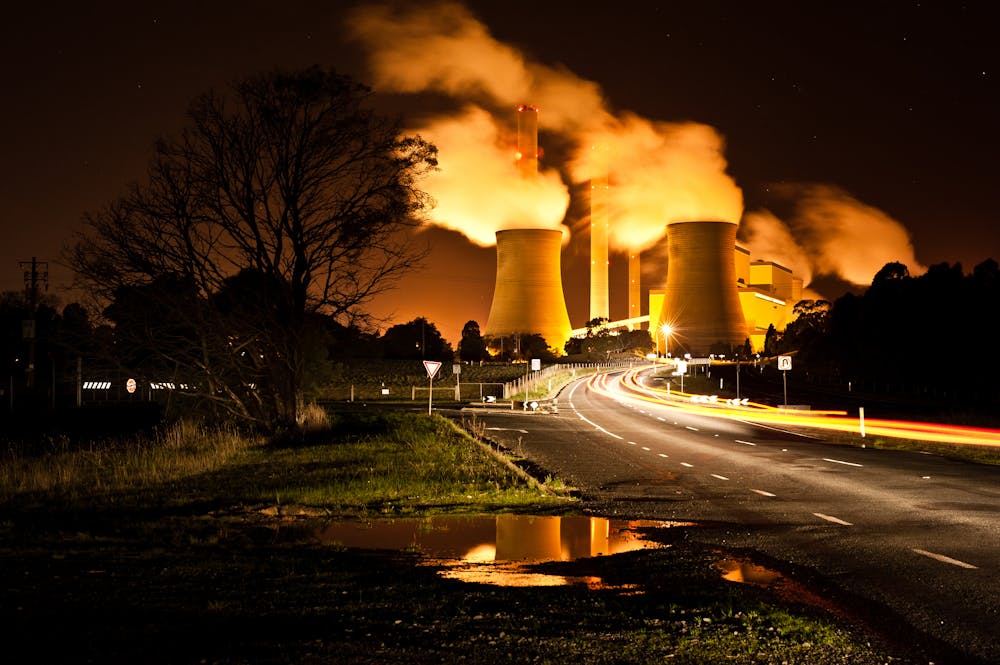 Australians are now paying the price for being dependant on on electricity produced from ageing, unreliable coal-fired power generators.
Shutterstock
Australians are now paying the price for being dependant on on electricity produced from ageing, unreliable coal-fired power generators.
Shutterstock
A principled phase-out
Integrity is not only about honesty but also upholding moral principles[26]. A principled approach to fossil fuel production is sorely needed. Australia is among the world’s largest exporters of fossil fuels[27].
The emissions burned overseas from the coal and methane gas we export dwarf[28] the emissions produced within our borders. Our political leaders have long hidden behind claims that these exported emissions are the responsibility of the importing country[29]. Never mind that we put the weight of our foreign and trade policy behind cultivating[30] overseas demand for our fossil fuels. You might have also heard the drug dealer’s defence[31] of “if we don’t export the coal and gas, someone else will.” All of these are hypocritical and opportunistic excuses – the opposite of adhering to moral principles.
Taking a principled stand means taking responsibility for problems to which we contribute, or that we have the power to redress, regardless of whether others are acting wrongfully. It’s not beyond us. In other areas, successive Australian governments have performed admirably in taking a stand on issues from nuclear disarmament to the mining of asbestos. We stopped doing dangerous things like mining asbestos because they were wrong, and we used our diplomatic weight to persuade other countries to follow suit.
 Teal independents should join the Greens in their call to end fossil fuel subsidies.
AAP Image/James Ross
Teal independents should join the Greens in their call to end fossil fuel subsidies.
AAP Image/James Ross
If Australia was to regain its moral compass on fossil fuels, we wouldn’t be acting alone. A number of governments recently formed the Beyond Oil & Gas Alliance[32], which commits them to stop issuing new oil and gas exploration and production licences and to phase out existing oil and gas production on a timeframe aligned with the objectives of the Paris Agreement. Other governments, including New Zealand and California, have taken significant steps[33] in that direction.
In this spirit, I hope the teal independents join the Greens in championing[34] an end to fossil fuel subsidies and a ban on new coal and gas projects. Not only is a ban the principled thing to do, but it will help protect existing fossil fuel jobs[35] for a transition period while governments plan a managed phase-out of the industry.
Phasing out this industry must happen while putting communities first and while amplifying the voices of those in the community already working to forge a future beyond fossil fuels. Fortuitously, the teal independents know a thing or two about community-building.
Read more: The ultra-polluting Scarborough-Pluto gas project could blow through Labor’s climate target – and it just got the green light[36]
References
- ^ Green and teal wave (www.theguardian.com)
- ^ attention (www.theguardian.com)
- ^ focused (www.sei.org)
- ^ unambitious (climateanalytics.org)
- ^ formally committed (www.abc.net.au)
- ^ Lemming-like march (www.theguardian.com)
- ^ accounting tricks (theconversation.com)
- ^ Emissions Reduction Fund (www.cleanenergyregulator.gov.au)
- ^ super-generator (www.abc.net.au)
- ^ dodgy offsets (australiainstitute.org.au)
- ^ figleaf (australiainstitute.org.au)
- ^ expansion of the gas industry (www.afr.com)
- ^ business as usual (www.smh.com.au)
- ^ technological breakthroughs (www.industry.gov.au)
- ^ paying the price (australiainstitute.org.au)
- ^ too dependent (www.theguardian.com)
- ^ captured Australian politics (www.sciencedirect.com)
- ^ international diplomacy (www.australianforeignaffairs.com)
- ^ school curriculum (reneweconomy.com.au)
- ^ The teal independents want to hold government to account. That starts with high-quality information (theconversation.com)
- ^ Massachusetts Attorney General (www.mass.gov)
- ^ Philippines Human Rights Commission (www.climatechangenews.com)
- ^ lawsuit (www.mass.gov)
- ^ golden escalator (theconversation.com)
- ^ pioneering approach (www.vichealth.vic.gov.au)
- ^ moral principles (www.dictionary.com)
- ^ world’s largest exporters of fossil fuels (australiainstitute.org.au)
- ^ dwarf (climateanalytics.org)
- ^ responsibility of the importing country (www.abc.net.au)
- ^ cultivating (www.australianforeignaffairs.com)
- ^ drug dealer’s defence (www.sbs.com.au)
- ^ Beyond Oil & Gas Alliance (beyondoilandgasalliance.com)
- ^ significant steps (beyondoilandgasalliance.com)
- ^ championing (greens.org.au)
- ^ fossil fuel jobs (australiainstitute.org.au)
- ^ The ultra-polluting Scarborough-Pluto gas project could blow through Labor’s climate target – and it just got the green light (theconversation.com)










