Morrison was routed by combination of quiet Australians and noisy ones
- Written by: Michelle Grattan, Professorial Fellow, University of Canberra
The rout of Scott Morrison goes beyond the defeat of his government. It has left behind a Liberal party that is now a flightless bird.
The parliamentary party has had one wing torn asunder, and its path to recovery will be difficult and painful.
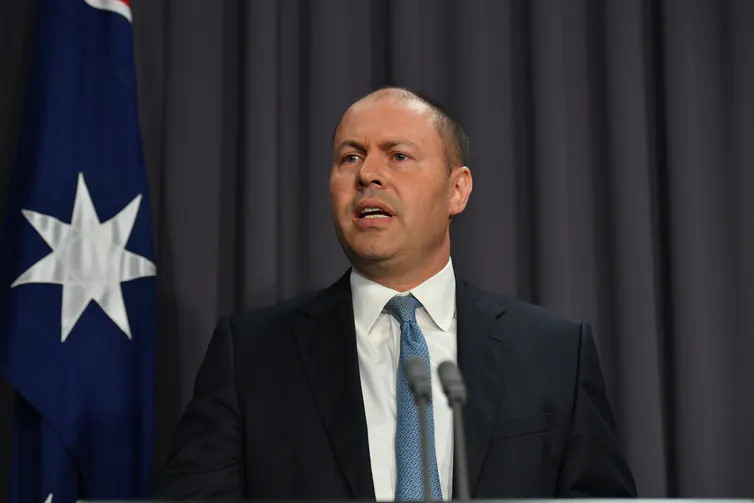
It has lost a clutch of moderates, and with them the person who would have been potentially the most unifying figure in opposition, Josh Frydenberg.
Peter Dutton, now the most likely next leader, is divisive within the party and community; he would wield a hard fist against the new government but have trouble rebuilding his own side and changing his style.
Meanwhile the postmortem will get ugly. As outgoing minister Jane Hume put it succinctly on Sky News, “We should gut the chicken properly before we read the entrails – and there’ll be a lot of gutting.”
The Coalition’s loss goes to multiple factors, but Morrison personally carries much of the blame. On Saturday, he was torn down by a combination of quiet Australians and noisy ones.
His arrogant, or ill-informed, assumption seems to have been the teals were just a bunch of irritating women, and that professional people – including and especially female voters – in traditional Liberal seats would buy the government’s insulting argument these candidates were “fakes”.
They weren’t fakes – they were the genuine article. They embodied the thinking of many people, who previously voted Liberal and had concerns about climate, integrity and gender equity. But especially, and fundamentally, the rise of these candidates was a sign of community frustration and anger at the way politics is being played.
Morrison thought that whatever he lost to the teals – and almost no one expected him to lose anything like this much – he would pick up with the outer suburban tradies, the “quiet” ones.
Don hi-vis jackets as often as possible. Get your advancers to organise photo ops so you could put on aprons in coffee and food-serving places around the country. Kick footy balls. Oh, and install Katherine Deves in Warringah to dog-whistle on the trans issue to electorates many kilometres away.
Well, the tradies turned out to be harder voters to move or keep than the inner city professionals, and Morrison lost out in that transaction. The tradies are more worried about cost of living than culture wars.
For some time Morrison, reading polls and focus group reports and hearing from some alarmed backbenchers, was trying to catch up with the political zeitgeist. But it was too little too late, and moreover his efforts had unintended consequences.
He negotiated a deal with Nationals leader Barnaby Joyce for the net-zero 2050 emissions target. But the revised climate policy lacked medium-term ambition and so didn’t combat the teals. It also set off a “climate war” among Coalition troops and supporters, with a sharp negative reaction from the right.
Recognising his own deep unpopularity – he couldn’t set foot in many Liberal seats during the campaign – Morrison promised to be more empathetic if re-elected. However his last-minute “bulldozer gear change” narrative became a complete muddle, convincing nobody.
In the run-up to the election, with the polls showing the government was flagging, the Liberals put their hopes in Morrison’s reputation as a campaigner.
But that reputation was always over-egged – the 2019 “miracle” win came as much from the unpopularity of Labor’s policies and then leader, Bill Shorten.
Morrison was banking on wearing down Anthony Albanese during a relatively long six-week campaign. The government would play the man, and Albanese certainly made that easier with his mistakes.
But the electorate had also decided to play the man, and that man wasn’t Albanese. Voters had made up their minds against the government before the campaign, and many were given a middle-ground landing spot by the teals.
The election delivered lethal variations of the maxim that all politics is local. Labor’s bid to install former senator Kristina Keneally in the Sydney seat of Fowler was rejected by the voters, who likely would have got behind a well-known local Asian-Australian candidate, lawyer Tu Le, if Labor had put her up.
On a much bigger scale, Western Australians have had their revenge over Morrison’s attacks on their state during the pandemic (joining Clive Palmer’s border challenge; drawing an unfortunate comparison with cave people). Something of the same reaction has hit the Liberal vote in Victoria, where many people resented the attacks on Premier Dan Andrews.
Albanese, Australia’s 31st prime minister, was, it turns out, born under a lucky political star. Leave aside the log cabin story. In the days of the Rudd/Gillard/Rudd Labor governments, he wasn’t talked of as a likely future prime minister.
If Shorten had won the last election, Albanese, now 59, would never have reached the leadership. Time would have been against him.
Uncharismatic but dogged and canny, Albanese kept his nerve and held the party together over a difficult term dominated by a pandemic that initially helped incumbent governments and sidelined oppositions.
In an unwelcome byelection, he held the seat of Eden-Monaro, when a loss could have posed a threat to his leadership. He saw off mutterings as colleagues grew nervous about whether he could deliver government.
He set, and stayed with, the small-target strategy. He weathered the vicious and unrelenting attacks from the Murdoch media, in their newspapers and from Sky News commentators.
All the while, Morrison was doing for him what Shorten did for Morrison in 2019: alienating voters.
We don’t yet know whether Albanese will be in majority or minority government, although Labor’s chance of a majority were said to be improving on Sunday. If it were minority government, there are so many crossbenchers he wouldn’t have any trouble securing confidence and supply and passing legislation.
As leader of the house in the minority Gillard government, Albanese is experienced in dealing with crossbenchers, which would stand him in good stead.
There is speculation about the pressure he will be under, including from inflated Greens (at least one extra in the lower house and perhaps more) and the teals, to be more ambitious on climate policy.
But he needs to act with caution. Trust is low in the Australian electorate, and it is not a bad rule – unless circumstances change substantially – to say what you’ll do and do what you say.
“I want to change the country, I want to change the way politics works in this country,” Albanese declared on Sunday. To the extent he can do either, establishing and maintaining trust, in himself and in his government, will be vital.
He is promising to gather premiers and chief ministers together soon, which is a sound move. The federation is in need of some greasing.
While main attention is always on the prime minister, the incoming Labor government is fortunate in having a strong frontbench, several of whom have been in office before.
Sworn in on Monday, Albanese will fly off to Tuesday’s QUAD, the highly significant grouping of the leaders of United States, Japan, India and Australia. Although on one level the timing might look inconvenient, it is actually extraordinarily fortuitous.
Albanese, with little experience in foreign affairs, now has the immediate opportunity not just to participate in the QUAD’s collective discussion, but to have bilateral meetings with Japan’s Fumio Kishida, India’s Narendra Modi and US president Joe Biden.
It’s icing on the cake as he starts his term.