


Platforms supporting Ukrainian refugees must prioritise their safety — or risk exposing them to trafficking and exploitation
- Written by: Adriana E. Bora, PhD Candidate, Queensland University of Technology
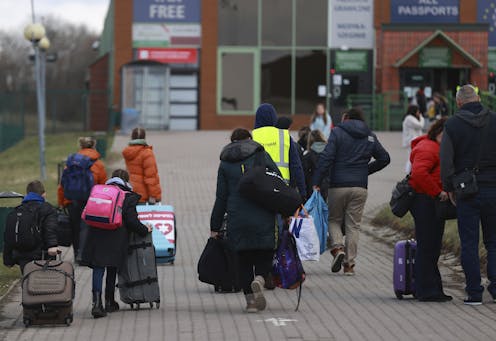
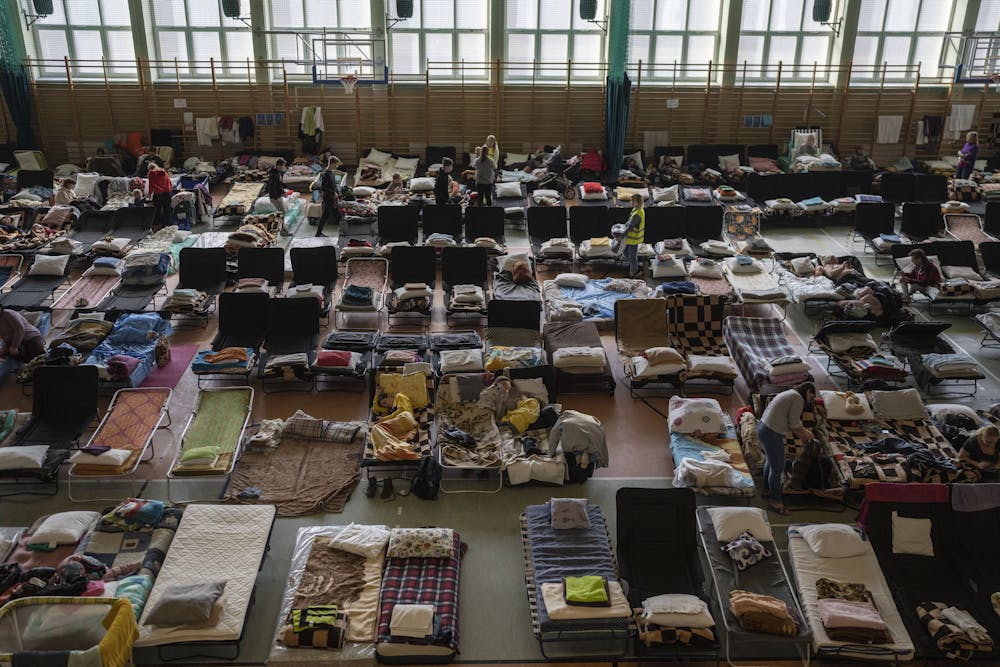
The unimaginable tragedy of Russia’s invasion of Ukraine has forced 4.5 million Ukrainian refugees[1] to flee into neighbouring countries, seeking protection. They’ve been met with overwhelming support and generosity by ordinary people offering clothes, food, transport and even their homes.
These humanitarian efforts quickly gathered traction online, with people using a plethora of WhatsApp and[2] Facebook[3] groups[4] to coordinate support.
Soon websites and platforms popped up, dedicated to connecting those willing to help with those in need. These include A Roof[5], Shelter 4 UA[6], Homes for Ukraine[7], Refugees at Home[8], AirBnb[9], Room for Refugees[10], Host 4 Ukraine[11], Ukraine Take Shelter[12], Ukraine Shelter[13], Refugees.ro[14], Unitado[15],Ukraine Now[16] and EU4UA[17].
These initiatives have allowed the public to support Ukrainian refugees.
However, many of these well-meaning projects have been developed with limited humanitarian knowledge, and without collaboration with governments or experienced NGOs. As such, they also risk opening the door for human trafficking and exploitation.
The risk is real and worrying
People displaced by wars are at risk of human trafficking and exploitation. In 2018, United Nations research[18] showed a drastic increase in the number of human trafficking victims from conflict areas such as Syria, Iraq, Afghanistan and Myanmar.
These victims can end up in some of the worst forms of modern slavery, such as forced labour, forced marriage, sexual slavery or exploitation as part of armed groups.
Similar trends have already been seen in the war in Ukraine. Reports indicate perpetrators and traffickers have tried to exploit Ukranian refugees[19] by confiscating IDs, demanding labour or sexual services, or targeting help only to young women.
This builds on an already well-established[20] industry of criminal networks operating between Ukraine and countries in Europe and Central Asia.
According to Unicef[21], more than 500 unaccompanied children were identified crossing into Romania from Ukraine between February 24 and March 17. Secretary general of Missing Children Europe[22], Aagje Ieven, has said[23]:
There are so many children […] that we lost track of […] This is a huge problem, not just because it means they easily go missing, and are difficult to find, but also because it makes trafficking so easy.
So while most offers of online support are well intended, the risk for perpetrators to infiltrate is real and worrying.
Read more: Ukraine refugees: six practical steps to rise to the challenge[24]
Platforms should shoulder responsibility
Ukrainian refugees arriving in neighbouring countries are exhausted and traumatised. When looking for services such as housing, transport, jobs and medicine, they shouldn’t bear the burden of having to ensure the offers presented on platforms are legitimate.
Background checks are a genuinely challenging task, even for mature institutions. And criminals are becoming increasingly skilled at bypassing the barriers built into these checks, such as by forging identities, and falsifying credentials and identification documents.
But without such checks, all parties — including those offering support — are at risk. Platforms have a duty to collaborate with the relevant experts and present only verified offers to refugees.
Some have led efforts on this front. For instance, A Roof, Homes for Ukraine, Refugees at Home, Airbnb and Room for Refugees have all either been led by, or co-created with, a government body or national or international NGO with relevant experience in humanitarian crisis.
These platforms declare that after receiving an offer, they check the credibility of the people making the offer and any conditions attached to it. Only then do the platforms connect the people providing the service with refugees. These platforms also claim to keep a record of all activity, and some present clear rules of engagement for all parties involved.
On the other hand, other platforms leave background checks to the refugees, offering only warning messages such as:
The platform functions as an emergency aggregator and does not ensure the validity of all data. We urge you to confirm the credibility of all those who you contact for any service. (Refugees.ro[25])
We provide refugees with a guide of some safety notes for contacting hosts. Refugees are ultimately responsible for their own safety. (Ukraine Take Shelter[26])
Many media outlets have endorsed and promoted these initiatives, including the two above, without asking vital questions regarding safety, security and privacy. Such endorsements can make an entity seem trustworthy to those desperately seeking help.
Protection for those wanting to help
The privacy of those offering support should also be protected by the platforms they are trusting with their data. In most cases these data will include their full name, email address, phone numbers, home address and pictures.
Some of the more reliable platforms declare the personal data received are only used to facilitate contact between hosts and refugees, and only made available to the entrusted organisation (generally a specialised NGO or government agency).
However, even these platforms could do more to ensure they are taking measures against cyber attacks, and have back-up solutions in case data are compromised.
Some[27] platforms[28] display users’ full names, emails, home addresses and pictures for all to see. This places individuals at risk of having their details scraped, sold and used for fraud or exploitation.
Matches between refugees and hosts should be clearly recorded and shared with authorities upon request. Without this, there are opportunities for perpetrators to groom or scam victims without leaving a trace.
We can all do more to help
Those who have developed solutions to help Ukrainian refugees should be celebrated, and this article isn’t intended to take away from their efforts.
However, it’s unreasonable to expect that vulnerable refugees — many of whom are arriving in countries where they don’t speak the local language — should be the ones ensuring the credibility of offers.
Platforms facilitating humanitarian efforts shouldn’t be able to ignore safety, security and privacy recommendations by hiding behind “terms and conditions”. It has been more than a month since the invasion started, so the initial excuse that there was no time to implement these measures no longer holds up.
Moving forward, developers of existing platforms should work closely with experienced organisations to ensure the safety, security and privacy of their users. At the same time, members of the public wanting to offer support are advised to only use platforms which have such measures in place.
Read more: Russia a 'real threat' to Australia as well, Ukranian president Zelenskyy warns parliament[29]
References
- ^ 4.5 million Ukrainian refugees (data2.unhcr.org)
- ^ and (www.facebook.com)
- ^ Facebook (www.facebook.com)
- ^ groups (www.facebook.com)
- ^ A Roof (code4.ro)
- ^ Shelter 4 UA (shelter4ua.com)
- ^ Homes for Ukraine (homesforukraine.campaign.gov.uk)
- ^ Refugees at Home (www.refugeesathome.org)
- ^ AirBnb (www.airbnb.org)
- ^ Room for Refugees (www.roomforrefugees.com)
- ^ Host 4 Ukraine (www.host4ukraine.com)
- ^ Ukraine Take Shelter (www.ukrainetakeshelter.com)
- ^ Ukraine Shelter (www.ukraineshelter.com)
- ^ Refugees.ro (refugees.ro)
- ^ Unitado (unitado.com)
- ^ Ukraine Now (www.ukrainenow.org)
- ^ EU4UA (fr.eu4ua.org)
- ^ research (globalinitiative.net)
- ^ exploit Ukranian refugees (www.bbc.com)
- ^ already well-established (www.unodc.org)
- ^ According to Unicef (www.unicef.org)
- ^ Missing Children Europe (missingchildreneurope.eu)
- ^ has said (www.theguardian.com)
- ^ Ukraine refugees: six practical steps to rise to the challenge (theconversation.com)
- ^ Refugees.ro (refugees.ro)
- ^ Ukraine Take Shelter (www.ukrainetakeshelter.com)
- ^ Some (shelter4ua.com)
- ^ platforms (refugees.ro)
- ^ Russia a 'real threat' to Australia as well, Ukranian president Zelenskyy warns parliament (theconversation.com)










