older people can struggle with sustainable living, despite its obvious benefits
- Written by: Xin Hu, Lecturer, School of Architecture and Built Environment, Deakin University
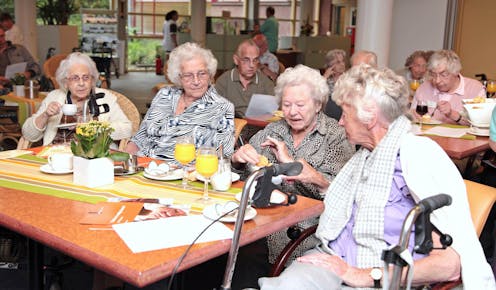
Improving the sustainability of Australia’s housing stock is crucial[1] to meeting national emissions reduction goals. But for older adults, such changes can bring both benefits and challenges.
My recent research[2] examined the literature on environmental sustainability measures at residences for older adults. These included private homes, retirement villages and nursing homes.
I found that while sustainability measures can bring multiple benefits to older people, they also bring challenges. For example, people living in sustainable dwellings may use less energy and water which leads to lower bills. But older people may suffer cognitive decline and struggle to use sustainable technology devices.
The full effects of environmentally sustainable features must be better understood if we’re to provide seniors with high-quality residential environments.
Sustainability and ageing: a complex mix
Forecasts suggest that by 2056, 22% of Australians[3] – or 8.7 million people – will be aged 65 or older. High-quality residential environments are important to maintaining the welfare of these people as they age.
Environmental sustainability is playing an ever greater role in residential development across the board, including retirement villages. And previous research[4] suggests most retirement village residents want to lead more sustainable lifestyles.
As climate change worsens, the dwellings of older adults should allow them to adapt to these changing conditions. The reduced ability of elderly people to regulate their body temperature means global warming is a profound threat to this group.
Improving the sustainability of a residential environment may include:
- reducing waste
- using low carbon or recycled building materials
- solar passive design
- efficient heating and cooling
- using renewable energy such as rooftop solar.
Some residential projects[5] for the elderly already include environmental sustainability. A case study[6] of a not-for-profit retirement village in South Australia revealed practices such as innovative floor plans, thermally efficient building materials, good window orientation and a water harvesting system.
And my previous research found[7] a range of sustainability features at eight private and not-for-profit retirement villages in Queensland.
However, while many retirement village developers prioritise “social sustainability” features such as care provision and social interaction, environmental sustainability is largely ignored[8].
Read more: Intergenerational report to show Australia older, smaller, in debt[9]
On the plus side
The benefits of environmentally sustainable features in in older adults’ residential environment include:
- reduced resource consumption: sustainable dwellings usually require less water and energy use, which lowers living costs. This is especially important for older adults who often have reduced financial capacity after retirement. Older people also use energy more intensively[10] than other groups because they have fewer household members, greater heating requirements and spend more time at home.
- reduced health risks: environmentally sustainable measures can lead to healthier indoor environments. For example, good ventilation and high-quality air conditioning often lead to improved indoor air quality and more comfortable ambient temperatures.
- alleviated environmental challenges: many older people want their homes to be more environmentally friendly. Doing their bit to alleviate global problems such as greenhouse gas emissions can provide them with peace of mind.
Read more: The Great Australian Dream? New homes in planned estates may not be built to withstand heatwaves[11]
The potential downsides
The challenges of environmentally sustainable home features for older adults include:
- financial pressure: the income of many older adults is substantially reduced after retirement. This can conflict[12] with the high initial investment of developing an sustainable housing and the cost of replacing existing systems with sustainable ones.
- reducing energy consumption: in some cases, sustainability measures can involve tolerating slightly higher or cooler temperatures. For example, moving from a gas-heating system to a more sustainable type may delay[13] the arrival of heat in a room and leave older people uncomfortable for a short time. This may conflict with older people’s increased sensitivity[14] to ambient temperatures.
- confusion and complexity: Older adults can have reduced cognitive capabilities[15] affecting memory and information processing speed. As a result they may struggle to use sustainable technologies such as smart thermostats. Research has suggested[16] ways of overcoming this, such as better recognising the diversity of older adults to achieve a better “person-technology fit”.
Read more: Buildings produce 25% of Australia's emissions. What will it take to make them 'green' – and who'll pay?[17]
Next steps
Older adults have unique needs which their homes must satisfy[18], even when sustainability features are being adopted.
Ageing should be seen as a dynamic process with physical, psychological and social dimensions. And the complex interrelationships of ageing, environmental sustainability and the residential environment also need to be recognised.
Best practices and lessons learned in creating sustainable living environments for older adults should be shared[19].
Finally, developers making sustainability decisions should consult other stakeholders. These include contractors, occupational therapists, researchers and most importantly, older adults themselves.
References
- ^ crucial (www.google.com)
- ^ recent research (www.sciencedirect.com)
- ^ 22% of Australians (www.aihw.gov.au)
- ^ previous research (www.hindawi.com)
- ^ Some residential projects (new.gbca.org.au)
- ^ case study (www.emerald.com)
- ^ found (www.sciencedirect.com)
- ^ largely ignored (www.sciencedirect.com)
- ^ Intergenerational report to show Australia older, smaller, in debt (theconversation.com)
- ^ more intensively (www.sciencedirect.com)
- ^ The Great Australian Dream? New homes in planned estates may not be built to withstand heatwaves (theconversation.com)
- ^ can conflict (www.sciencedirect.com)
- ^ delay (www.sciencedirect.com)
- ^ increased sensitivity (ideas.repec.org)
- ^ reduced cognitive capabilities (academic.oup.com)
- ^ suggested (www.sciencedirect.com)
- ^ Buildings produce 25% of Australia's emissions. What will it take to make them 'green' – and who'll pay? (theconversation.com)
- ^ must satisfy (www.sciencedirect.com)
- ^ shared (www.sciencedirect.com)