'Strollout' has gathered pace, romping home as the Macquarie word of the year. I'd have gone for 'vax' if on the list
- Written by: Roslyn Petelin, Course coordinator, The University of Queensland
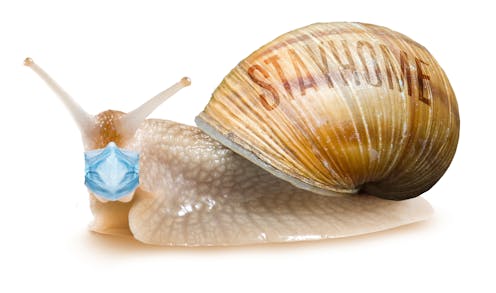
In a break from the usual tradition, Macquarie[1] asked the public to choose their word of the year in advance of the committee’s decision. The pundits were betting on a COVID-19 inspired word and the shortlist certainly contained possibilities related to the pandemic: “Delta”, “shadow pandemic”, and “strollout”. And they were right!
Macquarie’s other 16 possibilities included more obscure choices such as “humane washing” to describe “the misleading marketing of a product sourced from animals, deceptively giving the impression that the animals have been treated humanely” and “dry scooping” to describe the “practice of ingesting powdered pre-workout supplements or protein powder without mixing with water or milk as directed”.
Many of the wordsmiths I shared the list with had not heard of most of them. Neither had I. For example, “brain tickler” instead of nose swab.
Nor could we see ourselves using such terms as “hate-follow” (of sites whose content we disagreed with) or “front-stab” (as opposed to back-stab). We were offended by “menty-b” for mental breakdown and not that curious about “sober curious”.
And I’m too fond of proper baking to prepare a “dump cake” by combining the ingredients directly in the cake tin in which the cake is to be baked.

Macquarie has just announced the result of the committee’s AND the people’s choice: both chose “strollout”, defined as a “blend of rollout and stroll”[2], the word refers to the “perceived lack of speed” in Australia’s vaccine rollout.
Strollout was mostly used in media coverage to criticise the government[3] for Australia’s initially slow rollout of the vaccination program over the past year.
 ‘Strollout’ was used by media to criticise the Scott Morrison government’s very slow vaccine rollout.
AAP Image/Lukas Coch
‘Strollout’ was used by media to criticise the Scott Morrison government’s very slow vaccine rollout.
AAP Image/Lukas Coch
The Australian National Dictionary Centre had already chosen “strollout”[4], which originated here and later featured on American media.
Oxford Dictionaries had chosen “vax”, which would have been my choice, had it been on Macquarie’s list. Was “strollout” as ubiquitous as “vax”?
Avoiding the COVID-19 direct expressions such as “Delta”, Cambridge had also gone for a subtler but still pandemic-inspired word of the year with “perseverance”, which we can all relate to.
 One of the shortlisted words for the Macquarie Dictionary Word of the Year was ‘dry scooping’, the practice of ingesting powdered pre-workout supplements or protein powder without mixing with water or milk as directed.
Shutterstock
One of the shortlisted words for the Macquarie Dictionary Word of the Year was ‘dry scooping’, the practice of ingesting powdered pre-workout supplements or protein powder without mixing with water or milk as directed.
Shutterstock
Other words of the year
Collins Dictionary chose the non-COVID “NFT”[5] (non-fungible token), which WAS on Macquarie’s list. An NFT is an ownership certificate for a chunk of digital data such as an image, a domain name, a tweet, or a video. It’s a one-off, not fungible or replaceable by any other piece of data. Christies sold a digital artwork for £50 million earlier this year. Merriam-Webster hasn’t announced its choice yet. Nor has the American Dialect Society, the first body to launch a Word of the Year competition in 1990. It announces its choice after the end of the year.
You may be surprised that Cambridge has chosen the abstract word “perseverance”. Doesn’t the Word of the Year have to be a neologism like “strollout”?
Well, no! Macquarie usually chooses newly coined words like the whimsical “milkshake duck”[6], and “mansplain”, which was chosen[7] as Macquarie’s word of the decade.
Read more: Cancel culture, cleanskin, hedonometer ... I'm not sure I like any of Macquarie Dictionary's words of the year[8]
What criteria do the authorities base their choice on?
As Rose Wild asks in The Times[9], does a word of the year mean:
a word we perceive to be most used, abused or overused? Or is it one that encapsulates something unique to this year’s mood or events — or can it be both? What’s the point of it?
How is the decision made? Who gets to choose?
Merriam-Webster bases its decision on the frequency of words that are “looked up” in their online dictionary. As does Cambridge. Collins tracks word usage in its corpus database that covers social media and print publications such as newspapers, and uses its team of editors, lexicographers, and marketing and publicity staff.
The American Dialect Society’s choice is determined by a vote of independent linguists. The Australian National Dictionary Centre’s editorial staff chooses words that have been prominent in the Australian social and cultural landscape during the year, though the word is not always one that has originated in Australia.
Macquarie lists on its website a committee of language experts to make the choice.
Read more: When we needed a new word, Twitter gave us 'milkshake duck'[10]
Beyond the Word of the Year
The American Dialect Society takes its mission seriously. It goes beyond Word of the Year to Word of the Decade; for the 2010s, it was the singular “they”. Its Word of the 20th Century was “Jazz” (Yay!), and its word of the past millennium was “she”.
The American Dialect Society also chooses words in several intriguing sub-categories. Some previous choices include most useful “they” (as a gender-neutral pronoun); most unnecessary “manbun”; most outrageous “gate rape” (airport patdown); most euphemistic “scooping technician” (a person whose job it is to pick up dog pooh); most productive “shaming” (as in “fat-shaming”); most likely to succeed “binge-watch” (many of us can confess to that), and most unlikely to succeed “sitbit” (a device that rewards a sedentary lifestyle), which is, of course, a pun on Fitbit. Some of us may be guilty of “sitbit”.
My favourite category is the most creative word. Apparently, the Milwaukee Mitchell International Airport provides a “recombobulation area” for passengers who have passed through security screening, so that they can get their clothes and belongings back in order.
Having been prevented from international travel by COVID-closed borders for nearly two years, oh, how I long to be recombobulated again, though not necessarily at the Milwaukee Mitchell International Airport.
References
- ^ Macquarie (www.macquariedictionary.com.au)
- ^ defined as a “blend of rollout and stroll” (www.abc.net.au)
- ^ mostly used in media coverage to criticise the government (www.theguardian.com)
- ^ already chosen “strollout” (www.abc.net.au)
- ^ Collins Dictionary chose the non-COVID “NFT” (www.theguardian.com)
- ^ “milkshake duck” (theconversation.com)
- ^ which was chosen (theconversation.com)
- ^ Cancel culture, cleanskin, hedonometer ... I'm not sure I like any of Macquarie Dictionary's words of the year (theconversation.com)
- ^ The Times (www.thetimes.co.uk)
- ^ When we needed a new word, Twitter gave us 'milkshake duck' (theconversation.com)