Scott Morrison caught in catch-22 over the issue of his integrity
- Written by: Michelle Grattan, Professorial Fellow, University of Canberra
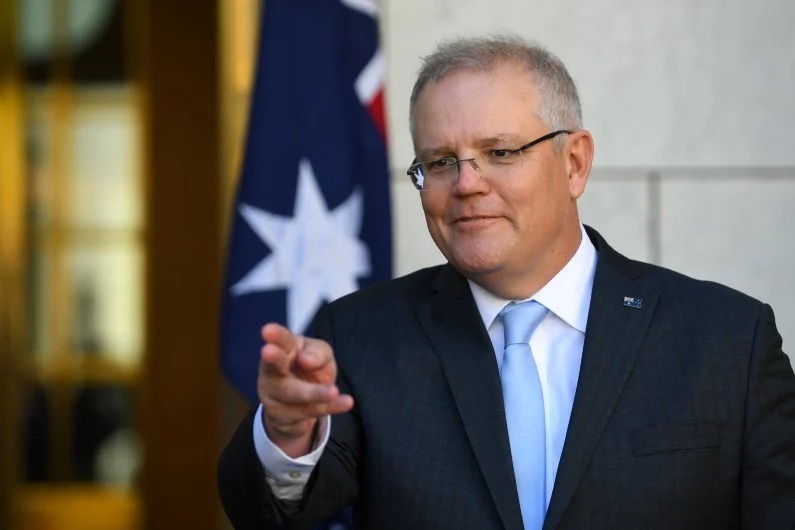
It’s not often that leaders get the blunt question 3AW’s Neil Mitchell threw at the prime minister on Friday. “You ever told a lie in public life?”
What could Morrison say?
“Yes” – the frank answer, and the discussion would turn to where and when. “No” – and that would invite sceptical responses and provide another opportunity to put French President Emmanuel Macron’s now-famous interview clip on repeat.
Morrison opted for denial. “I don’t believe I have, no.” Inevitably this set off claims that here was another lie.
It was put to him at his press conference later: “You said earlier today you’ve never lied in public life, is that really true?” “That’s what I think to be true,” he replied. “What are you suggesting? What do you think I did?”
Macron’s skilfully delivered political dagger, in the row over the French submarines, set off the current debate about Morrison’s honesty, or lack of it. And Malcolm Turnbull chimed in with the accusation his successor was a serial liar.
Coincidentally, all this has been given some underpinning by Sean Kelly’s just published book The Game: A Portrait of Scott Morrison, which analyses the PM’s character.
Recent events have provided traction to an existing perception that the PM is inclined to say anything that suits his immediate purpose.
“Lies”, it should be noted, are not the same as “broken promises” (unless the intention always was to break the undertaking). In fact, Morrison may be more careful than some predecessors about the latter, because the voters have become increasingly censorious of governments flouting pledges.
Many politicians are accused of lying. The dangerous difference for Morrison is that he risks the tag being attached to him like a sewn-on label, and a subject of conversation when voters think about him.
Nailing particular “lies” can be a tricky business, however, because “lies” shade into “being slippery with the truth”.
Take his words on electric cars this week. At one point he was asked, “How can you honestly spruik electric vehicles when you campaigned against them in the last election?”
He replied: “But I didn’t. That is just a Labor lie. I was against Bill Shorten’s mandate policy, trying to tell people what to do with their lives, what cars they were supposed to drive and where they could drive.”
It might be right that in 2019 Morrison said at some point he wasn’t against electric cars as such. But on any normal reading of what he said, he was condemning them.
How otherwise to characterise his hyperbole that Shorten would destroy the weekend – the electric cars wouldn’t be able to tow your trailer or boat?
The facts are somewhat murkier with Macron.
It’s clear enough the French were deliberately deceived. What we can’t know is precisely how Morrison deployed his words.
If there was a transcript of the Morrison-Macron mid-year conversation in Paris, would a straight-out lie be found? Or was it a matter of misleading by the impression given, then and in later Australian interactions with the French?
So in dealing with what Morrison says, it can be important to distinguish between the actual words and the sense that a person would get from the words.
For example, when recently asked why the government supported Clive Palmer’s case against the Western Australian government over its closed border, Morrison told parliament “The government did not pursue that case at all”.
Literally, he could say this was correct. It’s all about the word “pursue”. The government dropped off the case for political reasons. But anyone unfamiliar with what had happened could think from Morrison’s answer that it had not been involved.
When a person’s integrity is beyond question, one doesn’t need to be so careful; if they are slippery, every nuance must be studied. This is even more so in the age of “spin” when the spinners and their bosses live by the maxim “what the traffic will bear”.
A politician says, in a campaign, that the government “plans” to do something. This can be a statement of firm intent – or something that’s deliberately hedged so it can be reviewed later.
Kelly (a former Labor staffer who has observed a few politicians up close) argues Morrison doesn’t feel untruthful because he believes what he says “in the moment”.
Whatever he might think at the time, Morrison’s tactic often is just to slide away when confronted. Pressed by Mitchell on whether he wasn’t worried when Macron and Turnbull call him a liar, Morrison said no, because he was making the “right decisions” on defence and you shouldn’t be in the PM’s job if you couldn’t deal with the sledges.
He’s asking people to look beyond the claims about lies, suggesting they are just a nasty part of the political environment.
Many people may think the same. But past a tipping point, having the reputation of being a liar cuts through. The question is whether Morrison has reached that point with voters.