A River Divided: Must Read Eco-Fiction
- Written by: Charlotte Lewis
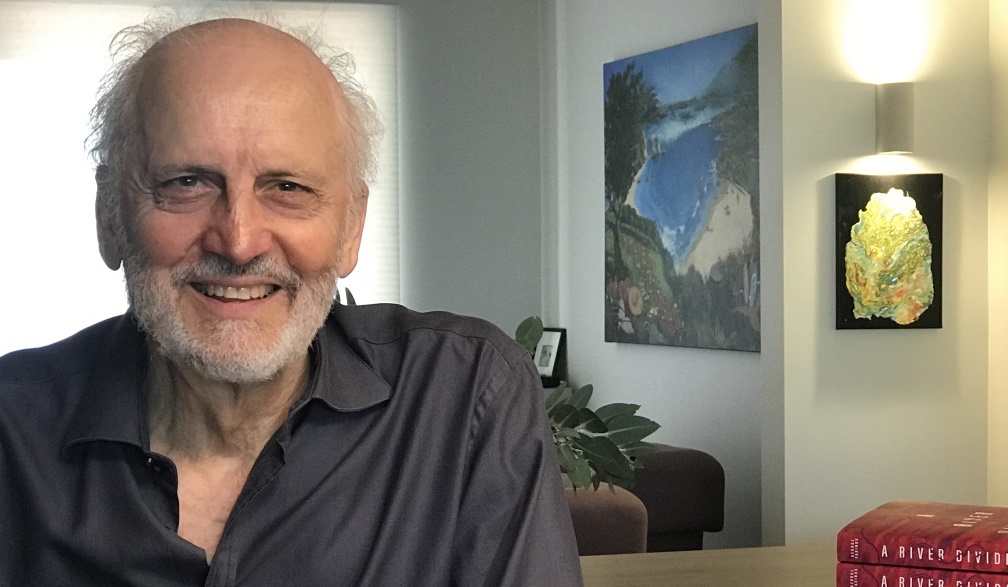
A world-leading neuroscientist is so concerned about the state of the world’s environment, he has written a gripping novel to boost awareness.
Professor George Paxinos – a cerebral cartographer who has identified and named more brain areas than anyone in history – has just released A River Divided, a recalibration of religion, science, and culture.
The book centres on a female scientist who believes she found the remains of Christ and produces, not one, but two clones. It follows the lives of the two boys, Christopher and Jose, who grow up on opposite sides of the world.
Neither is aware of the other’s existence until their paths collide and we see their responses to the crisis of deforestation of the Amazon. It is a neuropsychological approach of identical twins who, in the novel, possess the genetic endowment of Christ and are raised in different environments.
“There is nothing immoral in nature,” says Professor Paxinos, a Professor of Medical Sciences at Neuroscience Research Australian and The University of NSW.
“But if there were, it would be this generation setting the conditions for the extinction of its own progeny.”
He said he believed mankind did not have the intellectual, motivational, and emotional brain capacity to save itself.
“If the human brain were ‘smaller’ than what it is, it would not have supported the development of science and technology which today threaten existence.
“If it were “larger” than what it is, it might have understood the problem and even rectified it.
“The human brain is not in the Goldilocks zone. It is not the right ‘size,’” Professor Paxinos says. Critics are already labelling the eco-fiction book as a must read. Set across four continents, it’s a definite eco fiction for the 21st century.
A River Divided examines the limits of science and the brain and poses the searing question of our time - can humans and nature coexist in harmony? What does it take to change behaviour? What are we willing to live without?
You can get a copy of the book here: https://www.georgepaxinos.com.