BYD Sealion 7 Named Australia's Most Searched-For Electric Vehicle as Interest in EVs Accelerates
- Written by: Times Media
- New research from car insurance expert MoneySuperMarket reveals the BYD Sealion 7 is the most-searched electric vehicle in Australia.
- Google searches for ‘electric vehicles’ in Australia have risen 70% in the past year.
- On a global scale, the Tesla Model Y ranks as the most searched-for vehicle in the past year.
- Australia’s ten most searched-for EVs generated more than 4.27 million searches over the past year.
With petrol and diesel prices continuing to climb worldwide, new data from Car Insurance Expert MoneySuperMarket explores how interest in electric vehicles (EVs) has increased in Australia, and how local buying habits compare to the rest of the world.
According to its latest EV Adoption Report, MoneySuperMarket finds that, overall, Google searches for ‘electric vehicles’ worldwide have increased 168% year-on-year. During the same time frame Australia’s searches with the same search term have increased by 70%. 1
It’s not just searches that are increasing in Australia, either. According to research from the Electric Vehicle Council and Federal Chamber of Automotive Industries,
103,843 EVs were delivered in Australia in the first half of 2026, an increase of 119.8% on the same period of the previous year. 2
To uncover which EVs are the most searched-for in Australia and beyond, MoneySuperMarket’s research analyses Google search volumes for more than 200 electric vehicle models across more than 200 countries. The research finds that in the last year, Australia’s top ten most searched-for EVs attracted more than 4.27 million searches combined, with the BYD Sealion ranking in first place (874,500 searches).
Australia’s Top 10 Most Searched-For EVs (April 2025 - April 2026):
|
Rank |
EV Model |
Combined annual Google searches (April 2025 – April 2026) |
|
1 |
BYD Sealion 7 |
874,500 |
|
2 |
Tesla Model Y |
717,100 |
|
3 |
BYD Seal |
450,300 |
|
4 |
BYD Atto 3 |
393,000 |
|
5 |
BYD Sealion 6 |
357,000 |
|
6 |
Subaru e-Outback |
337,200 |
|
7 |
KIA EV5 |
302,200 |
|
8 |
Tesla Model 3 |
300,500 |
|
9 |
BYD Dolphin |
299,200 |
|
10 |
KIA EV3 |
244,500 |
The race between Tesla and BYD has a clear winner in Australia
While worldwide searches depict a clear domination between both Tesla and BYD, with the two manufacturers accounting for 40% of the overall top twenty searches worldwide, the picture is much different in Australia.
Among the most-searched EVs in Australia, BYD seems to have made a sizable impression, with five models placing within the top ten. These models include the BYD Sealion 7, which ranks first (874,500 searches in the past year), BYD Seal in third (450,300), BYD Atto 3 in fourth (393,000), BYD Sealion 6 in fifth (357,000) and BYD Dolphin in ninth (299,200).
Globally, BYD’s numerous EVs rank first place in one quarter (25%) of all countries analysed (50 countries), showing the impact both manufacturers are having on the EV market. The BYD Sealion 7, which ranks first in Australia, is the most searched-for in other territories including Albania, Singapore, the Seychelles, Guyana and Trinidad and Tobago.
Global Top 20 Most Searched Electric Cars
|
Rank |
EV Model |
Combined annual Google searches (April 2025 – April 2026) |
|
1 |
Tesla Model Y |
25,176,020 |
|
2 |
Tesla Model 3 |
16,837,120 |
|
3 |
BYD Seal |
15,322,040 |
|
4 |
Tesla Cybertruck |
12,118,080 |
|
5 |
BYD Dolphin |
10,855,030 |
|
6 |
Jeep Avenger |
10,802,260 |
|
7 |
Porsche Taycan |
10,362,390 |
|
8 |
BMW iX3 |
10,089,710 |
|
9 |
Volvo EX30 |
9,567,140 |
|
10 |
BYD Sealion 7 |
9,270,730 |
|
11 |
Skoda Elroq |
8,726,600 |
|
12 |
MG Cyberster |
7,955,570 |
|
13 |
BYD Atto 3 |
7,266,040 |
|
14 |
Kia EV6 |
7,169,520 |
|
15 |
Skoda Enyaq |
6,846,620 |
|
16 |
Subaru e-Outback |
6,785,330 |
|
17 |
Tesla Model S |
6,736,620 |
|
18 |
Kia EV9 |
6,736,380 |
|
19 |
Kia EV3 |
6,376,200 |
|
20 |
Hyundai Ioniq 5 |
6,264,170 |
Out of the 200 countries analysed by MoneySuperMarket, Tesla’s various models rank first in 38% of the market (75 countries), with a combined 71.6 million Google searches. The Tesla Model Y, which ranks as the number one car worldwide, amassed 25.1 million Google searches worldwide between April 2025 and April 2026.
In second, the Tesla Model 3 attracted 16.8 million Google searches worldwide, attracting the most attention in European countries such as Portugal, Spain, Romania and Hungary. Following closely behind in third is the BYD Seal, which is the highest-ranking model for BYD worldwide. The model is the most searched-for EV in markets such as the UK, Ireland and Japan.
The Tesla Cybertruck ranks fourth in MoneySuperMarket’s new EV report, behind the top three most searched EVs, with 12.1 million Google searches worldwide in the past year. This iconic vehicle’s ranking, which is only available in select countries such as Mexico, the United States, Canada and the UAE, reflects the wider consumer curiosity over its interesting shape and virality on social media.
The Chinese-owned BYD Dolphin ranks in fifth place, with 10.8 million searches worldwide in the past year. It tops the list in locations such as Mexico, Thailand and Brazil.
Alicia Hempsted, Car Insurance Expert at MoneySuperMarket, says: “The EV market has expanded rapidly over the last few years, especially in Australia, with more affordable electric options on the market. With searches for ‘electric vehicles’ showing strong growth in the past year, it is clear that drivers across the nation are actively exploring their future vehicle options. Whether Aussies are researching their first electric car, or planning an upgrade, the most important thing is to find the right make and model to suit their needs and ensure they have the right insurance policy in place before getting behind the wheel.”
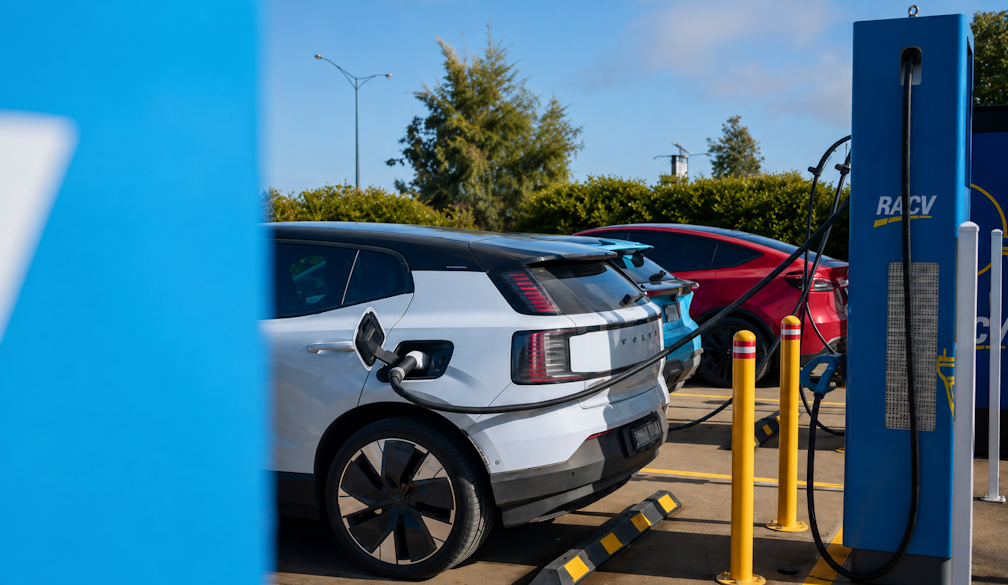
Image credit: https://www.pexels.com/photo/electric-cars-charging-at-racv-station-in-barnawartha-33083245/