Bush medicine partnership to sow seeds of collaboration
- Written by: Hamish Walsh
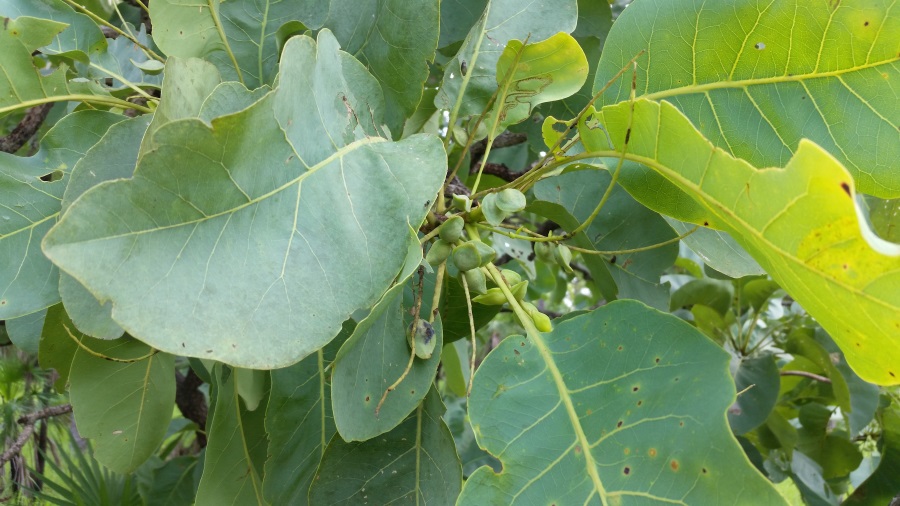
An Australian-first $1.01 million research and commercial partnership aims to explore the development of a sustainable agribusiness model for traditional Australian medicinal plants growing in Northern Australia.
The partnership between Menzies School of Health Research (Menzies), Traditional Homeland Enterprises (T.H.E.), Integria Healthcare (Integria) and The University of Queensland has received $363,363 over 18 months in funding from the Cooperative Research Centre for Developing Northern Australia (CRCNA). Project participants have committed $188,845 in cash and $461,074 in-kind contributions towards the project, over the next 18 months.
The Traditional Australian Medicinal Plants Agribusiness collaboration brings together extensive research and industry experience to focus on traditional Australian medicinal plants as an important biological, cultural and economic resource.
The project originated from requests by a Menzies Indigenous Reference Group (IRG) seeking that more research be done on Indigenous medicinal plants. This IRG continues to have oversight of the project. According to Mark Mayo, the partnership’s Indigenous Steering Committee representative and Menzies researcher, the group initiated plans for this project with a view to creating important opportunities for collaboration and mutual learning through the application of modern science to Indigenous knowledge.
“This exciting project will provide opportunities for Aboriginal people to share their knowledge of medicinal plants, developed over thousands of years, with researchers that have expertise in laboratory testing and healthcare product development,” Mayo said.
“The project also offers employment and training for Indigenous people, as well as the possibility of developing a sustainable agribusiness for future employment and training in Indigenous communities,” he said.
The long-term goal of the project is the development of a local industry with opportunities in Indigenous workforce development, sustainable regional development in Northern Australia, and potential export of uniquely Australian, value-added products.
CRCNA Chief Executive Officer Jed Matz said the project was a significant investment in Traditional Owner-led business models and will provide far-reaching benefits to the communities involved.
“The CRCNA is excited to invest in research which has the potential to make a significant impact, with early estimations the products delivered could add an additional $20m in value to the bush medicine sector, over the next five to ten years,” Matz said.
“An important element of this project will be the extensive consultation and engagement with Traditional land owners and partners to ensure the project will deliver sustainable economic benefits to the community and provide a pathway to a successful business model,” he said.
Traditional medicinal plants will be evaluated at Menzies in Darwin and the School of Chemistry and Molecular Biosciences at the University of Queensland, with a view to using these findings to develop prototype healthcare products.
“Australia’s unique plant life offers a rich but underexplored source of medicinal plants and to embark on this exploration with the guidance and knowledge of the traditional custodians of the land is very exciting for everyone involved,” UQ’s Associate Professor Joanne Blanchfield said.
John Kavanagh, CEO Integria Healthcare, says the company will build on its expertise in traditional herbal medicines and experience gained from their early involvement with Australian tea tree oil to lead the development of prototype healthcare products.
“Integria brings to the project over 60 years of experience in the production of traditional herbal medicines. Once the early stage research is completed, Integria will use the findings to further the development of prototype products in collaboration with the Indigenous Communities. Integria looks forward to playing a role in the development of Australia’s own traditional medicinal plants,” Kavanagh said.
T.H.E. Executive Officer Ann Shanley says the enterprise looks forward to bringing their experience in the Kakadu plum industry to collaborate with Top End communities in developing models for sustainable Indigenous-led agribusinesses.
“This is an exciting opportunity to bring together learnings as we look to continue developing meaningful economic opportunities for Indigenous communities and explore solutions to important challenges such as supply chain, benefit sharing and intellectual property management,” Shanley said.
The initial phase of the project also includes opportunities for young Indigenous scientists, with two Indigenous trainees already working on the project at the Menzies laboratories.
“In addition to laboratory work, there are opportunities to explore and preserve Indigenous knowledge of traditional medicinal plants and their use,” said Menzies Honorary Fellow Dr Greg Leach.
“Participating in such an enterprise requires a range of skills and the project expects to expand the involvement of Indigenous trainees across several disciplines and create further opportunities to include students at either Certificate or undergraduate level. We are also currently seeking an Indigenous postgraduate student,” said Dr Leach.
About: Menzies School of Health Research
Menzies School of Health Research is one of Australia’s leading medical research institutes dedicated to improving Indigenous, global and tropical health. Menzies has a history of over 30 years of scientific discovery and public health achievement. Menzies works at the frontline, joining with partners across the Asia-Pacific as well as Indigenous communities across northern and central Australia. Menzies collaborates to create new knowledge, grow local skills and find enduring solutions to problems that matter.
About: Traditional Homeland Enterprises
Traditional Homeland Enterprises (T.H.E.) works with Indigenous communities to develop supply chains and grow the market for native botanicals, including the Kakadu Plum. T.H.E., a project of Kindred Spirits Enterprises, is currently in a research and development phase to bring Northern Australian products to global markets.
About: The University of Queensland
For more than a century, The University of Queensland has educated and worked with outstanding people to create positive change for society. UQ research has global impact and is delivered by an interdisciplinary community of more than 1500 researchers at six faculties, eight research institutes and 100+ research centres.
About: Integria Healthcare
With over 60 years’ experience in the science of herbal remedies, Integria Healthcare is at the forefront of natural medicine research and development. Integria proudly owns some of the most reputable and innovative natural healthcare brands including Thursday Plantation®, MediHerb®, Eagle® and Thompson’s®. Driven by our vision to inspire people to live better lives through natural healthcare, Integria is committed to ensuring superior and efficacious products are offered under the Integria Healthcare umbrella.
About: CRCNA
The Cooperative Research Centre for Developing Northern Australia (CRCNA) is investing $75m of Commonwealth funds over ten years to support industry-led research collaborations. The funding will develop new technologies, products and services which address industry issues in northern Australia within three initial focus areas:
- Agriculture and food (including aquaculture)
Removing barriers and improving supply and value chains for new and existing northern agricultural industries. - Northern Australia health service delivery
Identifying new models and approaches, early detection, health seeking behaviour and mental health. - Traditional Owner-led business development
Identifying new models and approaches and building an industry ready skilled workforce in the fields of agriculture, food and/or health industries.
The CRCNA brings together industry, universities and other research bodies, regional development organisations, all northern jurisdictions and international partners in a collaborative industry-led R&D venture to assist businesses, governments and researchers identify opportunities for business and growth in the north.
We also work closely with and are supported by our investment partners the Northern Territory, Western Australia, Queensland and Australian governments.
The CRCNA has its head office in Townsville, QLD and two regional offices on Broome, WA and Darwin, NT.