Teledyne Space Imaging Launches Industrial Image Sensors Tested for Space
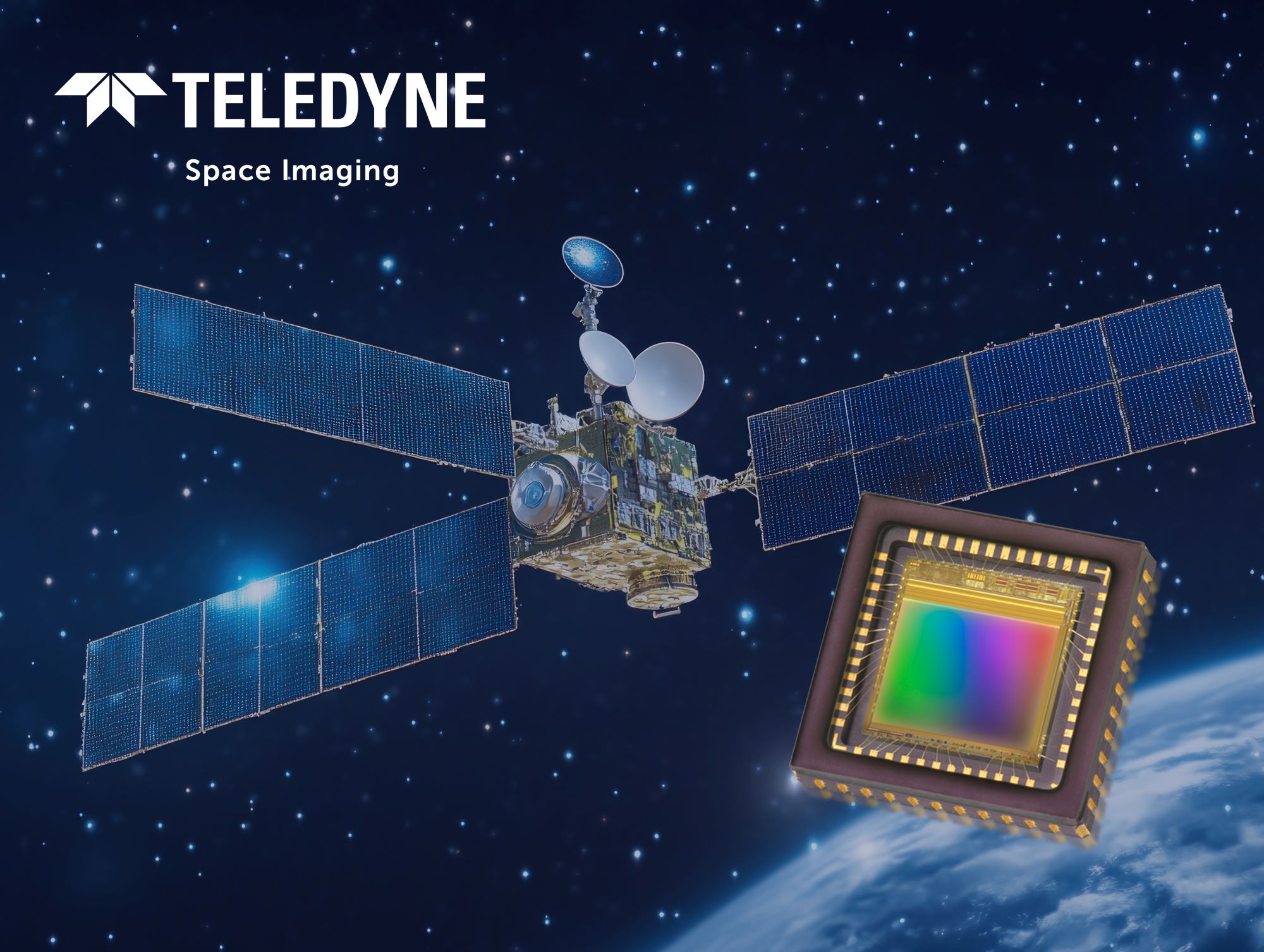
GRENOBLE, FRANCE - Media OutReach Newswire - 26 May 2025 - Teledyne Technologies Incorporated (NYSE:TDY), a leading provider of advanced imaging solutions, is proud to announce the release of three variants of industrial CMOS sensors, with resolutions ranging from 1.3MP up to 67MP, following a delta space qualification methodology and radiation testing.
These industrial image sensors are designed, manufactured and tested in Grenoble-France and Seville-Spain and upscreened for space in the Grenoble facilities. The Upscreened Variants (USV) are intended to be suitable for new space applications such as Earth observation and remote sensing payloads, star trackers, monitoring cameras, and cameras for space suits, rovers, moon landers, and space situational or domain awareness. These new products complement Teledyne's ongoing offerings for demanding science and defense missions by providing options for the less rigorous New Space market.
"Within the New Space industry, some system designers may use COTS sensors and make them fly with no upscreening, which means that they take the risk of any malfunctions or errors further down the line," explains Céline Semécas, Product Marketing Manager, Teledyne e2v. "Teledyne e2v's industrial upscreened image sensors are tested for space and are delivered as flight models with lot validation test certificates and radiation test reports."
The three CMOS sensors will undergo full screening, serialization and lot validation tests. Depending on the mission profile, they are delivered as flight models with two levels of screening, according to U1 (ESCC9020-like) or U3 (NASA Class 3 tailored for image sensors). Devices were sampled and have been through radiation characterization in specialized facilities, including testing for Single Event Latch-up (SEL), Single Event Effect (SEE), and Single Event Functional Interrupt (SEFI) malfunctions or errors. The image sensors feature a broad range of embedded functions, including sub-sampling, multi-region of interest (ROI), defective pixel correction, and high dynamic range capability.
For satellite star trackers and monitoring cameras, the Ruby 1.3M USV is a radiation tolerant 1.3MP (1280 x 1024) global shutter sensor optimized for space systems that are subject to constraints, such as size, weight and power (SWaP) and cost. Housed in a 12.7mm x 12.7mm CLCC packaging, this 5.3µm pixel pitch sensor can fit with cost-effective 1/1.8" lenses, consumes very low (≤200mW) power, and is available in a monochrome or colour version.
The Emerald Gen2 12M USV is a compact 12MP (4096 x 3072) global shutter imaging sensor for monitoring cameras with a 2.8µm pitch, and available in monochrome and colour versions. It features a very low readout noise performance of less than 3 electrons, delivering excellent image quality and the ability to work in high-contrast scenes. It has ROI features, enabling Teledyne e2v to offer an 8.9MP ROI image sensor in the same packaging, allowing space engineers to make even smaller cameras because they can use smaller optics. This sensor also features both LVDS and MIPI outputs, which ease the integration.
The Emerald 67M USV is a 67MP (8192 x 8192) image sensor that features one of the smallest global shutter pixel pitches (2.5µm) on the market. This 8K high-resolution device can cover a large swath for Earth observation and is also suitable for space domain awareness applications, allowing them to cover a large field of view. Emerald 67M USV combines low noise (
Teledyne e2v provides a full range of tools to ease system integration of the CMOS sensors and accelerate time-to-market. These tools include evaluation kits, reference designs, radiation reports and space qualification reports. "With a dedicated support team and quick response times, Teledyne e2v in Grenoble supports space engineers from design concept to system launch," adds Céline Semécas. "Furthermore, Teledyne e2v is used to managing long-term supplies with applications that require long product life cycles and obsolescence management."
During SmallSat Europe 2025, Europe's leading event dedicated to small satellites, which will take place on May 27 and 28 at the RAI Convention Center in Amsterdam, visitors to the Teledyne stand, at booth 737, can watch a live demo showcasing the performance characteristics of the new Emerald Gen2 12M USV upscreened image sensors.
Hashtag: #Teledyne
The issuer is solely responsible for the content of this announcement.
Teledyne Space Imaging
Teledyne Space Imaging offers innovative space imaging products, including those from sister companies. This new line of industrial image sensors upscreened for space is from Teledyne e2v in Grenoble. This facility is known for its high-performance, high-reliability semiconductors for the most demanding space applications.
Teledyne Space Imaging is part of Teledyne Technologies, a leading provider of sophisticated digital imaging products and software, instrumentation, aerospace and defense electronics, and engineered systems. Teledyne's operations are primarily located in the United States, Canada, the United Kingdom, and Western and Northern Europe.
For more information, visit Teledyne's websites: www.teledyne.com and www.TeledyneSpaceImaging.com