Alarming Surge in Fragility Fractures Underscores Urgent Need to Address Osteoporosis Crisis in Hong Kong
The Osteoporosis Society of Hong Kong (OSHK) Launches Groundbreaking Clinical Guidelines to Combat Growing Public Health Burden
HONG KONG SAR - Media OutReach Newswire - 1 September 2024 -Alarming Burden of Fragility Fractures in Hong Kong
The burden of osteoporosis in Hong Kong has reached alarming levels, with a staggering 51.2% surge in fragility fractures over the past 14 years.
The number of cases has skyrocketed from 5,596 in 2004 to 8,465 in 2018. Even more concerning is the 30.9% rise in the most serious type of fracture - hip fractures - which have increased from 4,002 to 5,241 cases during this period.
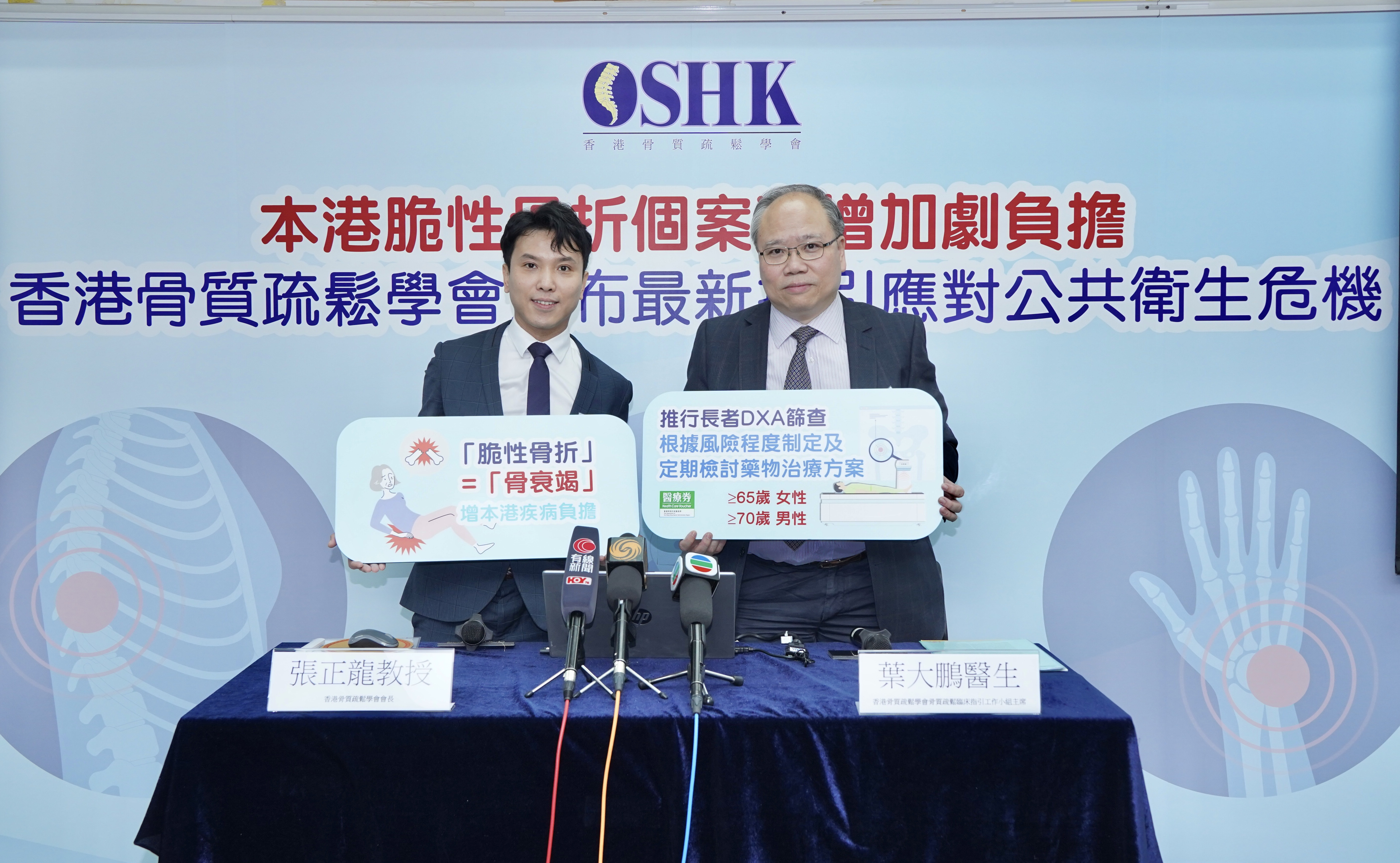
These fragility fractures, which occur due to low bone density and strength, can have devastating consequences for patients. Alarmingly, recent research has found that the mortality rate of hip fractures rivals that of leading cancer killers in Hong Kong. A study from the University of Hong Kong revealed that the mortality rate of hip fractures in men is higher than the mortality rate for prostate cancer, and on par with the mortality rate for colorectal cancer. Similarly, the mortality rate of hip fracture patients in women is higher than the mortality rate for thyroid cancer and breast cancer.
Compounding the problem, fragility fracture patients face a high risk of subsequent fractures, with nearly half (49.5%) of those who sustain an initial fracture experiencing a second fracture within the first two years. This "imminent fracture" period leaves patients vulnerable to repeat, debilitating injuries in quick succession.
"The dramatic escalation in fragility fractures underscores the urgent imperative to address osteoporosis and improve overall bone health in our community," said Professor Cheung Ching-lung, President of The Osteoporosis Society of Hong Kong (OSHK). "In response, the OSHK's multi-disciplinary task force has issued landmark clinical guidelines that revolutionize the approach to osteoporosis management in the city. This new, evidence-based framework aims to help identify and effectively manage individuals at different level of risk of these often devastating, and sometimes deadly, fractures, empowering both medical professionals and the public to take proactive steps in tackling this major public health crisis."
OSHK recommends DXA Screening for Early Osteoporosis Detection in Hong Kong
OSHK is recommending that all Hong Kong men aged 70 and older, and all women aged 65 and older, undergo dual-energy X-ray absorptiometry (DXA) scans to screen for osteoporosis. DXA is considered the gold standard diagnostic tool for identifying osteoporosis. With such a protocol, an estimate of 5,234 hip fractures would be prevented in 10 years to reduce the devasting impact of fragility fractures on patients, their families, and the broader healthcare system in Hong Kong.
"DXA screening gives us the ability to identify osteoporosis early and take action to strengthen bones and prevent these life-altering fractures," emphasized Dr Ip Tai-pang, Chairperson of The Osteoporosis Society of Hong Kong (OSHK) Guideline Task Group. "We're calling on all Hong Kong residents in the recommended age groups to have this simple, painless test and have an open discussion with their doctors about optimizing their bone health."
Landmark Guidelines Introduce Personalized Approach to Tackling Osteoporosis
The new OSHK guidelines go beyond recommending universal DXA screening to promote the use of a well-structured risk stratification model. This enables healthcare providers to comprehensively evaluate each patient's individual risk of fragility fractures. By thoroughly assessing the patient's unique risk profile and bone density T-score, clinicians can now establish a targeted treatment plan to effectively reduce their likelihood of experiencing a debilitating fragility fracture.
The OSHK guideline outlines the following risk-based approach for systematic fracture prevention:
| Risk Level | Recommendations for Medications |
Low risk
|
|
High risk
|
|
Very high risk
|
|
In addition, patients undergoing treatment for osteoporosis should review their treatment plan with their doctor every 1-2 years to ensure they are receiving maximum benefit. "Osteoporosis is a condition that requires long-term management," emphasizes Dr Ip Tai-pang. "Patients should never stop taking their medications without first consulting their doctor, as abruptly discontinuing treatment can lead to rapid and dramatic loss of bone density."
Reframing Fragility Fractures as "Bone failure" Underscores Urgent Need for Proactive Management of Devastating Complications
The OSHK's new clinical guidelines reflect a paradigm shift in how this progressive bone disease is viewed and managed. By recognizing fragility factures as a systemic "bone failure" condition, the guidelines emphasize the serious, wide-ranging complications that can occur, including spinal deformities, loss of mobility, reduced quality of life, as well as the increased risks of other serious health issues, such as cardiovascular diseases and pneumonia etc. that can stem from osteoporosis and related fractures.
"We need to strengthen public education, so that the public understands that fragility fractures are akin to bone failure," reminded Professor Cheung Ching-lung. "This will encourage them to proactively undergo screening, and to work closely with their doctors based on their individual risk levels, to continuously monitor their condition and receive targeted management or treatment."
Hashtag: #Osteoporosis #DXA #fracture #OsteoporosisSocietyHK #BoneFailure
The issuer is solely responsible for the content of this announcement.
About The Osteoporosis Society of Hong Kong (OSHK)
The Osteoporosis Society of Hong Kong (OSHK) is a non-profit organization dedicated to promoting bone health and preventing osteoporosis in Hong Kong. Established in 1994, the OSHK is a multi-disciplinary society comprising orthopedists, endocrinologists, rheumatologists, geriatricians, family medicine practitioners, physiotherapists, nurses, and other healthcare professionals. The OSHK works to raise awareness, provide education, and advocate for policies to address the growing burden of osteoporosis in the city.