How to Study for Year 12 Exams Without Burning Out A Plan That Starts in Term 3
Why Cramming Fails
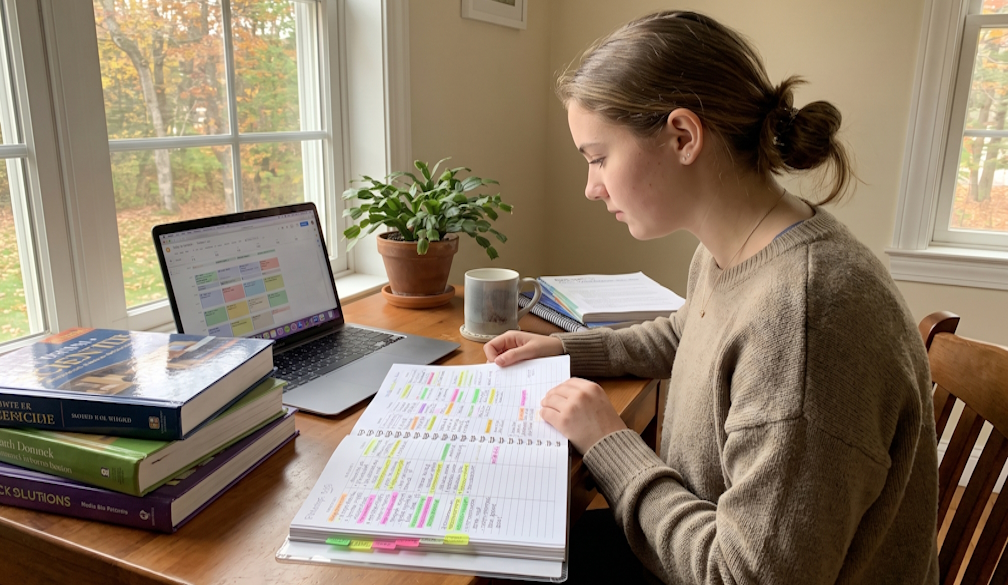
When the study period for the exams starts in the last month of Year 12, it can be a stressful race to finish. Students will often read over notes and mark the books numerous times, only to be unable to remember the information when it is needed for the test. The challenge is that people would not be able to recognize a stimulus on a page, but also remember it independently and apply it to a new stimulus.
Spaced Practice and Retrieval Practice are two helpful learning strategies. Spacing is described by the Australian Education Research Organisation (AERO) as "revisiting over time" and retrieval practice is "recalling without restating. These strategies will assist students to review and reinforce their understanding and prepare them to spot gaps before testing.
For instance, a student might work on a Biology topic on Monday, answer questions on the same topic on Thursday and test it the following week. This provides a number of chances to practise recalling the information. If it's something that's been left behind, the student can go back to it before it's a bigger issue.
These habits will be developed starting from Term 3 so students in Year 12 will have time to develop these habits in conjunction with completion of school work. It's not about studying all of the spare time. It is to ensure the revision is frequent enough that towards the end of the school year exam practice could become the priority, instead of always needing to be learning from the start.
Build Your Study Plan Backwards
Use the exam timetable and proceed backwards. Write each EXAM DATE, what the exam is about, and the main topic on a whiteboard and then determine what to edit weekly. Increase time for challenging topics and content where marks are always lost, and continue to rotate strong topics/content.
Break down revision into smaller tasks and incorporate specific objectives. Maths problems may be the topic for one session and an English essay plan for another, for instance. In the early part of Term 3 focus on understanding content. In preparation for the exams, focus on greater time at the end of the semester on timed, exam-style practice.
Allow space for lighter weeks and rest days, school assessments. It's better to have a schedule with some flexibility than one that requires a few hours of studying each night. Reschedule, don't double up the next day's work if a session is missed.
Use Past Papers Properly
Past papers allow students to get used to the type of questions that might appear in an actual test, time themselves and discover their strengths and weaknesses. Begin the revision of a topic with individual questions and, as exams approach, try timed papers.
Use the appropriate marking guide and examiner's report to indicate all attempts. Look for the correct explanation and evidence, calculations or subject terminology in answers. Make note of errors on an error log and review similar questions several days after.
Turning in papers that haven't been read for errors is a good way to miss a valuable learning opportunity. To learn about what marks were lost and to practise correcting the problem before the actual test.
When Is a Tutor Worth Paying For?
A tutor can be supportive where a student is having difficulty with a specific topic, are not getting very clear feedback, or continue to miss marks despite consistent practice. Feedback on English responses, on tricky Maths concepts and on Exam techniques can be useful in helping the student understand what they need to do better.
Melbourne services such as ATAR STAR Tuition pair students with a subject tutor who marks practice responses and drills exam technique, which is where most marks are lost.
Tutoring is not a requirement for all students. Individuals who know their content and are able to self-regulated and utilize teacher feedback may not require extra support classes. Define a specific learning gap and agree on a clear goal prior to paying for support. Students are still required to revise their work and practise outside of session.
How Parents Can Help
Parents can help revision to be a smoother experience by offering a quiet place for revision to take place, a visible revision timetable for the family to help plan around exams and regular meals. Take breaks and keep to normal routines at home to ease unnecessary stress.
Questions about marks each day can aggravate the situation for everyone without resolving it. Rather, ask student what they are working on or if they need any assistance. Listen and don't criticise their work right away.
If becoming exhausted, having trouble sleeping or continuing to feel distressed becomes challenging, it may be helpful to find support that's right for you. Preparing for exams should be a challenge, NOT an overwhelming task!
Make Each Study Session Count
A good study session must have a clear goal. Work out what you are going to do before you sit down, whether it's answering 10 Maths questions, writing an English essay or learning about a tricky Chemistry topic. This allows for easier tracking of progress and allows students to not spend an entire afternoon on one activity that could be done more efficiently.
Use the phone in a focused study time to minimize distractions. If a topic is too much, divide it up into tasks and work through them sequentially. Sometimes it is necessary to take a short break between sessions to help 'settle' the mind after a very challenging piece of written work or complex calculation.
It also aids in reflecting on progress on a weekly basis. Review the tasks accomplished, mistakes that continue to occur and subjects that require further focus. If you have an extremely strict time schedule, alter it. It's better to have a realistic plan that you follow through than have a pretty plan that you get exhausted doing.
Balance Schoolwork with Your Wellbeing
Many students in Year 12 are worried that if they don't study for an hour, then their results are jeopardised. But if you are continuously working and not getting a break at the right time, it becomes difficult to maintain focus and motivation. A break from academic pressure is needed through exercise, hobbies and friend time.
Avoid being inconsistent with your sleep schedule, especially during assessment times. If students are overly fatigued, revision sessions may not be as effective as they could be because they are unable to concentrate and recall information. Sleep protection is, therefore, not a distraction from preparation, but a component.
Pupils should also not compare their daily schedules with their peers. Some may take longer to understand a topic, while others may be quicker to revise, but need more practice with exam technique. Pay attention to your own performance and make adjustments that are appropriate for your outcomes.
If stress is interfering with daily functioning talk to a trusted teacher, parent or appropriate health worker. Seeking assistance early will ensure that manageable concerns don't become more challenging during the testing time.
Get Ready for Exam week!
Revise important concepts, look at the error log and work through some of the questions in the final days. Don't attempt to learn a whole subject at a single sitting.
Maintain a regular sleep schedule, have regular meals and take frequent breaks. Do a site check for exam venue, travel and equipment the night before the exam. Pack all the necessary items and set an alarm.
On test day, have a breakfast food you're used to eating and come in with plenty of time to spare. Read the instructions carefully, plan the time to answer the questions based on the marks available and answer the questions as clearly as possible. Once you have taken an exam, concentrate on studying for the next exam, rather than constantly rehashing the previous one and its problems.
Exam Preparation Checklist
- Make note of exam dates and subject requirements.
- Block revision weekly from Term 3.
- Employ spaced revision and active recall.
- Fill in and carefully complete old papers.
- Maintain an error chart and review errors.
- When needed, ask for specific assistance.
- Ensure adequate sleep, food and rest periods.
- Make the night before exam preparation.
Conclusion
If students begin the preparations for Year 12 early, and they make sure they make consistent changes and learn from their mistakes, then Year 12 preparations will be more effective. A realistic timetable, well-revieved past papers and targeted support can help to ease the late-night pressure, without compromising sleep or personal time. The goal is to come into each exam with the intent to show the examiner knowledge, not dump information in the last month.
Frequently Asked Questions
1. At what age is it too early to begin preparation for Year 12 exams?
Regular revision is a practical approach for term 3 and an identification of gaps/exam skills before the final few weeks.
2. What is the recommended number of hours per day that students should study?
This will vary based on individual requirements, school requirements and level of difficulty of subjects. Strive for incremental progress and manageable tasks not some random number of hours.
3. How many times should students do past papers?
Start with topic-based questions and gradually move onto full timed papers as exams near. Make sure time is always provided to record and go over errors.
4. Do students need to study tutoring to get a high ATAR?
No. Tutoring will address certain weaker areas, but independent practice, effective revision and feedback is vital.
5. What if a student falls behind?
Prioritise difficult and important topics, adjust the timetable and seek help where needed. Avoid sacrificing sleep to catch up on everything at once.